
When I first tasted Korean Chicken Bao at a vibrant street market, the explosion of flavors left an imprint on my palate. The tender, marinated chicken nestled in a pillowy bao bun, paired with fresh, tangy pickled vegetables, was nothing short of perfection. That day, I knew I had to recreate this delightful dish at home.
Now, whenever the craving for something hearty yet light hits, I whip up these mouth-watering baos. With just a handful of ingredients, this recipe transforms everyday chicken into a culinary adventure. Whether you’re preparing for a cozy dinner or looking to impress at your next gathering, these Korean Chicken Baos are incredibly versatile and sure to please.
Join me as we embark on this cooking journey, where the delightful aromas of garlic and ginger fill your kitchen, and you’ll discover that bringing the heart of Korean street food to your home is easier than you can imagine!
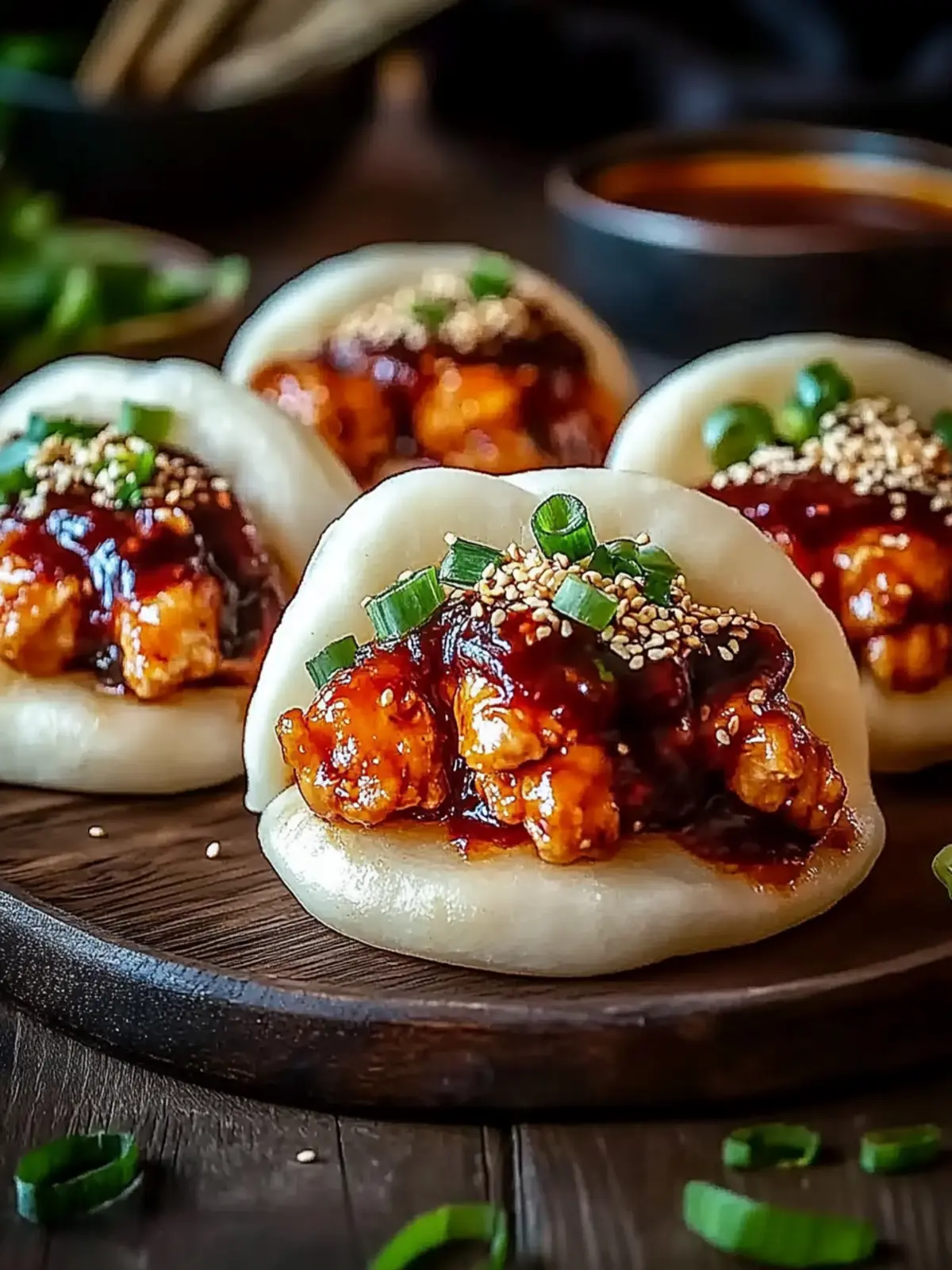
Why will you love Korean Chicken Bao?
Deliciously Unique: This recipe packs a flavor punch with the perfect blend of garlic and ginger, setting it apart from regular chicken dishes.
Quick & Easy: With just 15 minutes of prep and 30 minutes of cooking, you’ll be savoring these delectable baos in no time.
Crowd-Pleasing Appeal: Ideal for family dinners or parties, everyone will love the soft bao buns and succulent chicken combination.
Versatile Enjoyment: Customize your bao with various toppings like sesame seeds or green onions for a personal touch.
Authentic Experience: Bring the vibrant essence of Korean street food into your home without the hassle of a lengthy cooking process.
Dive into this culinary adventure and impress your loved ones with homemade Korean Chicken Bao that feels special yet is remarkably simple to prepare!
Korean Chicken Bao Ingredients
For the Chicken Marinade
• Boneless, skinless chicken thighs – this cut stays juicy and tender even after cooking.
• Garlic – adds aromatic depth to the marinade, enhancing the overall flavor.
• Fresh ginger – introduces a zesty warmth that complements the chicken beautifully.
• Low-sodium soy sauce – ensures a balanced salty flavor without overwhelming the dish.
• Honey – brings a touch of sweetness to contrast the savory components.
For Cooking
• Vegetable oil – ideal for sautéing as it has a high smoke point, perfect for cooking chicken.
For Assembly
• Pickled vegetables – carrots and cucumbers add a refreshing tartness that brightens each bite.
• Bao buns – whether store-bought or homemade, these are essential for cradling your delicious filling.
Optional Toppings
• Sesame seeds – for a nutty crunch that elevates the dish visually and texturally.
• Sliced green onions – gives a pop of color and fresh flavor, enhancing your Korean Chicken Bao experience.
Now that you have your ingredients ready, get excited to create a scrumptious meal that will surely become a family favorite!
How to Make Korean Chicken Bao
-
Whisk Together: In a medium bowl, combine low-sodium soy sauce, honey, minced garlic, and grated ginger. Whisk until all ingredients are well blended and aromatic, ensuring a flavorful marinade.
-
Marinate the Chicken: Add the bite-sized chicken pieces to the marinade, tossing to coat them evenly. Cover the bowl and refrigerate for at least 30 minutes (up to 2 hours for deeper flavor absorption).
-
Cook the Chicken: Heat vegetable oil in a skillet over medium-high heat. Add the marinated chicken (discard excess marinade) and cook for 6–8 minutes until golden brown and the internal temperature reaches 165°F.
-
Warm the Veggies: In a separate pan, gently heat the pickled carrots and cucumbers for 1–2 minutes until slightly warm, enhancing their flavors without losing their crunch.
-
Steam the Bao Buns: Prepare the bao buns according to the package directions, usually steaming for about 5–8 minutes until they are soft and fluffy, perfect for filling.
-
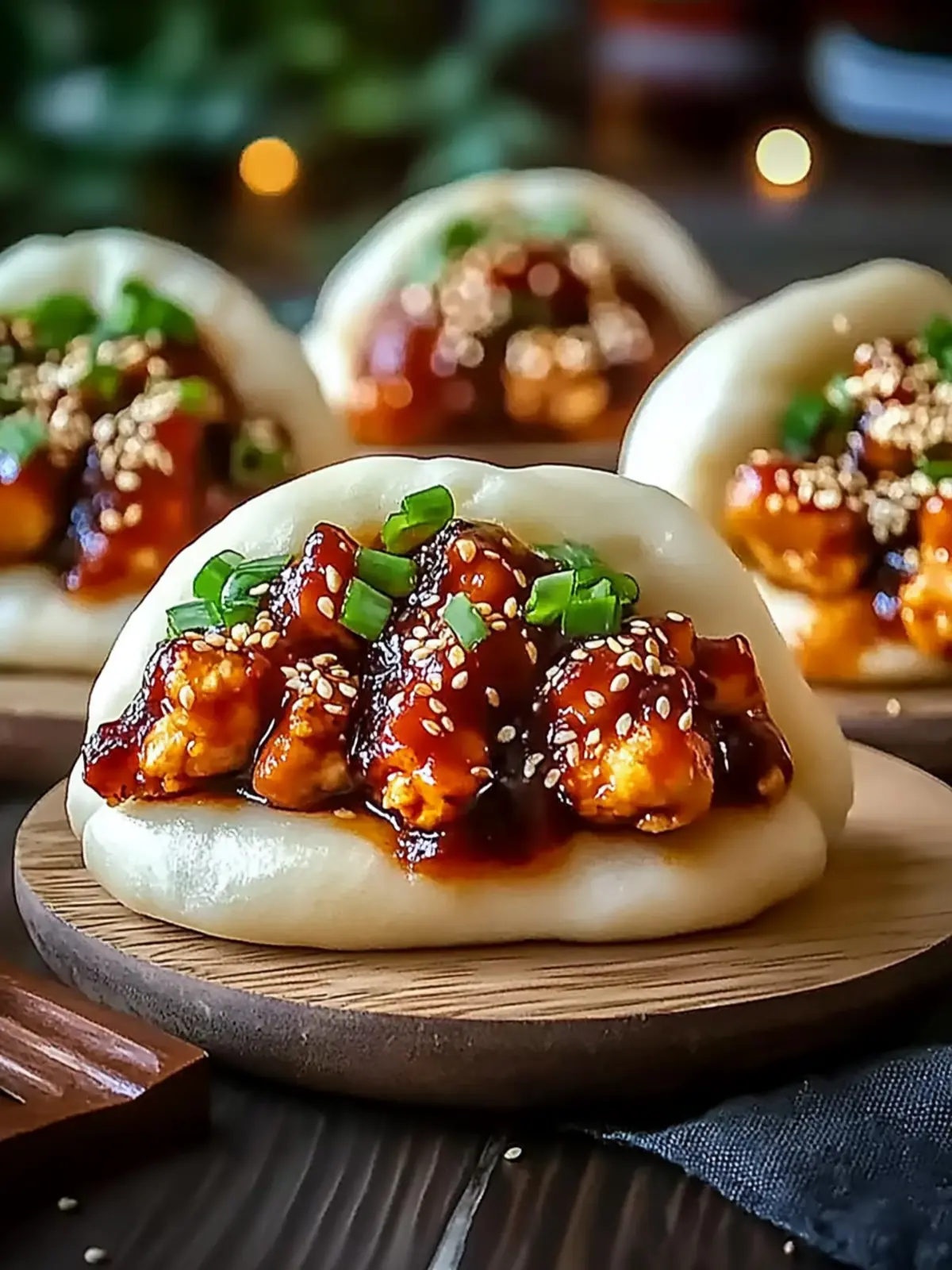
Assemble the Baos: Carefully open each steamed bao, adding a generous scoop of the cooked chicken inside. Top with the warmed pickled vegetables, and drizzle with extra sauce if desired for more flavor.
-
Garnish and Serve: Sprinkle with sesame seeds and sliced green onions on top for an appealing presentation. Serve the Korean Chicken Bao immediately while warm for the best taste experience.
Optional: Add a splash of your favorite hot sauce for an extra kick.
Exact quantities are listed in the recipe card below.
Make Ahead Options
These Korean Chicken Bao are perfect for busy home cooks looking to save time! You can marinate the chicken in the soy sauce mixture up to 24 hours in advance; simply cover it and refrigerate. Additionally, you can prepare the pickled vegetables 3 days ahead and store them in an airtight container in the refrigerator to keep them crisp. When you’re ready to serve, just sauté the marinated chicken and steam the bao buns according to the package instructions. This way, you’ll enjoy restaurant-quality results with minimal effort, giving you more time to relax before the meal!
What to Serve with Korean Chicken Bao?
Complement your flavor-packed Korean Chicken Bao with these delightful side dishes that enhance the overall meal experience.
- Crispy Asian Slaw: A refreshing crunch of cabbage and carrots in a tangy dressing adds brightness to the meal. This vibrant slaw balances the richness of the chicken.
- Steamed Broccoli: Tender and green, this simple side provides a lovely color contrast and a nutritious boost to your plate. It’s lightly seasoned to keep flavors intact.
- Spicy Kimchi: This fermented dish brings a bold kick that pairs perfectly with the sweet and savory bao. The heat cuts through the richness, elevating each bite.
- Sesame Spinach: Sautéed spinach drizzled with sesame oil offers a silky texture, creating a wonderful juxtaposition with the fluffy bao buns.
- Coconut Rice: Creamy and slightly sweet, this rice dish serves as a comforting base that complements the rich flavors of the chicken. It’s a perfect canvas for each bite.
- Chilled Cucumber Salad: Light and refreshing, the cool cucumbers in a rice vinegar dressing add a pleasant crunch, cleansing the palate between bites.
- Mango Lassi: For a drink option, this creamy yogurt-based beverage paired with mango balances the savory notes with its sweet and fruity flavor.
- Green Tea: A warm cup of green tea soothes the palate and aids digestion, making it a delightful accompaniment to any meal featuring Korean flavors.
- Mochi Ice Cream: For dessert, this chewy treat with a sweet filling creates a fun end to your meal and keeps the culinary adventure going.
Enjoy creating your perfect meal that beautifully highlights the delicious charm of your Korean Chicken Bao!
Variations & Substitutions for Korean Chicken Bao
Feel free to mix things up and make this recipe your own; the possibilities are endless!
-
Spicy Kick: Add a tablespoon of gochujang (Korean chili paste) to the marinade for a fiery twist. It introduces a delightful heat that complements the sweetness of honey.
-
Vegetarian Alternative: Swap chicken for firm tofu, marinating and cooking it similarly. The tofu absorbs flavors beautifully, making it a satisfying substitute.
-
Gluten-Free: Use tamari instead of soy sauce for a gluten-free version. Your chicken will still be wonderfully savory without the gluten kick.
-
Herb Enhancement: Incorporate chopped cilantro or Thai basil as a topping for a fresh herbaceous note. The bright flavors elevate the dish wonderfully.
-
Crunch Factor: Add crushed peanuts or chopped cashews as a garnish for extra texture and a satisfying crunch. They bring a delightful contrast to the soft bao.
-
Savory Fillings: Experiment with sautéed mushrooms or cooked ground chicken for a different filling option. The earthy flavors enhance the traditional taste with a twist.
-
Low-Calorie Version: Opt for skinless chicken breast instead of thighs for a leaner option. You’ll achieve a healthy bao without sacrificing taste.
-
Sweet Afterthought: Drizzle a bit of sriracha honey on top before serving for a perfect blend of heat and sweetness. It’s a lovely finishing touch that packs a flavorful punch!
Explore these variations and substitutions to create your perfect Korean Chicken Bao experience!
Expert Tips for Korean Chicken Bao
• Timing is Key: Allow your chicken to marinate for at least 30 minutes, or up to 2 hours, to fully absorb all the flavors in your Korean Chicken Bao.
• Perfectly Cooked Chicken: Ensure the chicken reaches an internal temperature of 165°F for juicy, succulent meat. Use a meat thermometer to avoid overcooking.
• Avoiding Soggy Buns: Be cautious not to overfill your bao buns with chicken or vegetables, as this can lead to sogginess. Keep it light for the best texture.
• Steaming Tips: When steaming bao buns, ensure they are spread out in the steamer to allow for even cooking and to prevent sticking.
• Customization: Experiment with different pickled veggies or toppings to make your Korean Chicken Bao unique. Try adding sliced radishes or spicy kimchi for a kick!
How to Store and Freeze Korean Chicken Bao
Fridge: Store leftover Korean Chicken Bao in an airtight container for up to 3 days. Reheat gently in the microwave or steam to regain softness.
Freezer: For longer storage, you can freeze the cooked bao (without the vegetables) for up to 2 months. Wrap them individually in plastic wrap and then place in a freezer bag.
Reheating: To reheat frozen bao, steam them for about 10 minutes directly from the freezer until heated through. Add warmed pickled vegetables before serving.
Meal Prep Tip: You can also freeze the marinated chicken (without cooking) for up to 2 months. Thaw in the fridge overnight before cooking for a quick meal.
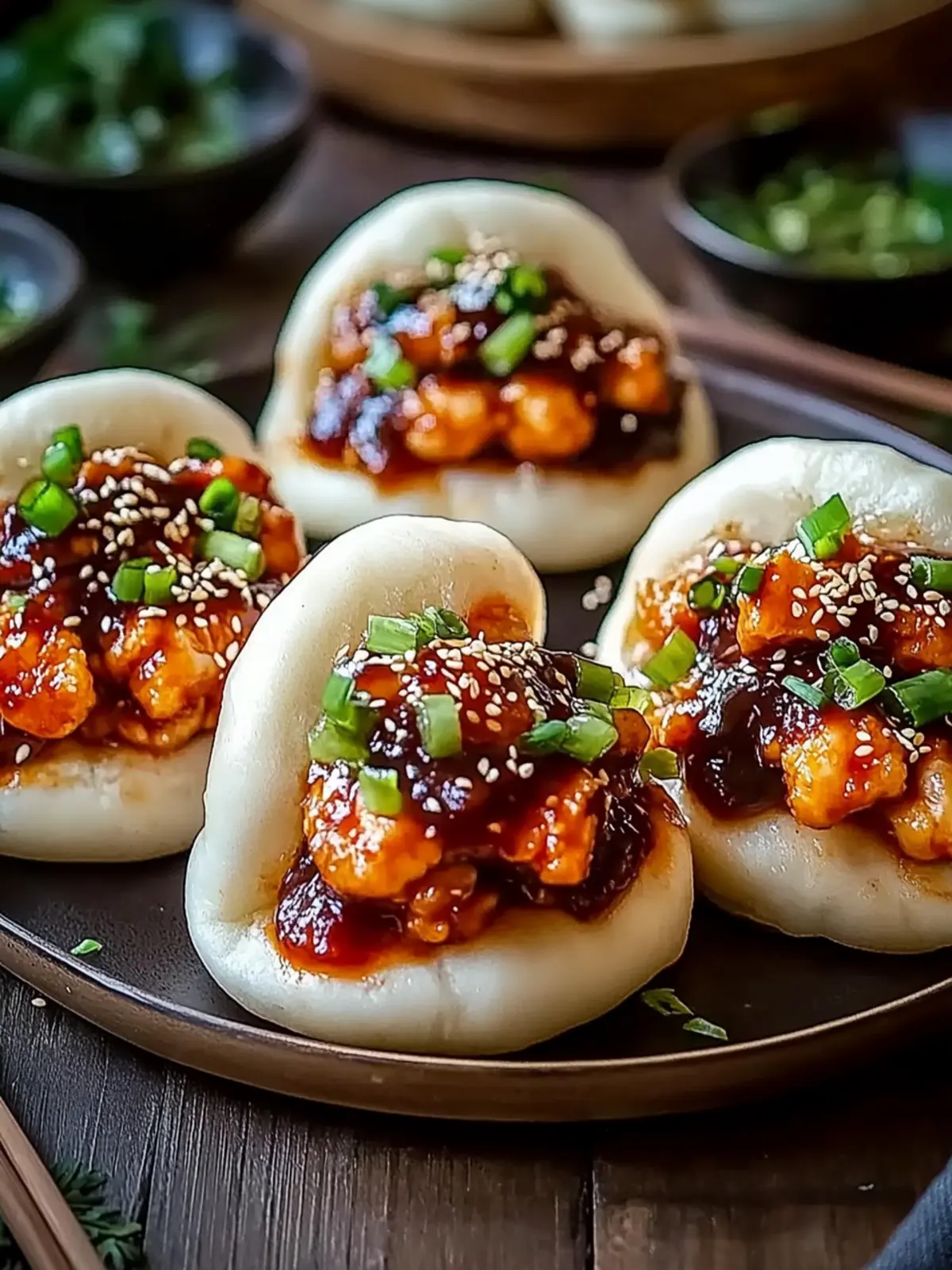
Korean Chicken Bao Recipe FAQs
How do I choose the best chicken thighs for my Korean Chicken Bao?
Absolutely! Look for boneless, skinless chicken thighs that are bright pink with no dark spots. Fresh chicken should feel firm to the touch and have a slight spring back when pressed. Thighs are ideal for this recipe because they remain juicy and flavorful even after cooking, elevating your bao experience.
What is the best way to store leftover Korean Chicken Bao?
For sure! Store any leftover Korean Chicken Bao in an airtight container in the fridge for up to 3 days. I recommend placing parchment paper between the layers to prevent sticking. When ready to eat, simply reheat in the microwave or steam to retain softness, ensuring that you enjoy every bite.
Can I freeze the cooked Korean Chicken Bao?
Yes! You can freeze the cooked bao (without the pickled vegetables) for up to 2 months. Wrap each bao individually in plastic wrap, then place them in a freezer bag to prevent freezer burn. When you crave them, steam from frozen for about 10 minutes until warm. Add your warmed pickled vegetables before serving for the best results.
What should I do if my bao buns are too soggy?
Very! If you find your bao buns soggy, it’s often due to overfilling with chicken or vegetables. To fix this, lightly toast the buns before adding the filling to create a barrier. I also recommend draining excess liquid from your pickled veggies and only adding a light drizzle of sauce so the buns stay deliciously fluffy.
Are there any dietary considerations for Korean Chicken Bao?
Absolutely! This recipe can easily be made gluten-free by using tamari instead of soy sauce and ensuring that your bao buns are gluten-free as well. For those with honey allergies, you can substitute maple syrup or agave nectar. Always double-check ingredient labels to keep everyone safe and happy.
Can I make the marinated chicken ahead of time?
Absolutely! You can marinate the chicken up to 2 hours in advance. For meal prep, consider freezing the marinated chicken for up to 2 months. Just remember to thaw it in the fridge overnight before cooking to ensure a quick and easy dinner option that’s bursting with flavor!
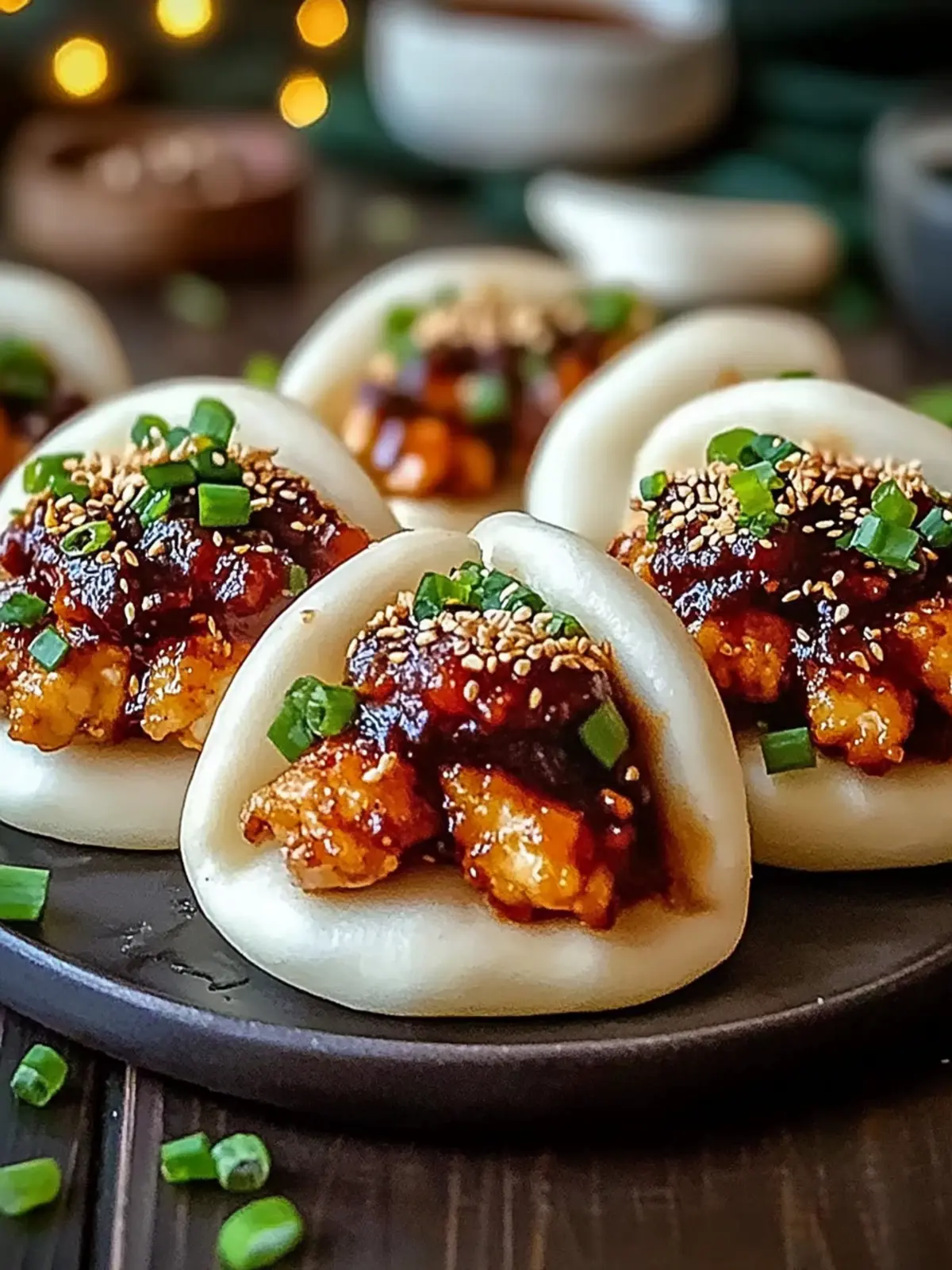
Savory Korean Chicken Bao: A Homemade Flavor Adventure
Ingredients
Equipment
Method
- In a medium bowl, combine low-sodium soy sauce, honey, minced garlic, and grated ginger. Whisk until all ingredients are well blended.
- Add the chicken pieces to the marinade, tossing to coat. Cover and refrigerate for at least 30 minutes.
- Heat vegetable oil in a skillet over medium-high heat. Add the marinated chicken and cook for 6–8 minutes until golden brown.
- In a separate pan, gently heat the pickled vegetables for 1–2 minutes.
- Prepare the bao buns according to the package directions, usually steaming for about 5–8 minutes.
- Carefully open each steamed bao, adding a scoop of the cooked chicken inside.
- Top with warmed pickled vegetables, sesame seeds, and sliced green onions before serving.