

There’s a certain satisfaction that comes from transforming a few simple ingredients into a vibrant dish, and this Hijiki Salad is the perfect way to embrace that joy. The first time I tried hijiki, its unique texture and slightly briny taste captivated me; I had stumbled upon a treasure that was both nutritious and delicious. As this salad came together in just 15 minutes, I realized I was on to something special, a recipe that would turn my usual mealtime routine into an exciting culinary adventure.
Packed with protein-rich soybeans and fresh veggies, this salad offers a delightful crunch and a burst of umami flavor. Whether you’re aiming for a light lunch or a stunning side dish, this hijiki salad checks all the boxes: it’s healthy, quick, and utterly satisfying. Let’s dive into the easy steps to create this crowd-pleasing delight that will have you saying goodbye to mundane meals and hello to a new favorite!

Why love Hijiki Salad so much?
Simple Preparation: You only need 15 minutes to whip up this delightful dish.
Nutritious Ingredients: Packed with vitamins and minerals from hijiki and fresh veggies, this recipe offers a health boost.
Bold Umami Flavor: The combination of soy sauce, mirin, and dashi powder lends a unique taste profile that excites the palate.
Versatile Serving Options: Enjoy it warm or chilled, making it perfect for any occasion.
Crowd-Pleasing Appeal: This salad is sure to be a hit, charming both family and friends.
If you’re looking for more quick and healthy recipes, don’t forget to check out our easy salad options.
Hijiki Salad Ingredients
For the Salad
• Dried Hijiki Seaweed – 2 Tbsp; a nutrient-dense seaweed that adds a savory depth to your hijiki salad.
• Carrot – 1, peeled and shredded; brings a sweet crunch and vibrant color to the dish.
• Aburaage (or Extra Firm Tofu) – 2 pieces, cut into thin strips; adds a delightful texture and protein boost.
• Vegetable Oil – 1 Tbsp; necessary for sautéing, use any neutral-flavored oil like canola or grapeseed.
• Boiled Soybeans – ½ cup; packed with protein and fiber, enhancing the nutritional value of your hijiki salad.
For the Flavor
• Dashi Powder – 1 tsp; this Japanese stock powder infuses the salad with rich umami flavor.
• Mirin – 2 Tbsp; adds a touch of sweetness and enhances the overall taste profile.
• Soy Sauce – 2 Tbsp; provides a salty kick, balancing the flavors beautifully.
• Water – ½ cup; helps to bring the ingredients together during cooking.
This easy-to-make Hijiki Salad is not only a feast for your taste buds but also a charming addition to your meal rotation!
How to Make Hijiki Salad
-
Soak the dried hijiki seaweed in water for at least 5 minutes. This will rehydrate the seaweed, making it tender and ready to mix with the other ingredients. Once done, drain it well to remove excess moisture.
-
Prepare the carrot by peeling it, then shredding it into thin strips. Also, cut the aburaage (or tofu) into thin strips. This will elevate the texture and provide a delightful crunch to your salad.
-
Heat 1 tablespoon of vegetable oil in a medium pot over medium heat. Add the shredded carrot, drained hijiki seaweed, and aburaage. Stir-fry these for 2-3 minutes until the carrots start to soften, which will brighten their color and enhance their sweetness.
-
Combine the dashi powder, mirin, soy sauce, and water to the pot. Gently toss in the boiled soybeans, ensuring everything is coated well in the flavorful mixture.
-
Boil the mixture and then reduce the heat to low. Cover the pot and simmer for 7-10 minutes. This allows all the lovely flavors to meld together beautifully!
-
Thicken the mixture by removing the lid after simmering. Let it cook for a few more minutes to reduce excess liquid until the salad reaches your desired consistency. Serve it warm or at room temperature.
Optional: Garnish with sesame seeds for an added crunch.
Exact quantities are listed in the recipe card below.
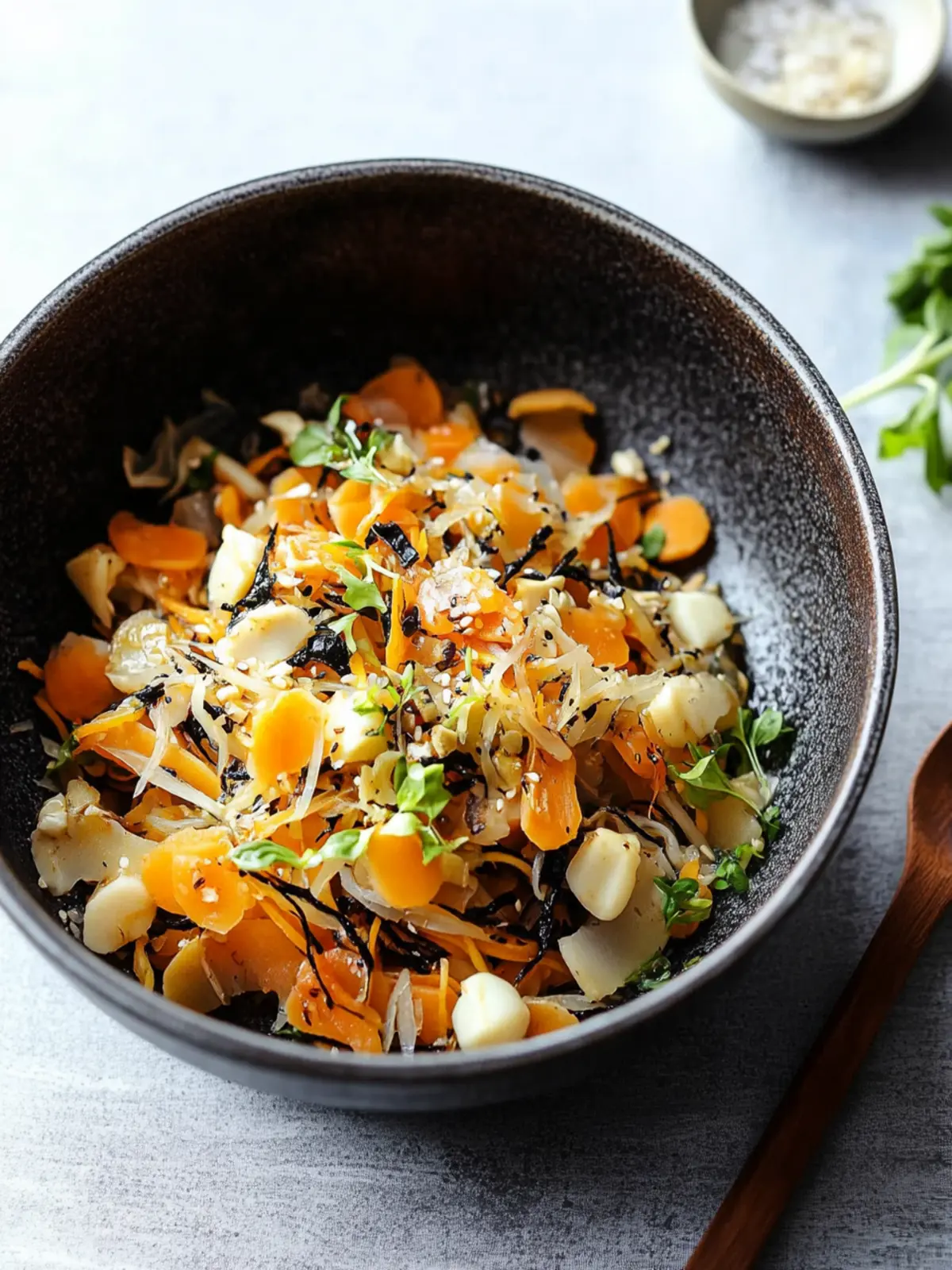
Hijiki Salad Variations
Feel free to tailor this delightful dish to your taste with some creative twists!
-
Gluten-Free: Use tamari instead of soy sauce to accommodate a gluten-free diet without sacrificing flavor.
-
Add Crunch: Toss in some toasted sesame seeds or chopped nuts for an irresistible crunch that complements the texture of the salad.
-
Spicy Kick: Sprinkle in some red pepper flakes or drizzle with sriracha to give your hijiki salad a zesty, spicy flair.
-
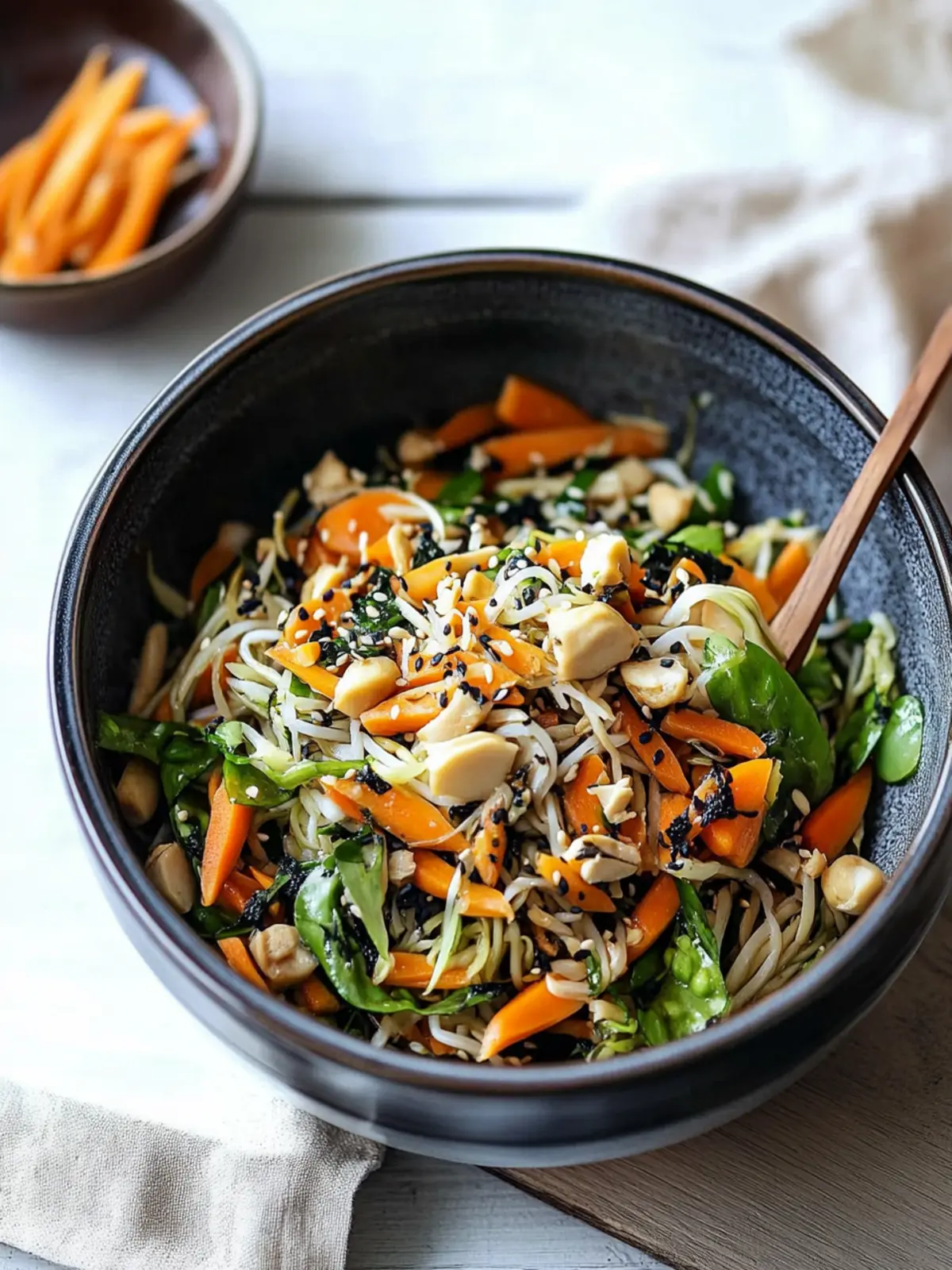
Vegetable Boost: Incorporate a variety of colorful vegetables such as bell peppers, cucumber, or snap peas for added nutrients and vibrant hues.
For a heartier option, try mixing in edamame in place of or alongside the boiled soybeans. The result is a salad bursting with fresh flavors and textures!
-
Citrus Twist: Add a splash of lemon or lime juice for a refreshing zing that brightens up the umami flavors of the salad.
-
Creamy Addition: Stir in a spoonful of tahini or a dollop of avocado for a rich and creamy element that balances the crunch.
-
Herb Infusion: Throw in a handful of chopped cilantro or green onions for an aromatic touch that elevates the overall flavor profile.
How to Store and Freeze Hijiki Salad
Fridge: Store the hijiki salad in an airtight container for up to 3 days. This keeps it fresh while allowing the flavors to deepen.
Freezer: For longer storage, freeze the hijiki salad in portion-sized containers for up to 1 month. Thaw in the fridge overnight before reheating.
Reheating: Gently reheat on the stovetop or in the microwave until warmed through. Add a splash of water if it seems dry.
Serving Temperature: This salad can be enjoyed warm, chilled, or at room temperature, so feel free to serve it how you like!
Make Ahead Options
These Hijiki Salad preparations are perfect for busy home cooks looking to save time during hectic weeks! You can soak the dried hijiki seaweed and prepare the carrots and aburaage up to 24 hours in advance, storing them separately in airtight containers in the refrigerator to maintain their quality. The entire salad can be made up to 3 days ahead; simply store it in an airtight container to preserve its freshness. When you’re ready to serve, just reheat gently on the stove over low heat or enjoy it chilled for a refreshing twist. This way, you can whip up a delicious, homemade meal almost effortlessly!
What to Serve with Hijiki Salad?
Creating a delightful dining experience is all about striking the right balance of flavors and textures to elevate your hijiki salad.
- Steamed Jasmine Rice: The fluffy, aromatic grains provide the perfect canvas for the flavors of your hijiki salad, enhancing each bite.
- Crispy Tempura: Light and airy tempura vegetables add a satisfying crunch alongside the salad’s tender ingredients, making for a fun contrast.
- Miso Soup: This comforting broth’s umami notes beautifully complement the hijiki salad, offering a warm and savory pairing that feels like a hug in a bowl.
- Grilled Teriyaki Chicken: The sweet and savory glaze of teriyaki chicken melds harmoniously with the salad’s umami, creating a well-rounded meal that pleases every palate.
- Sliced Cucumber Salad: Refreshing and crisp, a cucumber salad offers brightness and crunch, balancing the richer flavors of your hijiki salad.
- Sake or Green Tea: Serve chilled sake for a traditional touch, or enjoy calming green tea to cleanse the palate between bites.
- Sesame Noodles: With a nutty dressing, these noodles provide a delightful textural contrast and make for a satisfying main dish alongside the hijiki salad.
- Fruit Sorbet: End on a sweet note with a light and fruity sorbet that rounds out the meal without being too heavy, refreshing your palate.
- Edamame Beans: A protein-packed snack, these tender soybeans provide a satisfying pop to munch on while enjoying the salad’s flavors.
Expert Tips for Hijiki Salad
• Soak Time Matters: Ensure you soak the hijiki seaweed for at least 5 minutes; under-soaking may lead to a chewy texture.
• Cut Evenly: Slice the carrots and aburaage into thin, uniform strips to promote even cooking and a balanced crunch in your hijiki salad.
• Flavor Balance: Adjust the soy sauce and mirin to match your taste; if it’s too salty, add a bit more water or soybeans to balance the flavor.
• Simmering Perfection: Keep an eye while simmering; too long will make the salad mushy. Aim for 7-10 minutes for the best texture.
• Serving Suggestions: This hijiki salad can be enjoyed warm or chilled. Experiment with serving it as a side dish or on top of your favorite grain for a fulfilling main!
Hijiki Salad Recipe FAQs
What type of hijiki seaweed should I use?
You should use dried hijiki seaweed for this recipe. When you soak it, it will expand and become tender, adding a unique texture and flavor to your salad. Always look for hijiki that is dark and does not have any signs of spoilage, like a rancid smell or discoloration.
How should I store leftover hijiki salad?
Store your hijiki salad in an airtight container in the refrigerator for up to 3 days. This method helps retain its fresh flavors while allowing them to meld together even further. If you notice any excess liquid after storing, simply drain it before serving.
Can I freeze hijiki salad?
Absolutely! You can freeze the hijiki salad for up to 1 month. To do this, portion it into freezer-safe containers, making sure to leave a little space for expansion. When you’re ready to enjoy it again, thaw it overnight in the fridge. To reheat, warm it gently on the stovetop or in the microwave, adding a splash of water if it appears dry.
What if my hijiki salad is too salty?
If your salad is too salty, which can sometimes happen depending on the soy sauce used, don’t worry! You can balance the flavors by adding a bit more water or extra boiled soybeans. Start by mixing in small amounts, tasting as you go until it suits your palate.
Can I make this dish vegetarian or vegan?
Definitely! This hijiki salad is naturally vegetarian and can easily be made vegan by using vegetable-based dashi powder, although many dashi powders contain fish. Look for vegetarian-friendly brands or substitute it with a splash of miso paste mixed with water for a similar umami depth without any animal products.
Is hijiki safe to eat?
Yes! However, moderation is key. Hijiki contains a natural substance called arsenic, so it’s recommended to enjoy it occasionally rather than as a daily staple. If you have specific dietary concerns or conditions, it’s best to consult with a healthcare provider about inclusion in your diet.
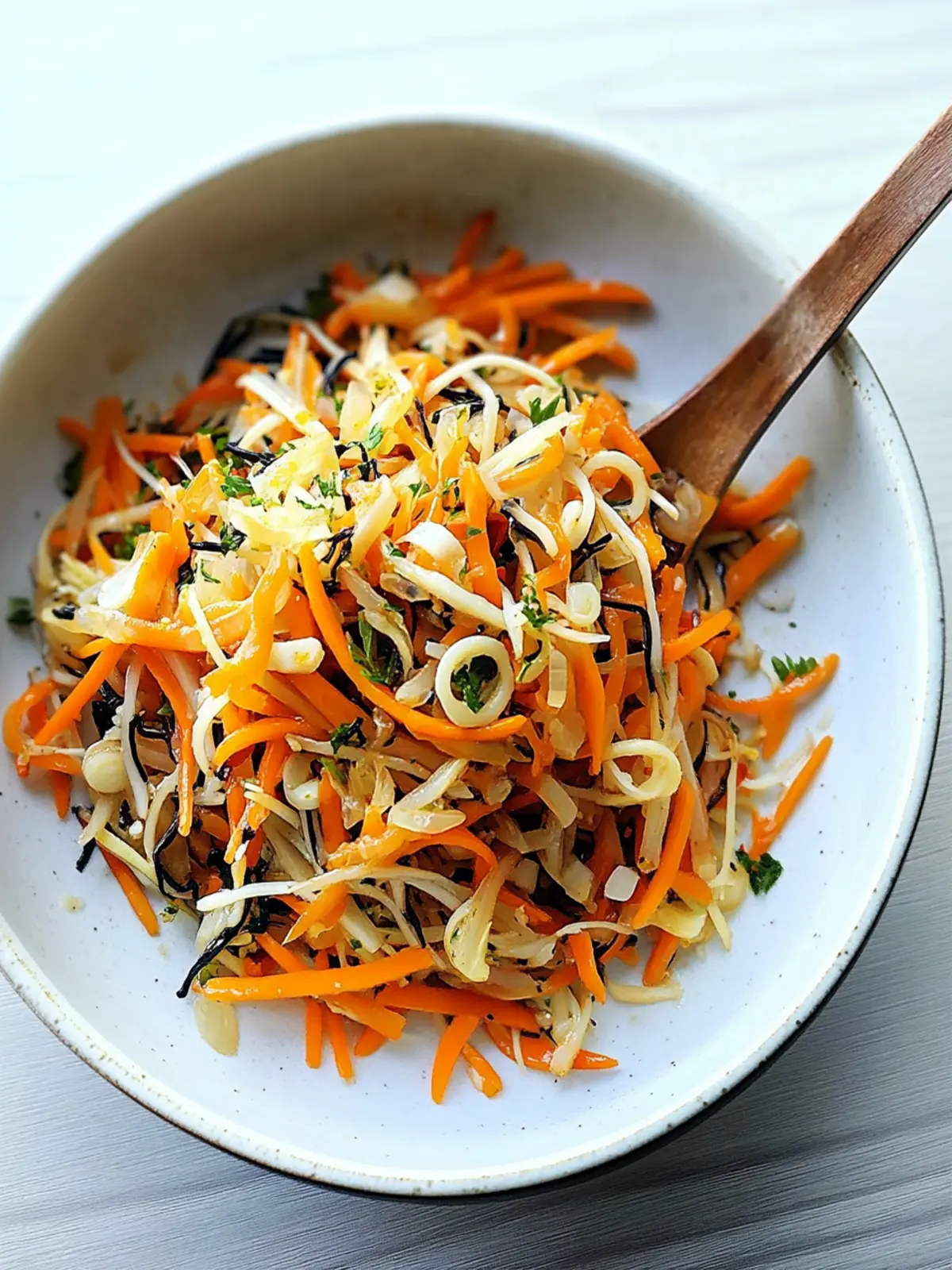
Delicious Hijiki Salad: A Nutritious Twist on Side Dishes
Ingredients
Equipment
Method
- Soak the dried hijiki seaweed in water for at least 5 minutes. Drain to remove excess moisture.
- Prepare the carrot by peeling and shredding it. Cut the aburaage (or tofu) into thin strips.
- Heat 1 tablespoon of vegetable oil in a medium pot over medium heat. Stir-fry the shredded carrot, drained hijiki seaweed, and aburaage for 2-3 minutes.
- Combine dashi powder, mirin, soy sauce, and water in the pot. Toss in the boiled soybeans.
- Boil the mixture, then reduce the heat to low. Cover the pot and simmer for 7-10 minutes.
- Remove the lid and cook for a few more minutes to reduce excess liquid until the desired consistency is reached.