
As the cold winds of winter sweep through the streets, there’s nothing quite like the comforting warmth of a bubbling Japanese hot pot, or nabe, gracing your dining table. I remember one particular evening when my friends gathered, laughter filling the room as we shared stories and savored every bite of this delightful dish. The fragrant broth enveloped us like a cozy hug, seamlessly marrying the umami of dashi with fresh, vibrant ingredients.
Stumbling upon this recipe was a happy accident; I had a medley of seafood and vegetables that needed to be used, and what better way than to create a heartwarming hot pot? The beauty of nabe lies in its versatility—each ingredient can be swapped to match your fridge’s offerings, making it the perfect solution for those busy weeknights or impromptu dinners with friends.
In just 30 minutes, this nourishing meal can be yours, melding rich flavors and textures that will impress your loved ones and leave you longing for more. Let’s dive into the steps to make your very own Japanese hot pot, because the best meals are often those shared around the table!

Why is Japanese Hot Pot a must-try?
Comforting warmth: Picture yourself around the table, savoring hot, flavorful broth that warms your soul.
Quick to prepare: With a total time of just 30 minutes, this dish is perfect for busy weeknights without sacrificing taste.
Endless variations: Whether you prefer chicken, seafood, or an abundance of veggies, feel free to customize with whatever ingredients you have on hand.
Shared experience: Bring family and friends together as you cook and enjoy this interactive meal, creating lasting memories while you share stories.
Healthful goodness: Rich in protein and fiber, this nourishing dish is a wholesome option that satisfies while keeping you energized.
For a deeper dive into other amazing comfort foods, be sure to check out my hearty soup collection.
Japanese Hot Pot Ingredients
Gather these wonderful ingredients to create your own flavorful Japanese Hot Pot!
For the Broth
- Water – 8 cups to create the flavorful base of your hot pot.
- Kombu – 2 pieces, 6 x 6-inch (15cm x 15cm); rich in umami, it boosts the broth’s flavor.
- Dried shaved bonito – 1 1/2 oz (45g); enhancing the dashi with a distinct smoky essence.
- Dashi – 4 cups; a traditional Japanese stock that adds depth to your hot pot.
- Mirin – 1/4 cup; a sweet rice wine that brings balance to the salty soy sauce.
- Soy sauce – 2 tablespoons; provides a savory kick to the broth.
For the Hot Pot Base
- Chicken leg and thigh – 1 piece, boned, skinned, and cut into bite-size pieces for a satisfying protein source.
- Napa cabbage – 1/2 lb (250g), sliced; adds crunch and nutrition to your dish.
- Harusame (cellophane noodles) – 1 oz (30g), soaked in water for 15 minutes; they soak up the broth’s flavors beautifully.
- Firm tofu – 1/2 package, cut into 4 pieces; a great protein-packed vegetarian option.
For the Seafood
- Clams – 4; they contribute a briny sweetness and elevate the overall flavor.
- Head-on shrimp – 4; not only delicious but also adds a fun visual appeal.
- Large scallops – 4; tender and succulent, they melt in your mouth.
- Red snapper (or sea bass fillet) – 1/2 lb (250g), cut into 1-inch (2.5cm) slices; adds a delicate fish flavor to the pot.
For the Veggies
- Negi (Japanese leek) – 1, sliced on an angle into 2-inch (5cm) pieces; lends a mild onion flavor.
- Spinach – 1 bunch, rinsed and cut into 2-inch (5cm) bundles; adds a pop of color and nutrition.
- Shiitake mushrooms (or enoki/oyster mushrooms) – 3 oz (90g); enhance the umami aspect of your hot pot.
- Carrot – 1/2 medium, peeled and cut into 2-inch (5cm) pieces, then thinly sliced lengthwise; for a sweet crunch and beautiful color.
Now that you have all your ingredients ready, you’re just a few steps away from enjoying a delicious Japanese hot pot experience!
How to Make Japanese Hot Pot
-
Steep kombu: Add the water and kombu to a stockpot, allowing it to steep for 30 minutes, which infuses the water with rich umami flavors and sets a great base for your broth.
-
Boil and add bonito: Place the stockpot over medium heat and bring it to a gentle boil. Remove the kombu, then add the shaved bonito, stirring once to incorporate it. Let it boil again, then lower the heat and simmer for 5 minutes.
-
Strain the broth: Turn off the heat and let the broth steep for 15 minutes to deepen the flavor. Strain the liquid through a fine sieve or cheesecloth, discarding the bonito flakes afterward.
-
Prepare the broth mix: In a separate bowl, combine the dashi, mirin, and soy sauce, stirring well, and set aside the savory blend that will soon bathe your hot pot ingredients.
-
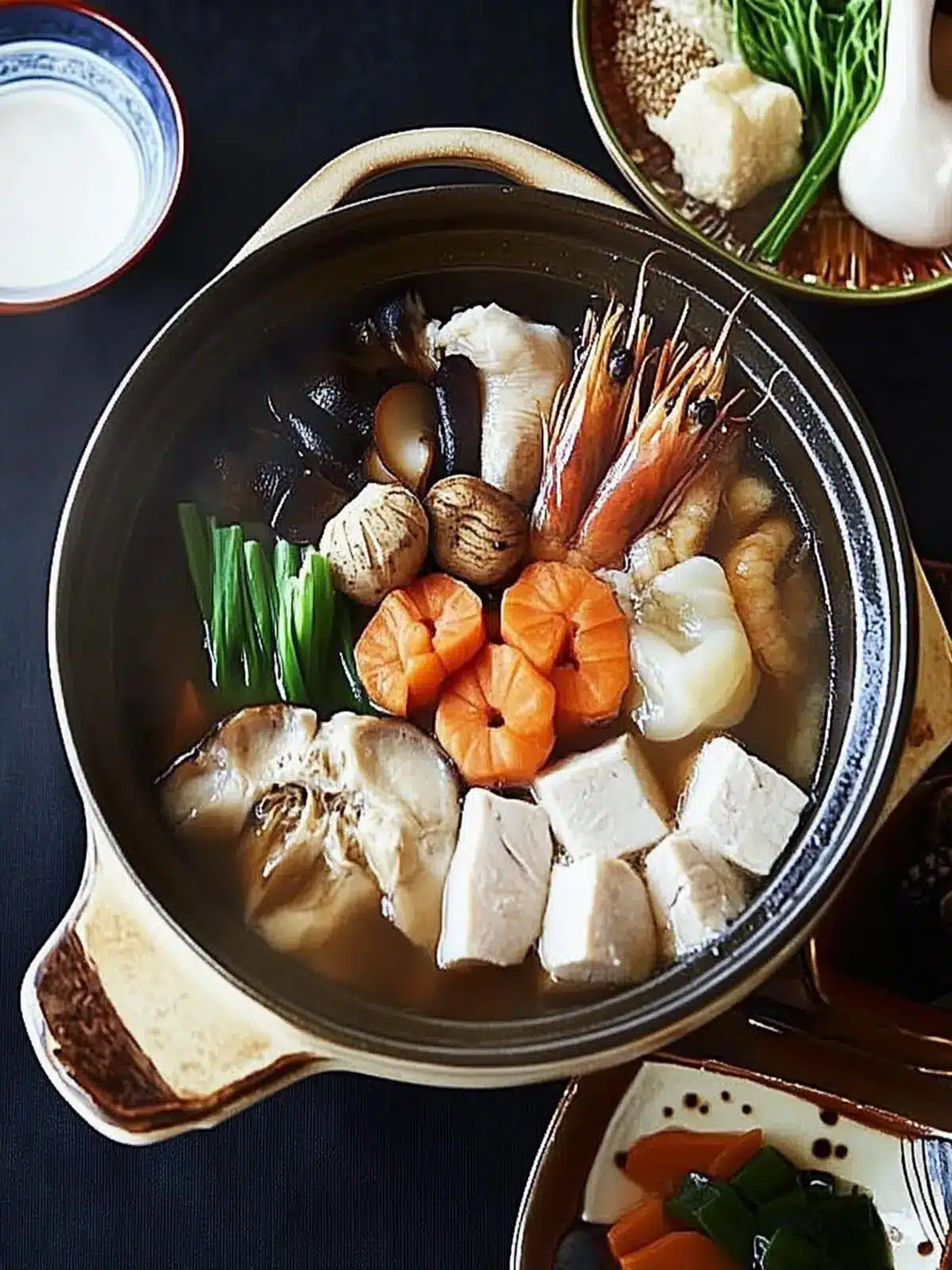
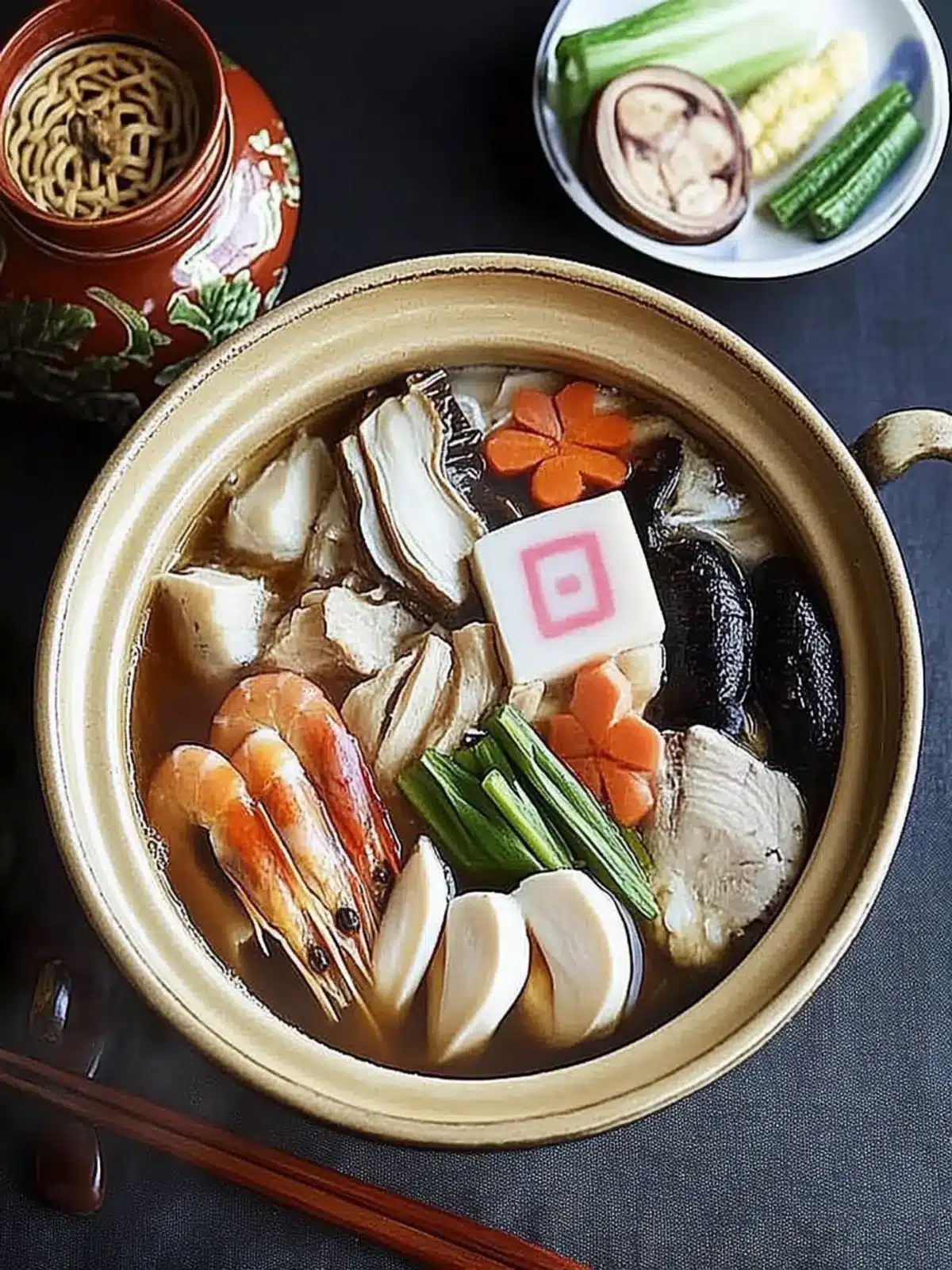
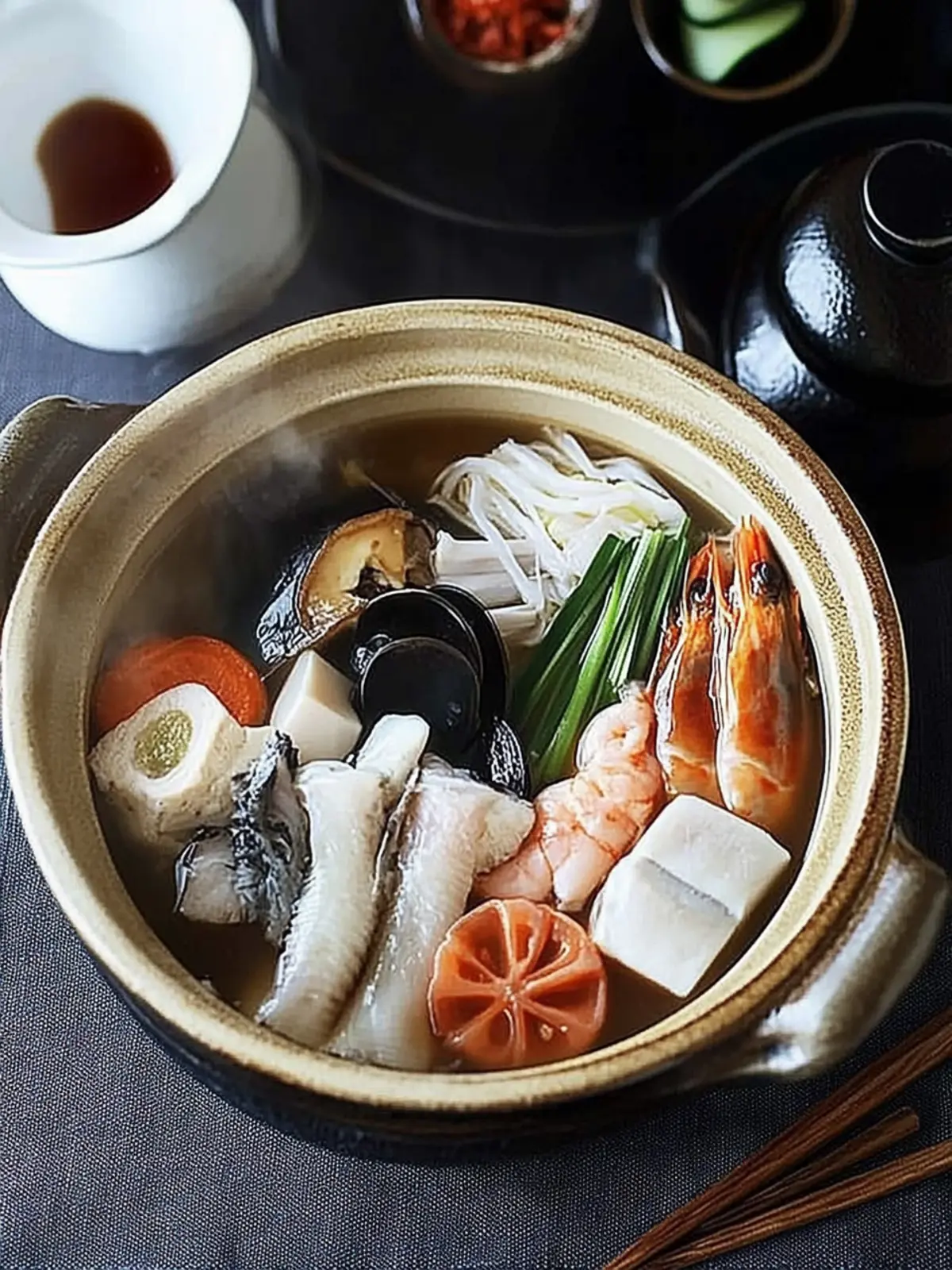
Layer the ingredients: Begin by placing the sliced napa cabbage at the bottom of your nabe pot. Next, artistically arrange the harusame, tofu, clams, shrimp, scallops, red snapper, chicken, negi, spinach, mushrooms, and carrot on top, creating a feast for the eyes as well.
-
Add the broth: Carefully pour the prepared broth over the beautifully arranged ingredients. Cover the hot pot and bring it to a boil over high heat, cooking until everything is tender and flavorful.
-
Serve with love: Transfer your stunning hot pot to the dining table and serve immediately, inviting everyone to gather around and enjoy this interactive meal filled with warmth.
Optional: Garnish with fresh herbs or a drizzle of sesame oil for an extra touch of flavor.
Exact quantities are listed in the recipe card below.
What to Serve with Japanese Hot Pot?
As you enjoy the warmth of your nabe, consider these delightful accompaniments to elevate your meal experience.
- Steamed Rice: A fluffy side that soaks up the broth’s rich flavors, balancing the meal beautifully.
- Pickled Vegetables: Crunchy and tangy, these brighten your plate and provide a refreshing contrast to the hot pot’s warmth.
- Chilled Soba Noodles: Serve alongside for a cool, nutty option that complements the savory elements of the hot pot.
- Sesame Sauce: Drizzle over ingredients for extra depth and a delightful nutty flavor that takes each bite to the next level.
- Miso Soup: This classic starter warms you up even more, harmonizing with the flavors of the nabe and delighting your taste buds.
- Green Salad: A light, fresh salad with citrus dressing offers a fantastic crunch and balances the hot pot’s richness wonderfully.
- Japanese Beer: Enjoy a crisp, cold beer to wash down your meal; the slight bitterness helps cleanse the palate between bites.
- Mochi Dessert: End on a sweet note with chewy mochi filled with sweet bean paste or ice cream, bringing joy to your meal’s conclusion.
How to Store and Freeze Japanese Hot Pot
Fridge: Store leftover Japanese hot pot in an airtight container for up to 3 days. Ensure it cools to room temperature before sealing to maintain freshness.
Freezer: Freeze the hot pot in airtight containers for up to 2 months. It’s best to separate the broth from ingredients like seafood and tofu to preserve texture when reheating.
Reheating: Reheat the hot pot gently on the stove over low heat until warmed through. Add a splash of water or broth if it seems too thick; stir occasionally for even heating.
Ingredient Tips: If you’ve made only the broth, consider adding fresh vegetables or proteins when reheating to enjoy a freshly cooked meal.
Make Ahead Options
Japanese Hot Pot is perfect for meal prep, making your busy weeknights a breeze! You can prepare the broth and prep the ingredients up to 24 hours in advance. Simply follow the steps to steep the kombu and prepare the dashi, then refrigerate the broth. You can also chop the vegetables, slice the tofu, and portion the seafood and chicken in separate containers to keep them fresh. When you’re ready to serve, layer the prepped ingredients in your nabe pot, pour the chilled broth over, and bring it to a boil. With these make-ahead tips, you’ll enjoy a delightful dinner that tastes just as delicious as if you made it fresh!
Japanese Hot Pot Variations
Feel free to take creative liberties with this soothing dish that warms both heart and belly.
-
Vegan Delight: Substitute chicken and seafood with hearty mushrooms and assorted vegetables, ensuring everyone can enjoy this nourishing meal.
Make it a vibrant medley by using a variety of seasonal greens and root vegetables. You’ll be amazed at how rich the flavors can still be! -
Spicy Kick: Add chili oil or sliced fresh chili peppers to the broth for a spirited twist that raises the heat factor.
This simple inclusion can awaken the taste buds and transform your hot pot into a lively feast worth gathering for! -
Gluten-Free: Use tamari instead of soy sauce, and opt for gluten-free noodles in place of harusame, keeping the dish flavorful.
You won’t miss out on taste, as these swaps still deliver that savory punch while catering to gluten sensitivities. -
Savory Miso: Stir in a couple of tablespoons of miso paste to the broth for depth and umami.
This adds a creamy texture and profound flavor, giving your hot pot an exciting twist that even your regulars will adore! -
Asian Greens: Feel free to swap napa cabbage with bok choy or kale for a unique flavor profile and colorful presentation.
These greens not only add nutritional benefits but also a delightful crunch to the dish that can keep you reaching for more! -
Protein Boost: Mix in tofu, seitan, or tempeh for added texture and protein without breaking the traditional appeal.
Incorporating different proteins makes each bite delightful with varied textures, ensuring nobody gets bored! -
Seafood Medley: Change the seafood assortment by including mussels, squid, or fish cakes to add complexity to your dish.
The different seafood enhances the broth’s richness, offering a delightful underwater adventure with every slurp! -
Herbal Infusion: Drop in fresh herbs like cilantro or Thai basil during the cooking process for a fragrant lift.
This delightful addition brings brightness to the rich broth, creating a fragrant experience that dances in your mouth!
Expert Tips for Japanese Hot Pot
-
Ingredient Placement: Layer ingredients starting from the one that takes the longest to cook, like chicken, at the bottom. This ensures everything cooks evenly in the Japanese hot pot.
-
Perfect Broth: Use high-quality dashi and ensure the kombu is thoroughly steeped. Overcooking the bonito can make the broth overly cloudy and bitter, so stir gently.
-
Vegetable Choices: Feel free to swap out veggies based on the season or what you have at home. Just be careful not to add watery vegetables like zucchini too early, as they can dilute the broth’s flavor.
-
Seafood Quality: Choose fresh, high-quality seafood for the best results. If using frozen, ensure you thaw and pat dry to maintain texture.
-
Serve with Dipping Sauces: Enhance your experience by serving with dipping sauces like ponzu or sesame sauce for an added flavor boost to your Japanese hot pot.
-
Keep it Interactive: Encourage guests to cook their favorite ingredients at the table for a fun, communal dining experience that never gets old!
Japanese Hot Pot Recipe FAQs
How do I choose the right kombu for my Japanese hot pot?
Absolutely! Look for kombu that is dark and firm, with a slight gloss. Avoid any that show signs of light discoloration or have a lot of broken pieces. A good kombu will enhance the umami flavor beautifully in your broth!
How should I store leftover Japanese hot pot?
Very simple! Store any leftovers in an airtight container in the refrigerator for up to 3 days. Make sure it cools to room temperature before sealing to keep it fresh and delicious. You can easily reheat it on the stove over low heat—just add a little water if it thickens too much.
Can I freeze Japanese hot pot?
Yes, you can! For best results, freeze the broth and solid ingredients separately. Pack everything in airtight containers and store it for up to 2 months. When you’re ready to enjoy it again, simply thaw overnight in the fridge and reheat on the stove, adding fresh veggies if desired.
What should I do if my broth is too salty?
If your broth turns out too salty, don’t fret! You can dilute it by adding more water or low-sodium broth to balance the flavor. Additionally, consider adding a potato or a piece of tofu to absorb some of the saltiness. Just simmer it for a few minutes before removing it after the flavors have mixed.
Are there any common allergens in Japanese hot pot?
Certainly! Common allergens in this dish include shellfish (like clams and shrimp) and soy (in soy sauce and tofu). If you’re cooking for someone with allergies, feel free to substitute these ingredients with alternatives like plant-based proteins and vegetable broths. Always check labels for hidden allergens!
How do I know when my hot pot ingredients are fully cooked?
Great question! Keep an eye on your ingredients as they cook. Chicken should be opaque and reach an internal temperature of 165°F (75°C). Seafood will turn from translucent to opaque. Vegetables should be fork-tender but not mushy, and noodles should be soft but still slightly chewy—typically just a few minutes in the broth will do the trick!
These FAQs help ensure your Japanese hot pot experience is as enjoyable and seamlessly delicious as possible!
Savor Japanese Hot Pot: A Cozy Meal for Any Night!
Ingredients
Equipment
Method
- Add the water and kombu to a stockpot, allowing it to steep for 30 minutes.
- Place the stockpot over medium heat and bring it to a gentle boil. Remove the kombu, then add the shaved bonito, stirring once to incorporate it. Let it boil again, then lower the heat and simmer for 5 minutes.
- Turn off the heat and let the broth steep for 15 minutes to deepen the flavor. Strain the liquid through a fine sieve or cheesecloth.
- In a separate bowl, combine the dashi, mirin, and soy sauce, stirring well.
- Begin by placing the sliced napa cabbage at the bottom of your nabe pot. Layer the other ingredients on top.
- Carefully pour the prepared broth over the arranged ingredients. Cover and bring to a boil over high heat.
- Transfer your hot pot to the dining table and serve immediately.