
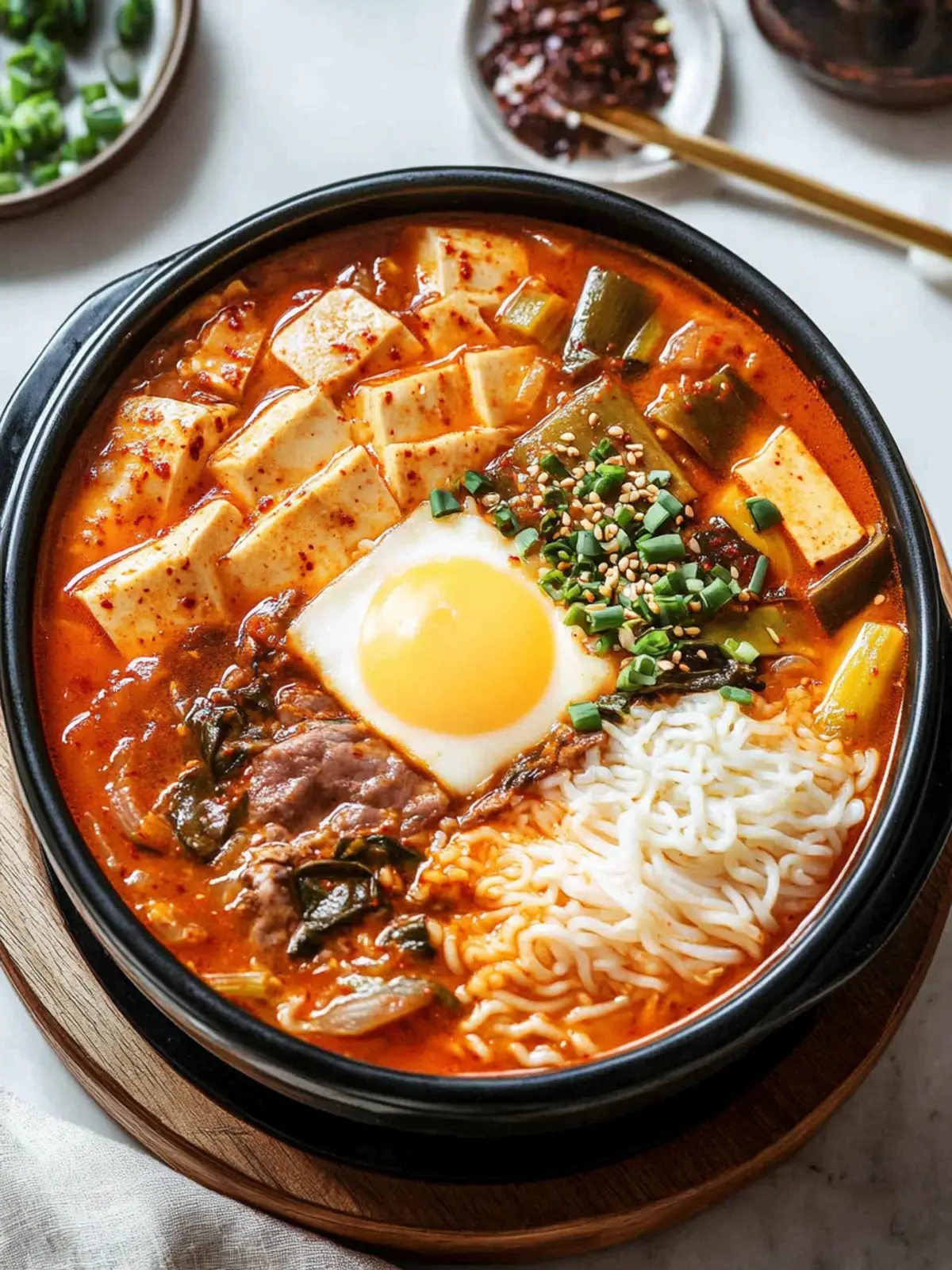
As the chill in the air whispers the arrival of cooler months, there’s nothing quite like gathering around a steamy pot of Korean Army Stew, or Budae Jjigae, to chase away those autumn blues. I first discovered this hearty dish during a cozy dinner with friends, where the vibrant flavors danced like the flickering candlelight around the table. With every spoonful, the smoky warmth of Spam and savory spices wrapped around my senses, instantly transporting me to a bustling Korean street market on a chilly evening.
What I love most about this dish is its incredible adaptability. Packed with flavor, it invites you to throw in whatever leftovers you have in the fridge, from hot dogs to veggies, creating a comforting meal that never feels routine. Plus, it’s a perfect weeknight solution when I need to whip up something delicious in just 30 minutes. So, let’s dive into this delightful recipe that’s not only a feast for the taste buds but also a wonderful way to bring friends and family together!

Why is Korean Army Stew so beloved?
Comforting, Hearty Delight: This dish brings warmth and comfort to chilly days, making it an ideal choice for gatherings or cozy dinners.
Flavor Explosion: The bold combination of gochugaru, kimchi, and savory meats creates a mouthwatering taste experience that elevates your meal.
Customizable Goodness: Feel free to mix in any leftover proteins or veggies, ensuring every bowl is a unique flavor adventure.
Quick and Easy: With just 30 minutes from prep to plate, this recipe is perfect for busy weeknights or spontaneous get-togethers.
Crowd-Pleasing Favorite: Everyone from family to friends will adore this delicious stew, sparking conversations and smiles at your dinner table.
To make your meal extra comforting, serve it with some warm steamed rice!
Korean Army Stew Ingredients
For the Sauce
• Gochugaru – Korean red chili pepper flakes that infuse the stew with a smoky heat.
• Gochujang – This Korean red chili pepper paste adds depth and a touch of sweetness.
• Soy Sauce – Provides savory umami flavors that enhance the overall taste.
• Fish Sauce – A little goes a long way; it adds a complex saltiness to the broth.
• Rice Wine Mirin – A touch of sweetness balances the spice and saltiness.
• Sugar – Helps to round out the flavors and adds a hint of sweetness.
• Black Pepper – A dash of this spice brings warmth and complements the other flavors.
• Garlic – Minced, it delivers aromatic goodness and boosts flavor.
• Chicken Stock – This forms the rich base of the stew, making it hearty.
For the Stew
• Kimchi – Chopped kimchi adds a tangy punch and vibrant flavor.
• Spam – Sliced into thick pieces, it brings a savory richness typical in Korean Army Stew.
• Hotdogs – Cut into quarter-inch slices, they provide a fun, nostalgic twist.
• Bacon or Pork Belly – Adds a crispy texture and smoky flavor to the mix.
• Tofu – Use medium firm tofu for a protein punch and smooth texture.
• Onion – Thinly sliced, it adds sweetness and depth when cooked.
• Napa Cabbage – This vegetable adds crunch and absorbs the flavorful broth beautifully.
• Baked Beans – A delightful surprise that contributes sweetness to balance the dish.
• Enoki Mushrooms – These add a delicate texture and earthiness to the stew.
• Shiitake Mushrooms – Their deep flavor enriches the overall taste profile.
• Green Onions – Sliced diagonally, they provide a grassy freshness as a garnish.
• Rice Cake – Adds chewiness; soak it in water for 15 minutes if frozen.
• Ramen Noodles – Perfect for soaking up the flavors and adding heartiness.
• American Cheese – Melts deliciously into the stew, giving it an indulgent creaminess.
• Chicken Stock, Anchovy, or Beef Broth – Choose whichever broth you prefer for depth in flavor.
To Serve
• White Rice – A must-have side to scoop up all the delicious stew!
Craft your own love-filled Korean Army Stew and enjoy a cozy evening with family and friends!
How to Make Korean Army Stew
-
Mix the Sauce
In a medium mixing bowl, combine the gochugaru, gochujang, soy sauce, fish sauce, rice wine, sugar, black pepper, minced garlic, and chicken stock. Stir until everything is well combined and set aside. -
Prep Ingredients
Soak the frozen rice cakes in water for 15 minutes if using. Slice the Spam, hotdogs, bacon, and tofu into 1/4 inch pieces. Chop the napa cabbage into bite-sized pieces and thinly slice the onion and green onions. Remove the stems from the mushrooms. -
Cook the Base
In a large shallow pot or braiser, add the kimchi, Spam, hotdog, bacon, tofu, onion, baked beans, and mushrooms. Pour in 4 cups of chicken stock and gently pour the seasoning sauce in the center. Cover and cook on medium-high heat until the stock begins to boil. -
Add Noodles and Cheese
Stir in the ramen, soaked rice cakes, green onions, and cheese slices. Continue cooking uncovered for another 2-3 minutes or until the noodles are soft and the cheese is melted. -
Serve
Ladle the hearty stew into bowls and serve with warm steamed white rice on the side for a complete, comforting meal.
Optional: Garnish with radish sprouts for an extra burst of flavor.
Exact quantities are listed in the recipe card below.
Korean Army Stew Variations
Feel free to make this delightful stew your own by adding unique twists and substitutions!
-
Veggie-Packed: Swap in your favorite seasonal vegetables like zucchini or bell peppers for added nutrients and color.
-
Meat-Free: Use plant-based sausage or seitan to create a vegetarian version that remains hearty and satisfying.
-
Spicy Kick: Add sliced jalapeños or a dash of chili oil to amp up the heat for those who crave a fiery twist.
-
Cheesy Goodness: Try a different cheese, like pepper jack or mozzarella, for a melty and flavorful alternative to American cheese.
-
Broth Switch-Up: Experiment with seafood stock for an umami-packed flavor or coconut milk for added creaminess and richness.
-
Noodle Variety: Swap ramen for udon or soba noodles if you prefer thicker noodles or want a change in texture.
-
Nutty Flair: Drizzle with sesame oil before serving to add a nutty aroma and extra depth to your dish.
-
Herb Boost: Garnish with fresh cilantro or basil instead of green onions for a refreshing herbal note that brightens each bite.
How to Store and Freeze Korean Army Stew
Room Temperature: Korean Army Stew is best enjoyed fresh, but you can leave it out for up to 2 hours if serving.
Fridge: Store leftovers in an airtight container in the fridge for up to 3 days. Reheat thoroughly before serving.
Freezer: If you have extra stew, freeze it in airtight containers for up to 3 months. Thaw in the fridge overnight before reheating on the stove.
Reheating: Gently reheat on the stovetop, adding a splash of broth or water to restore moisture and flavor. Enjoy your comforting Korean Army Stew!
What to Serve with Korean Army Stew?
Comforting and delightful, a warm bowl of stew opens the door to a symphony of flavors just waiting to be paired!
- Steamed White Rice: The classic companion to soak up every flavorful drop of the stew, bringing a satisfying balance to each bite.
- Kimchi: A side of fresh kimchi adds extra crunch and tang, amplifying the stew’s spicy notes while honoring its Korean roots.
- Scallion Pancakes: These crispy, savory pancakes offer a delightful contrast to the stew, making them an irresistible finger food alongside each warm spoonful.
- Savory Pickled Radishes: Their crunchy tartness cuts through the stew’s heartiness, cleansing the palate and brightening up your meal.
- Garlic Bread: For an unexpected twist, crispy garlic bread provides a buttery crunch that pairs beautifully with the rich broth.
- Cold Beer: A refreshing lager can enhance the stew’s spiciness, making for a lively and enjoyable dining experience.
- Fruit Salad: A light, refreshing fruit salad with citrus notes can cleanse your palate and add a sweet contrast to the stew’s savory goodness.
- Asian Pears: Sliced Asian pears bring a crunchy sweetness; their crisp texture complements the spicy warmth of the Korean Army Stew wonderfully.
- Mango Sticky Rice: For a sweet finish, this dessert combines the sticky goodness of rice with the tropical sweetness of mango, creating a lovely finale to your meal.
Make Ahead Options
These Korean Army Stew ingredients are perfect for meal prep, making your weeknight cooking so much easier! You can prepare the sauce by mixing all the sauce ingredients (gochugaru, gochujang, soy sauce, fish sauce, rice wine, sugar, black pepper, minced garlic, and chicken stock) up to 24 hours in advance; just store it in an airtight container in the refrigerator to maintain its bold flavors. Additionally, slice the Spam, hotdogs, bacon, tofu, and prepare the vegetables (onion, napa cabbage, and mushrooms) 1-3 days ahead — this will save a ton of time on busy evenings! When you’re ready to cook, simply combine everything in a pot and follow the remaining instructions. The result will be just as delicious, helping you create a comforting meal with minimal effort!
Expert Tips for Korean Army Stew
• Prep Like a Pro: Gather all your ingredients before starting. This will streamline the process and ensure you don’t miss any essential components.
• Adjust Spice Level: If you’re sensitive to spice, start with less gochugaru and gochujang. You can always add more to your Korean Army Stew as it cooks to find your perfect balance.
• Don’t Overcook: Keep an eye on the ramen and rice cakes; overcooking can make them mushy. Test them with a fork to maintain the right texture.
• Layer Flavors: For maximum depth, add ingredients like kimchi and mushrooms gradually, letting each layer simmer before adding the next. This enhances the overall flavor profile of your stew.
• Use Leftovers: Feel free to toss in any leftover meats or vegetables. Korean Army Stew is all about improvisation, making it a perfect dish to clear out the fridge while enjoying a rich meal.

Korean Army Stew Recipe FAQs
What type of kimchi is best for Korean Army Stew?
Absolutely! You can use any kind of kimchi you love. For a punchier flavor, opt for aged kimchi, which is tangier and holds up beautifully in the stew. If you’re looking for a milder taste, fresh kimchi will add a nice crunch without overwhelming the dish.
How do I store leftover Korean Army Stew?
Very easy! Store any leftover Korean Army Stew in an airtight container in the fridge for up to 3 days. Be sure to let it cool completely before sealing it up to maintain its freshness. When you’re ready to enjoy it again, simply reheat on the stovetop, giving it a quick stir to redistribute the flavors.
Can I freeze Korean Army Stew?
Definitely! If you have leftovers or want to make a big batch for later, freeze the stew in airtight containers for up to 3 months. When you’re ready to enjoy it, thaw it in the fridge overnight. To reheat, place it in a pot on the stove; add a splash of broth or water to keep it from drying out, and gently warm it over low heat.
What can I use instead of Spam in this recipe?
The more, the merrier! If you’re looking to swap out Spam, consider using diced chicken, turkey, or even firm tofu for a vegetarian version. Just remember that the flavor might vary a bit, but you’ll still end up with a delicious stew that brings comfort to your table!
What should I do if my noodles are overcooked in the stew?
Oh no! If your noodles end up a little mushy, don’t fret! There’s still hope. You can add a bit more chicken stock or water to the pot to help revive the overall broth. Another trick is to serve the stew over a bed of freshly cooked rice to balance the textures and enhance the experience.
Is Korean Army Stew safe for pets?
Absolutely not! While some ingredients may be harmless, others can be harmful to pets. Ingredients like garlic, onions, and certain spices should definitely be avoided, as they can be toxic to animals. It’s best to keep this spicy comfort food just for you and your family!

Korean Army Stew: A Spicy Comfort Meal You’ll Love!
Ingredients
Equipment
Method
- In a medium mixing bowl, combine the gochugaru, gochujang, soy sauce, fish sauce, rice wine, sugar, black pepper, minced garlic, and chicken stock. Stir until well combined and set aside.
- Soak the frozen rice cakes in water for 15 minutes if using. Slice the Spam, hotdogs, bacon, and tofu into 1/4 inch pieces. Chop the napa cabbage into bite-sized pieces and thinly slice the onion and green onions. Remove the stems from the mushrooms.
- In a large shallow pot or braiser, add the kimchi, Spam, hotdog, bacon, tofu, onion, baked beans, and mushrooms. Pour in 4 cups of chicken stock and gently pour the seasoning sauce in the center. Cover and cook on medium-high heat until the stock begins to boil.
- Stir in the ramen, soaked rice cakes, green onions, and cheese slices. Continue cooking uncovered for another 2-3 minutes or until the noodles are soft and the cheese is melted.
- Ladle the hearty stew into bowls and serve with warm steamed white rice on the side for a complete, comforting meal.