
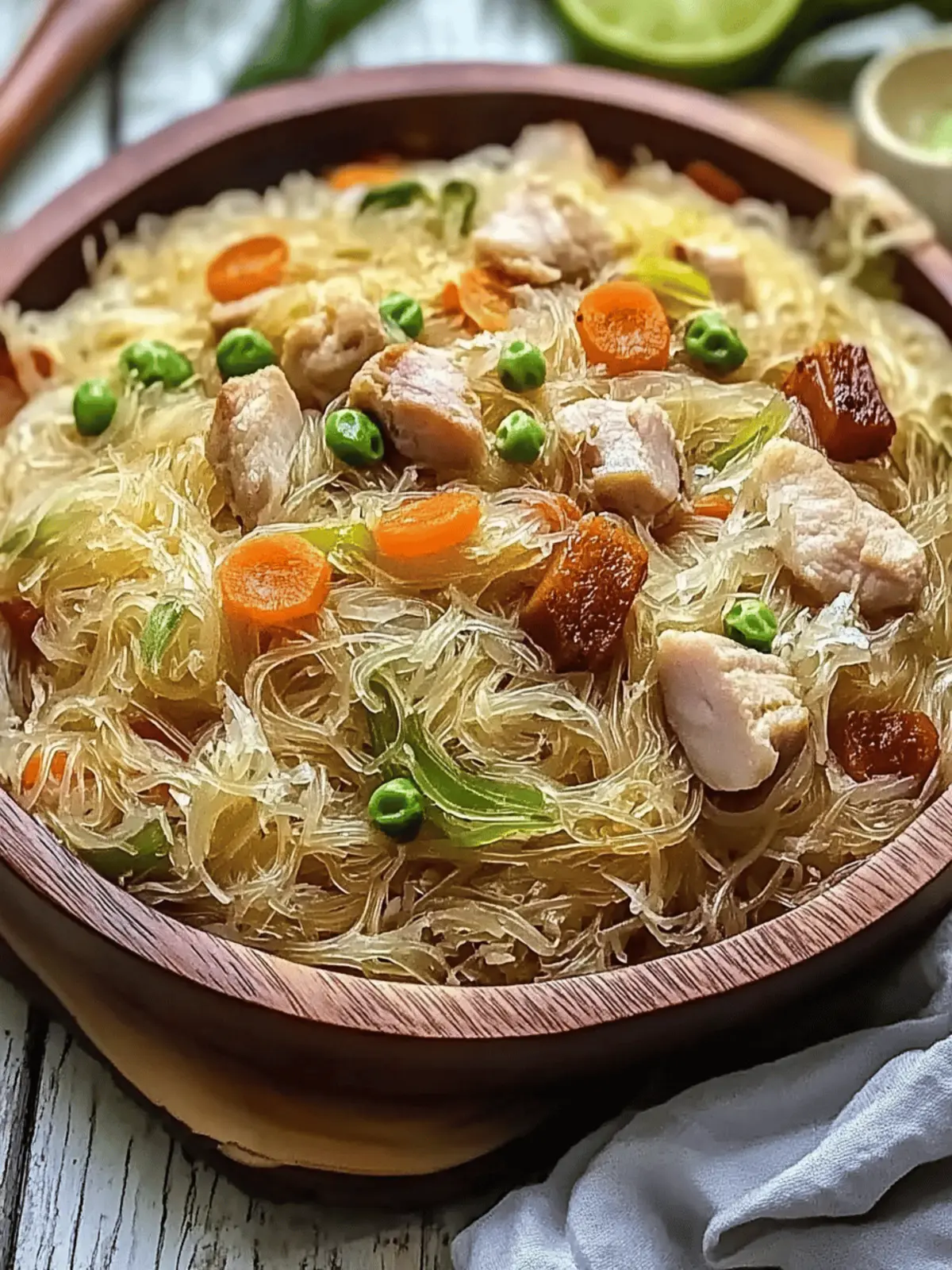
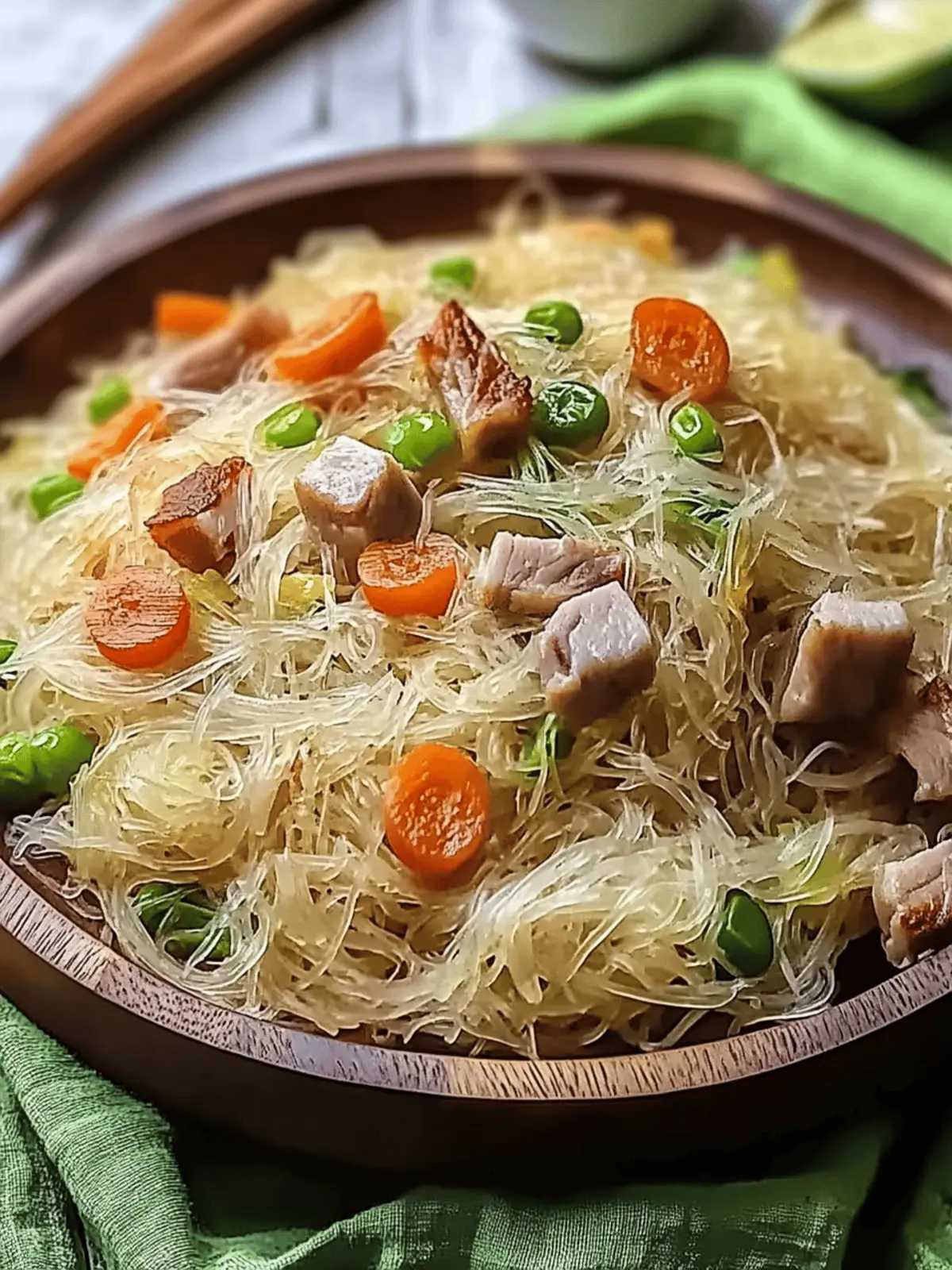
When the sun starts to set and the aroma of something savory begins to waft through the air, it feels like an invitation to gather around the table. I can still recall the first time I tasted Pancit Bihon—my friend’s family had prepared it for a festive celebration, and it was love at first bite. This vibrant dish, with its delicate rice noodles and perfectly sautéed vegetables, brings a beautiful burst of sweet and savory flavors that dance on your palate.
Pancit Bihon isn’t just a meal; it’s a story—one that elegantly reflects the warmth of Filipino cuisine and the joy of sharing good food with loved ones. Ideal for potlucks, casual dinners, or special occasions, this dish offers incredible versatility, allowing you to customize it to suit your taste. With its easy preparation and crowd-pleasing nature, you’ll find that this comforting noodle dish quickly becomes a favorite in your home. So grab your ingredients, and let’s bring a taste of the Philippines to your dinner table!

Why is Pancit Bihon a beloved dish?
Warmth of Tradition: This dish is steeped in cultural significance, often served at celebrations to symbolize good fortune.
Quick and Easy: With its straightforward cooking process, you can whip it up in no time, even on busy weekdays.
Customizable Delight: Feel free to mix and match proteins and vegetables based on what you love—perfect for picky eaters!
Crowd-Pleasing Flavor: The harmonious blend of textures and flavors makes it a hit at family gatherings and potlucks.
Nutrient-Packed: Packed with veggies and lean protein, it’s a wholesome meal that doesn’t skimp on taste.
Comforting Homey Dish: Enjoy the comforting goodness that brings everyone together; it truly feels like a warm hug on a plate!
Pancit Bihon Ingredients
For the Noodles
• Bihon (rice stick) noodles – The backbone of this dish, these noodles soak up all the delicious flavors beautifully.
For the Broth Mixture
• Chicken broth – Adds robust depth and umami; swap with vegetable broth for a vegetarian twist.
• Oyster sauce – Infuses a savory burst; use mushroom sauce as a vegetarian alternative.
• Sugar – Balances the savory notes; feel free to adjust based on taste.
• Light soy sauce – Delivers essential saltiness; low-sodium soy sauce can make it a healthier option.
For the Protein
• Chinese sausages – Contributes smokiness and subtle sweetness; substitute with regular pork or omit for vegetarian.
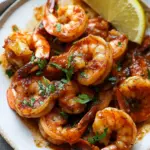
• Jumbo shrimp – Provides a lovely ocean flavor; can be replaced with chicken, tofu, or additional vegetables for a different texture.
For Sautéing
• Neutral oil (canola or avocado) – Perfect for sautéing your ingredients; any light oil will do.
For the Vegetables
• Celery, carrots, snow peas – Adds vibrant crunch; substitute with your favorite veggies for a custom touch.
• Garlic – A must-have aromatic; fresh garlic works best for maximum flavor.
• Spanish onion – Sweet and flavorful; yellow onion is a suitable substitute.
• Chopped cabbage – Offers volume and nutrition; bok choy or other greens can be great alternatives.
For Seasoning
• Kosher salt & black pepper – Essential for seasoning; adjust to your preference.
For the Fresh Touch
• Juice of 1 lemon – Brightens the dish beautifully; calamansi juice also makes for a lovely twist.
How to Make Pancit Bihon
-
Soak the Noodles: Begin by soaking the bihon noodles in warm water for about 20 minutes until they soften. This step is essential for achieving the perfect texture. Drain and set aside when ready.
-
Mix the Broth: In a separate bowl, whisk together the chicken broth, oyster sauce, sugar, and light soy sauce. This flavorful mixture will be the soul of your Pancit Bihon, so take a moment to combine it well and set it aside.
-
Cook the Sausage: Heat your dry wok and add the Chinese sausage, cooking it until browned. The sizzling sound is music to any cook’s ears! Once done, remove the sausage and set it aside.
-
Sauté the Shrimp: In the same wok, add a splash of neutral oil and sauté the seasoned jumbo shrimp until they are just cooked through. They should turn a lovely pink color. Remove from the wok and set aside.
-
Stir-Fry the Vegetables: Now, it’s time to add more color! Stir-fry your celery, carrots, and snow peas in the wok for about 3 minutes until they are tender-crisp. Remove them and set aside with the shrimp.
-
Sauté Aromatics: In that same flavorful wok, add more oil if needed, and sauté the garlic and onions until softened and fragrant. Next, pour in the broth mixture and toss in the chopped cabbage, bringing everything to a gentle boil.
-
Combine with Noodles: Carefully add the soaked bihon noodles to the boiling broth mixture. Press them into the liquid and let them simmer for about 8 minutes without stirring. This allows the noodles to absorb all the heavenly flavors.
-
Finish with Proteins and Seasoning: Gently fold in your cooked sausage, shrimp, and sautéed vegetables. Season with kosher salt and black pepper to taste, then finish off with the fresh lemon juice to brighten the dish. Serve hot and enjoy!
Optional: Garnish with fresh lime or calamansi wedges for an extra pop of citrus.
Exact quantities are listed in the recipe card below.
Pancit Bihon Variations & Substitutions
Feel free to make this dish your own by exploring exciting alternatives and additions, enhancing the flavors and textures!
- Dairy-Free: Use coconut aminos instead of soy sauce for a mild, slightly sweet flavor without dairy.
- Gluten-Free: Swap bihon noodles with rice vermicelli to ensure the dish remains gluten-free and just as delicious.
- Vegetable Boost: Add bok choy or bell peppers for extra crunch and color, making your dish even more vibrant.
- Protein Alternatives: Substitute shrimp with grilled tofu or seared chicken for a different take on this classic.
- Heat Level: For those who crave a kick, toss in sliced jalapeños or a dash of chili garlic sauce to spice things up.
- Umami Kick: Sprinkle in some chopped shiitake mushrooms to deepen the savory flavor profile.
- Sweet Twist: Incorporate a bit of pineapple for a delightful sweet contrast to the savory elements of the dish.
- Noodle Texture: Try using thicker rice noodles if you prefer a chewier texture, bringing a unique mouthfeel to your Pancit Bihon.
What to Serve with Pancit Bihon?
When it comes to crafting the ultimate dining experience, the right accompaniments can elevate your meal to a new level of delight.
-
Lemon or Calamansi Wedges: These bright, citrusy garnishes enhance the flavors of your Pancit Bihon, adding a zesty kick that complements the savory noodles beautifully.
-
Garlic Fried Rice: The fragrant, slightly crispy rice pairs perfectly with the richness of the stir-fried noodles, soaking up the flavors and adding a satisfying texture to your meal.
-
Filipino Lumpia: These crispy spring rolls filled with seasoned vegetables and meats provide a delightful crunch, making them a popular appetizer that perfectly contrasts Pancit Bihon’s chewy noodles.
-
Steamed Broccoli or Bok Choy: Lightly steamed greens add freshness and color to your plate while their mild taste balances the bold flavors of the stir-fry.
-
Sinigang Soup: This tangy, savory Filipino soup offers a refreshing contrast and adds a comforting warmth to the overall meal, making it ideal for sharing with family.
-
Mango Salad: A sweet and tangy salad with ripe mangoes and crisp vegetables creates a refreshing bite that contrasts beautifully with the richness of Pancit Bihon.
Indulge in these harmonious pairings, and together with your flavorful Pancit Bihon, they’ll create a feast that’s sure to be remembered!
Expert Tips for Perfect Pancit Bihon
- Soaking is Key: Ensure the bihon noodles are fully soaked for the right texture; under-soaked noodles can end up tough.
- Balance the Flavors: Adjust the saltiness and sweetness according to your taste preferences for a perfectly balanced Pancit Bihon.
- Simmer Gently: Avoid stirring the noodles immediately after adding; this allows them to absorb the savory broth without breaking apart.
- Veggie Swap: Feel free to substitute vegetables based on seasonal availability or your family’s favorites to keep things interesting.
- Make Ahead: Leftovers taste even better the next day, as flavors meld together beautifully; store in the fridge for up to 3 days.
- Safe Cooking: Ensure shrimp and meat are fully cooked before mixing them with the noodles to maintain food safety.
Make Ahead Options
Pancit Bihon is a fantastic choice for meal prep, saving you time on busy weeknights! You can soak the bihon noodles and prepare the broth mixture (chicken broth, oyster sauce, sugar, and soy sauce) up to 24 hours in advance; simply store them separately in the refrigerator. You can also cook the shrimp and sauté any vegetables (like celery and carrots) ahead of time. To maintain quality, refrigerate everything in airtight containers, which helps prevent the noodles from sticking together. When you’re ready to serve, reheat the broth mixture, add the soaked noodles, and finish by gently folding in the precooked ingredients; you’ll have a delicious dish ready in no time!
How to Store and Freeze Pancit Bihon
- Fridge: Store leftovers in an airtight container in the refrigerator for up to 3 days. The flavors will deepen as they sit, making each bite even better!
- Freezer: If you’d like to make Pancit Bihon ahead of time, freeze it in a freezer-safe container for up to 2 months. Thaw in the fridge before reheating.
- Reheating: Gently reheat in a skillet over medium-low heat, adding a splash of broth or water to keep the noodles moist and flavorful.
- Avoid Over-Soaking: When storing, avoid soaking the noodles before cooking as they may become mushy when reheated; always soak fresh for the best results.
Pancit Bihon Recipe FAQs
What type of noodles should I use for Pancit Bihon?
Absolutely! I recommend using bihon (rice stick) noodles, as they are perfect for absorbing the savory flavors in this dish. If you can’t find bihon, you can substitute with other thin rice noodles. Make sure to soak them in warm water for about 20 minutes until softened to achieve the ideal texture!
How should I store leftovers of Pancit Bihon?
Leftovers can be stored in an airtight container in the refrigerator for up to 3 days. The flavors often improve overnight, giving you a delicious meal ready for the next day! Just remember to gently reheat on the stovetop with a splash of broth or water to keep those noodles flavorful and moist.
Can I freeze Pancit Bihon? If so, how?
Yes! You can freeze Pancit Bihon in a freezer-safe container for up to 2 months. Be sure to let it cool completely first. To thaw, place it in the fridge overnight, then gently reheat it in a skillet over medium-low heat. Add a little broth or water as needed to retain moisture while reheating.
What should I do if my noodles are too mushy?
Very! If your noodles end up mushy, it could be that they were soaked for too long or were cooked too hard in the broth. Next time, only soak them for about 20 minutes and keep a close eye on them while they simmer in the sauce—try not to stir them too much. This will create a better texture, giving you that perfect bite!
Are there any dietary considerations for Pancit Bihon?
Absolutely! Pancit Bihon can be adjusted to accommodate various dietary needs. For a gluten-free option, make sure to use gluten-free soy sauce and check your oyster sauce. Vegetarians can omit the Chinese sausage and shrimp, swapping them with tofu or additional vegetables. Always ensure to check ingredient labels for allergens!
What kind of vegetables can I use?
The more the merrier! This dish is flexible, so you can swap in any vegetables you love. Celery, carrots, and snow peas are traditional, but feel free to use bell peppers, bok choy, or broccoli. Just be sure to use fresh produce for the best crunch and flavor in your Pancit Bihon.
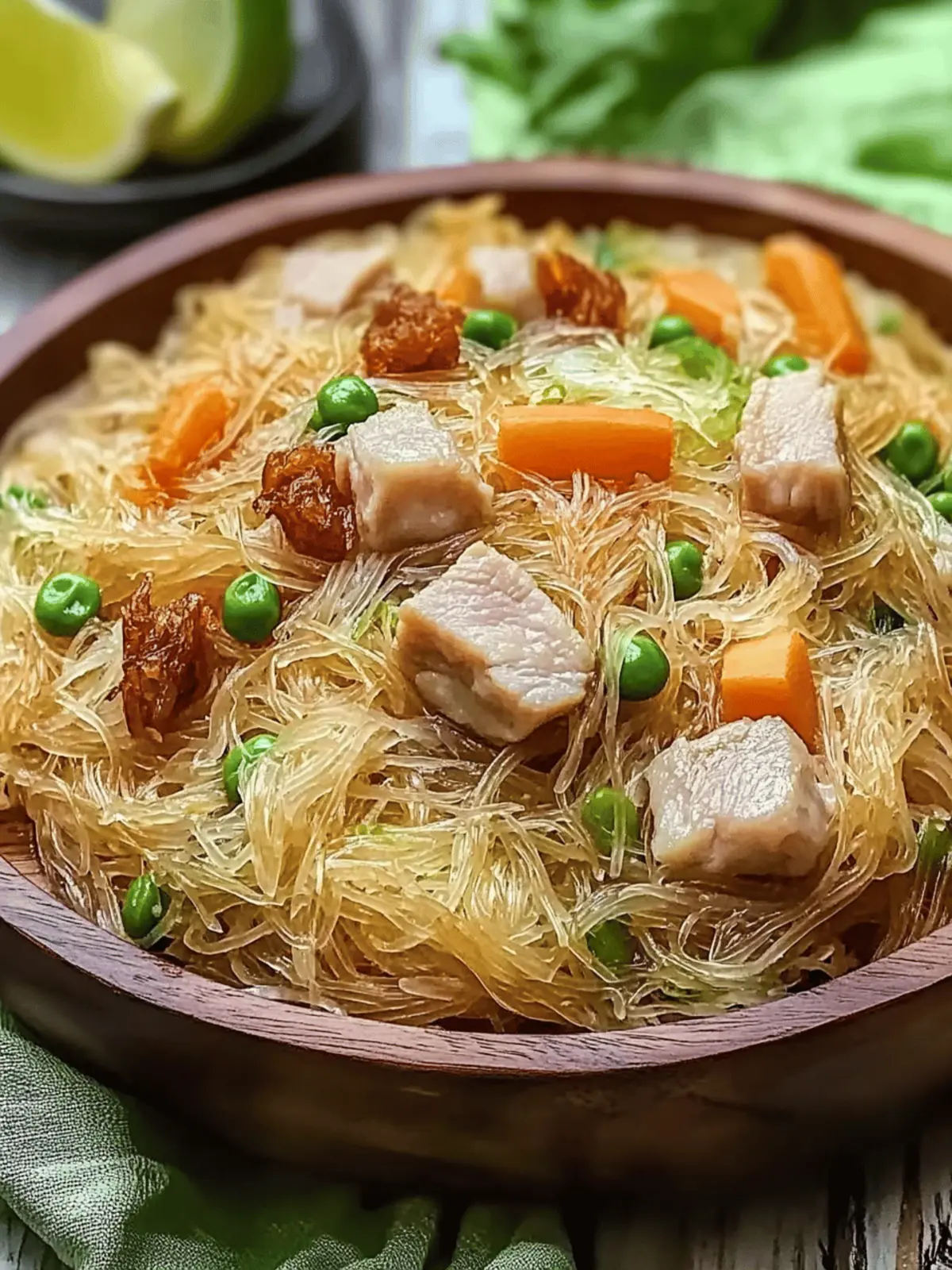
Delicious Pancit Bihon: Your New Favorite Comfort Food!
Ingredients
Equipment
Method
- Soak the Bihon noodles in warm water for about 20 minutes until they soften. Drain and set aside.
- In a separate bowl, whisk together the chicken broth, oyster sauce, sugar, and light soy sauce. Set aside.
- Heat your dry wok and add the Chinese sausage, cooking it until browned. Remove and set aside.
- In the same wok, add a splash of neutral oil and sauté the seasoned jumbo shrimp until just cooked through. Remove and set aside.
- Stir-fry your celery, carrots, and snow peas in the wok for about 3 minutes until tender-crisp. Remove and set aside.
- Sauté garlic and onions in the wok until softened and fragrant. Pour in the broth mixture and add chopped cabbage.
- Add the soaked Bihon noodles to the boiling broth mixture. Let them simmer for about 8 minutes without stirring.
- Gently fold in cooked sausage, shrimp, and vegetables. Season with salt and pepper, then finish with lemon juice. Serve hot.