
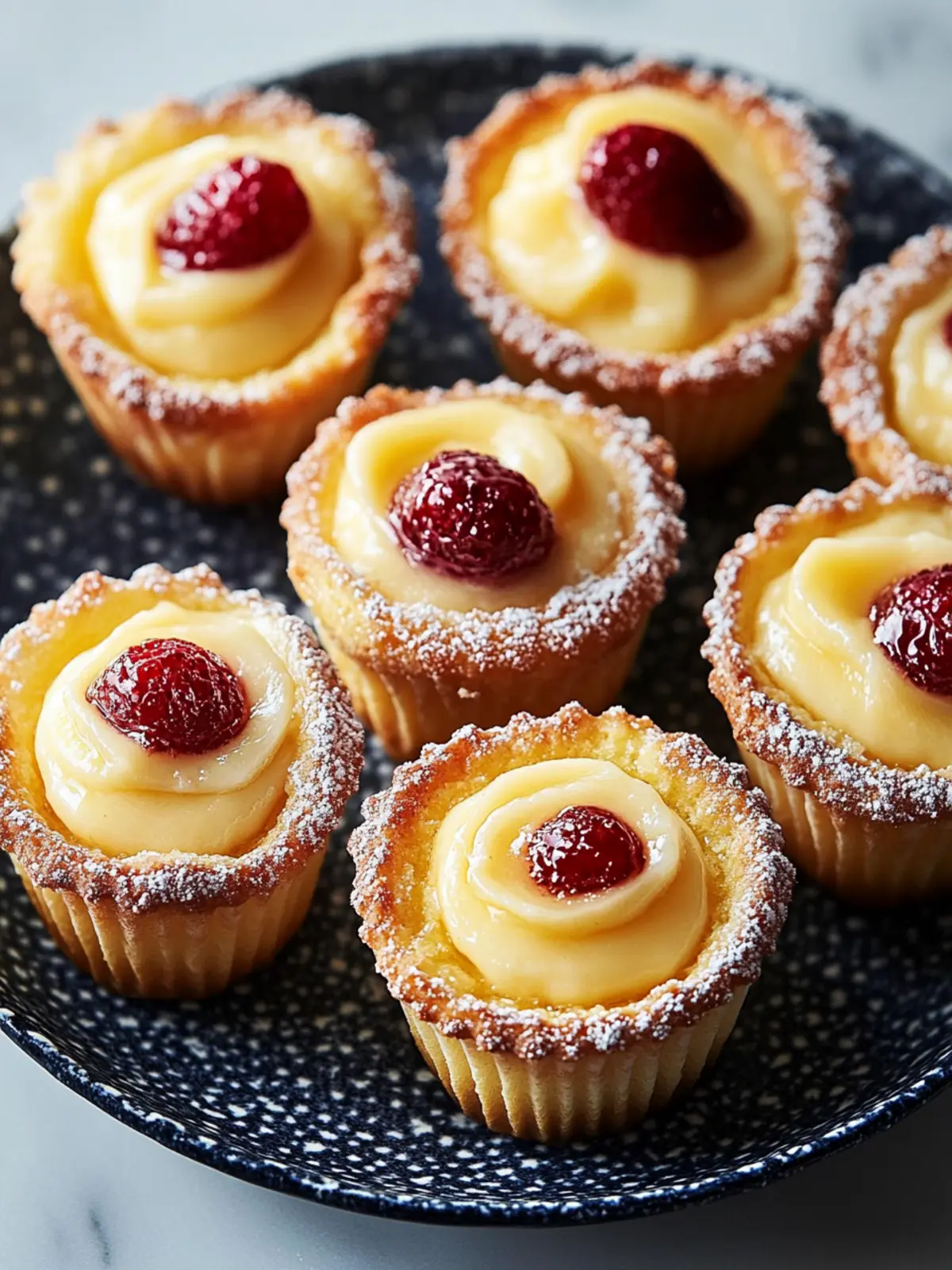
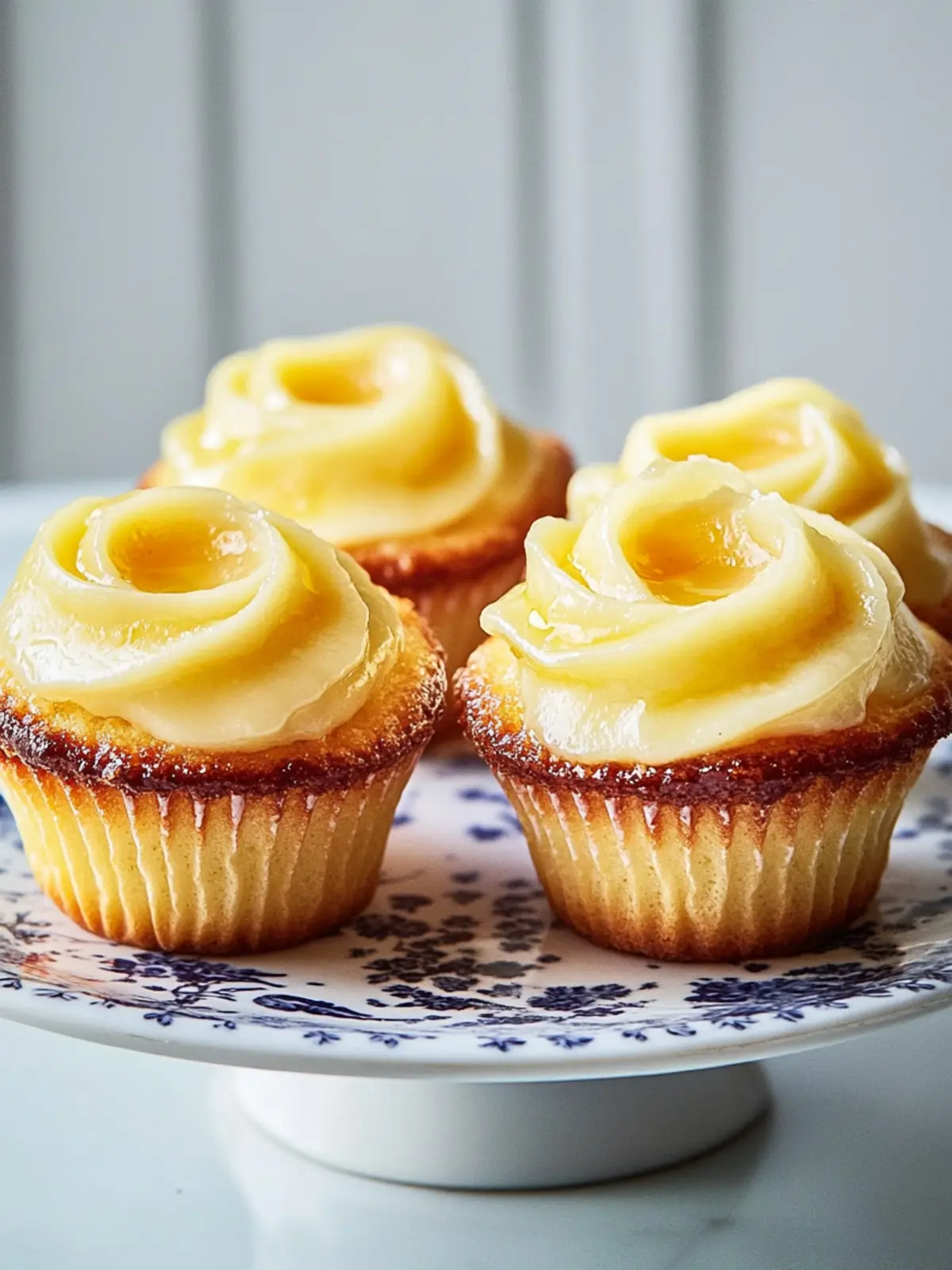
When the sun dips low in the sky and the scent of baked goods wafts through my kitchen, I find myself reaching for a beloved family recipe: Portuguese Custard Cupcakes, or queijadas. Picture this: tender cupcakes with a luscious custard center, kissed with lemon zest that adds just the right amount of brightness. These treats are not only a staple in Portuguese cuisine but the kind of dessert that transforms any gathering into a celebration.
I remember the first time I shared these little delights at a potluck; they disappeared nearly as fast as I could set them down. Their combination of chewy edges and creamy interiors makes them utterly irresistible, and the best part? They come together effortlessly, allowing you to spend more time enjoying life and less time in the kitchen. With options for dairy-free substitutions and gluten-free flour, everyone can indulge. So let’s roll up our sleeves and dive into the world of queijadas—your taste buds will thank you!

Why are Portuguese Custard Cupcakes so beloved?
Delightfully Unique: These queijadas offer a special twist on traditional desserts, pairing a chewy exterior with a creamy custard center.
Easy to Make: The straightforward process means anyone can whip these up with minimal fuss, making them perfect for busy bakers!
Versatile Options: With simple swaps like coconut milk for a dairy-free version, everyone can enjoy their sweetness.
A Flavor Burst: The hint of lemon zest adds an uplifting freshness, making each bite feel like a celebration.
Shareable Joy: They’re an instant hit at gatherings, bringing people together over a shared love for delicious treats!
Portuguese Custard Cupcake Ingredients
• Here’s what you need to create these delightful treats!
For the Batter
- Butter – Adds richness and moisture; can replace with margarine for a dairy-free option.
- Whole Milk – Provides creaminess and structure; substitute with non-dairy milk like coconut or almond for a dairy-free version.
- Flour – Acts as a thickening agent; feel free to swap in gluten-free flour for a gluten-free alternative.
- Baking Powder – Optional; can help lift the cupcakes, although traditional recipes may omit this for a denser texture.
- Eggs – Essential for binding and achieving that custard-like texture; no substitutes will match the consistency you’d get with eggs.
- Sugar – Brings sweetness; can be adjusted down for those who prefer a lighter taste.
- Vanilla Extract – Enhances the flavor profile, adding warmth; no substitute suggested for that rich taste.
- Lemon Zest – Brightens the flavor profile; can be omitted if you prefer a more straightforward cupcake experience.
How to Make Portuguese Custard Cupcakes
-
Preheat your oven to 350°F (175°C). This will ensure your cupcakes start baking at the right temperature for the perfect rise.
-
Whisk together the eggs and sugar in a large bowl until they’re well combined, forming a slightly frothy mixture that sets the sweet foundation for your cupcakes.
-
Melt the butter and combine it with the whole milk. Allow it to cool slightly before adding to the egg mixture—this step keeps your cupcakes from scrambling!
-
Gradually add the flour and baking powder (if using), whisking until the batter is smooth and well combined, ensuring there are no lumps for that creamy custard texture.
-
Stir in the vanilla extract and lemon zest, embracing that delightful zesty aroma. It’s the little touch that makes all the difference!
-
Pour the batter into a greased standard muffin pan, filling each cup about 3/4 full. A scoop or ladle works wonders for even distribution.
-
Bake for 25-30 minutes, or until the edges are golden brown, and the tops are set but still slightly jiggly in the center; this indicates the creamy interior you want!
-
Cool in the pan for 10 minutes before transferring them to a wire rack to cool completely, allowing the flavors to settle and intensify.
Optional: Dust with powdered sugar before serving for an elegant touch.
Exact quantities are listed in the recipe card below.
How to Store and Freeze Portuguese Custard Cupcakes
-
Fridge: Keep your queijadas in an airtight container for up to 7 days. This ensures they stay moist and delicious, ready for your next sweet craving!
-
Freezer: For longer storage, freeze the cupcakes in a freezer-safe container or bag for up to 2 months. Thaw in the fridge overnight before indulging.
-
Reheating: To enjoy them warm, preheat your oven to 350°F (175°C) and heat the cupcakes for about 5-10 minutes. This will revive their delightful custard center.
-
Serving Tip: Enjoy chilled for an extra refreshing treat! The creamy texture and citrusy flavor shine tantalizingly when served cold.
Expert Tips for Portuguese Custard Cupcakes
-
Ingredient Temperature: Start with room temperature eggs and milk to ensure the batter blends smoothly, contributing to a creamy custard texture in your Portuguese Custard Cupcakes.
-
Don’t Overmix: Whisk just until combined to avoid dense cupcakes. Overmixing can create tough edges instead of that lovely chewy texture.
-
Watch the Oven: Oven temperatures can vary, so keep an eye on your cupcakes. Look for golden edges and slightly jiggly centers to ensure they’re perfectly baked.
-
Cooling Time: Allow cooling in the pan briefly before transferring to a wire rack. This trick keeps the edges intact and makes for easier handling.
-
Flavor Variations: Feel free to experiment with different citrus zests or even spices like cinnamon for a unique twist, but keep the foundational ingredients the same for the best results.
-
Storage Tips: Keep unserved queijadas in an airtight container in the refrigerator to maintain their creamy texture and fresh taste. Enjoy within a week!
Make Ahead Options
Preparing these Portuguese Custard Cupcakes in advance is a fantastic way to save time and ensure you have a delightful treat ready whenever the craving strikes! You can mix the batter and refrigerate it for up to 24 hours before baking, which helps the flavors to meld together beautifully. To do this, simply follow the recipe steps up to pouring the batter into the muffin pan, then cover it tightly and store it in the fridge. When you’re ready to bake, pour the batter into the greased muffin pan and bake as directed. This method ensures your queijadas will be just as delicious, with that signature creamy custard texture, while freeing up your busy night!
Portuguese Custard Cupcake Variations
Embrace your inner chef and tailor these delightful queijadas to your taste preferences and dietary needs!
-
Dairy-Free: Substitute whole milk with coconut, almond, or oat milk to create a creamy, dairy-free alternative that retains richness.
-
Gluten-Free: Use a gluten-free flour blend to allow those with gluten sensitivities to savor these delightful treats without compromise.
-
Sweetness Adjustments: Reduce the sugar by a third for a lighter sweetness, perfect for those reducing their sugar intake while still keeping the flavor.
-
Citrus Swap: Replace lemon zest with orange or lime zest for a refreshing twist that brings a new flavor profile to these custard cupcakes.
-
Nutty Flavor: Add a sprinkle of almond or hazelnut meal into the batter for a subtle nutty taste that complements the creamy filling beautifully.
-
Spiced Delight: Incorporate a dash of cinnamon or nutmeg to the batter, infusing warm spices that create a cozy, comforting flavor in every bite.
-
Chocolate Lovers: Fold in chocolate chips or drizzle chocolate sauce on top for a decadent chocolate twist that pairs wonderfully with the custard.
-
Extra Fruity: Add a spoonful of fruit puree, like raspberry or mango, to the batter for an unexpected burst of flavor and vibrant color in every cupcake.
Feel free to mix and match these variations to find your perfect queijadas! The joy of baking is in making it your own.
What to Serve with Portuguese Custard Cupcakes?
When it’s time for a sweet treat, find the perfect pairings to elevate your delightful queijadas experience.
-
Fresh Berries: Juicy strawberries or raspberries provide a tart contrast, balancing the creamy sweetness of the cupcakes beautifully.
-
Whipped Cream: A dollop of fluffy whipped cream adds lightness and enhances the rich custard flavor, making for a decadent treat.
-
Chocolate Drizzle: A rich chocolate sauce drizzled over the queijadas brings an indulgent contrast that chocolate lovers can’t resist.
-
Iced Coffee: Sip on a chilled iced coffee for a refreshing kick that pairs harmoniously with the cupcakes’ sweetness, making for a delightful afternoon break.
-
Citrus Sorbet: A lemon or lime sorbet offers a bright, refreshing palate cleanser between bites, enhancing the lemon zest in the cupcakes.
-
Almond Biscotti: Crunchy almond biscotti provides a satisfying texture alongside the creamy queijadas, creating a delightful contrast in each bite.
-
Sparkling Water: Add some fizz to your dessert experience! Sparkling water with lemon or mint brings a refreshing lift after the rich sweetness of the cupcakes.
Portuguese Custard Cupcakes Recipe FAQs
How do I select the best ingredients for my Portuguese Custard Cupcakes?
Absolutely! For the best results, choose fresh eggs with bright yolks for a vibrant custard. When picking milk, look for whole milk or its non-dairy alternatives—aim for those with a creamier texture, like full-fat coconut or almond milk. Quality butter should be fresh without any off-smelling notes, and for the zest, select firm lemons with vibrant skin; they should feel heavy for their size.
What is the best way to store Portuguese Custard Cupcakes?
Very! After cooling completely, place your queijadas in an airtight container in the refrigerator, where they’ll stay fresh for up to 7 days. Make sure to separate layers with parchment paper to avoid sticking. If you prefer to extend their lifespan, consider freezing them (as detailed below).
How do I freeze my Portuguese Custard Cupcakes?
Of course! To freeze your queijadas, first ensure they are completely cooled. Then, wrap each cupcake individually in plastic wrap; this helps prevent freezer burn. Place the wrapped cupcakes in a freezer-safe bag or container, sealing it tightly. They can be frozen for up to 3 months—just remember to label the bag with the date! To enjoy, thaw them in the fridge overnight or at room temperature for a couple of hours.
What should I do if my cupcakes sink in the middle?
Oh no! If you notice sinking, it could mean the batter was overmixed, or the oven temperature was too low. To fix this, ensure you’re very gently mixing until just combined. It’s also best to preheat your oven fully before placing the cupcakes inside, as baking at the right temperature is crucial. However, a slight jiggle in the center is normal, so don’t worry too much as long as the edges are golden.
Are Portuguese Custard Cupcakes suitable for people with dietary restrictions?
Yes, indeed! To adapt this recipe for gluten-free diets, substitute regular flour with a gluten-free blend that has a similar structure. For those needing dairy-free options, coconut milk or almond milk works beautifully. Just remember that the egg is essential for the custard-like texture, so I wouldn’t recommend substituting it in this recipe. Always check for allergies with any zests or extracts used.
Can I serve Portuguese Custard Cupcakes warm or chilled?
Absolutely! These queijadas are delightful both warm and chilled. If you enjoy them warm, simply reheat in a preheated oven for about 5-10 minutes. If you prefer them chilled, pop them in the refrigerator for an hour or so—this enhances the smooth, creamy texture, especially after a meal on a hot day.
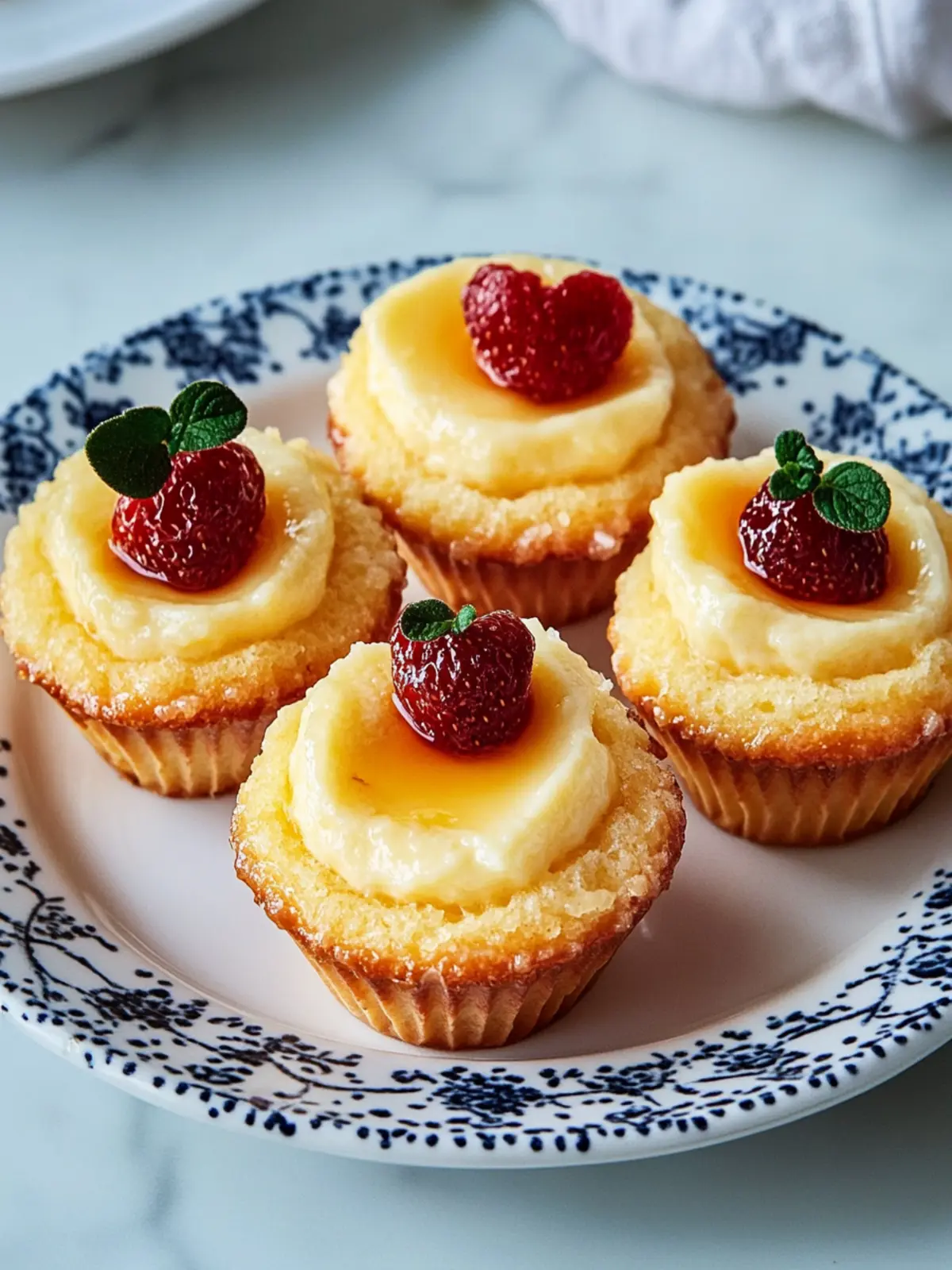
Delicious Portuguese Custard Cupcakes to Brighten Your Day
Ingredients
Equipment
Method
- Preheat your oven to 350°F (175°C).
- Whisk together the eggs and sugar in a large bowl until well combined.
- Melt the butter and combine it with the whole milk. Allow it to cool slightly before adding to the egg mixture.
- Gradually add the flour and baking powder (if using), whisking until smooth.
- Stir in the vanilla extract and lemon zest.
- Pour the batter into a greased muffin pan, filling each cup about 3/4 full.
- Bake for 25-30 minutes, or until the edges are golden brown.
- Cool in the pan for 10 minutes before transferring to a wire rack.