
As the sun begins to dip beyond the horizon, painting the sky with hues of orange and pink, there’s a satisfying comfort in preparing a Japanese Beef and Potato Stew—the beloved Nikujaga. The tender beef mingles with Yukon gold potatoes, while the sweetness of carrots adds a delightful balance, creating a dish that feels like a warm hug on a chilly evening.
I stumbled upon this simple yet heartwarming recipe during a busy week when I craved something hearty but didn’t want to reach for the takeout menu. With just a handful of ingredients—most of which I had lying around—I crafted a meal that turned my kitchen into a haven of mouthwatering aromas.
Not only is Nikujaga easy to make, but its rich, savory flavors have a knack for bringing everyone to the table. Whether it’s a weeknight dinner or a cozy gathering, this stew will surely impress without stressful preparations. So let’s dive into how to create this comforting masterpiece that effortlessly beats the monotony of fast food!
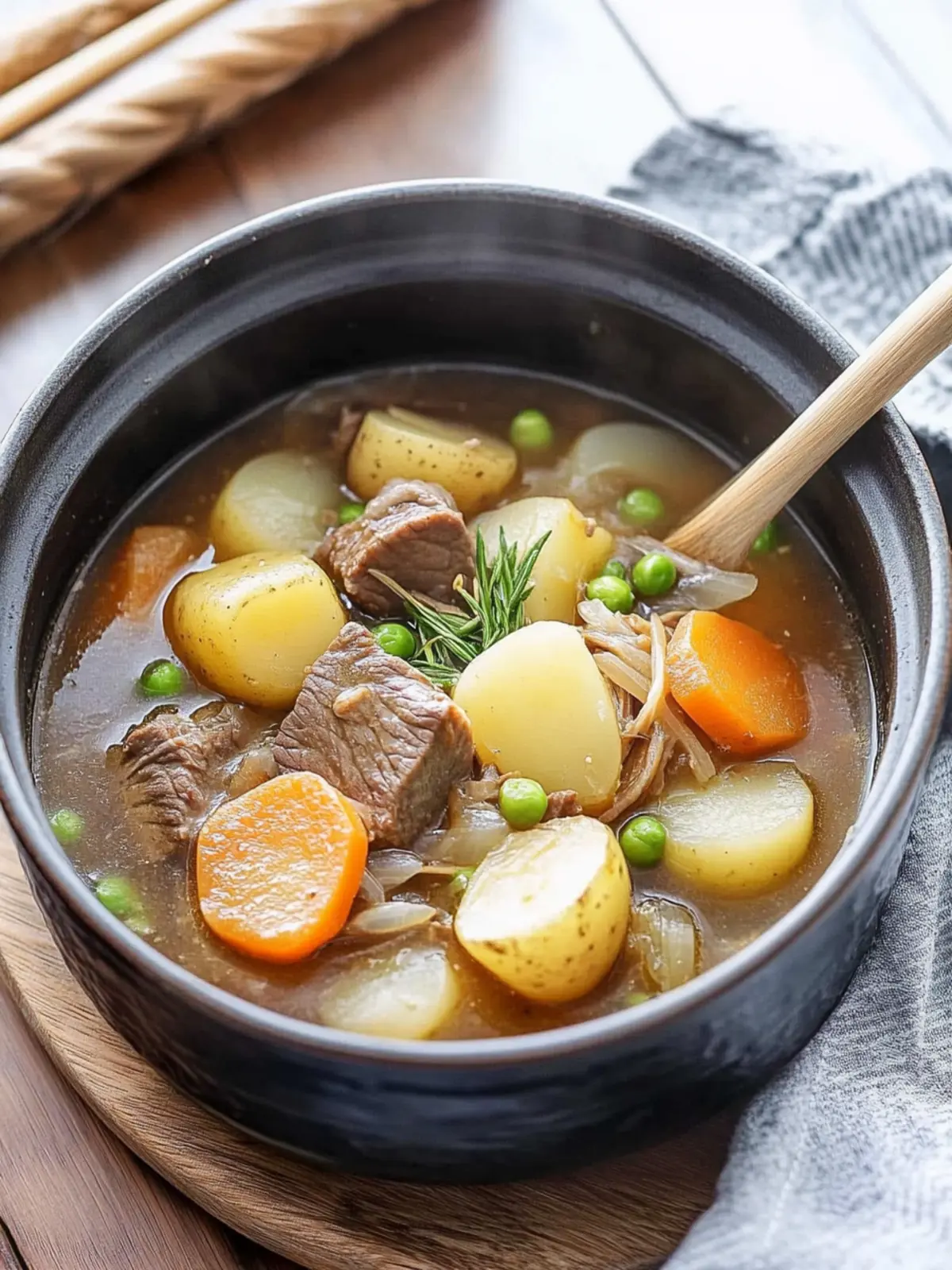
Why is Japanese Beef and Potato Stew special?
Simplicity at its best: You only need a few ingredients to create a hearty, delicious meal.
Flavorful fusion: The combination of tender beef, sweet potatoes, and carrots explodes with cozy flavors.
Versatile meal: Perfect for weeknight dinners or entertaining guests, this dish is a crowd-pleaser.
Time-saving: With most recipes coming together in under two hours, it’s an easy option for busy days.
Nutrient-rich: Packed with protein and fiber, this stew keeps you satisfied while treading away from fast food habits.
For a quick side dish, consider whipping up some blanched snow peas to complement your meal!
Japanese Beef and Potato Stew Ingredients
Discover the essential ingredients for this heartwarming dish!
For the Stew
- Onions – 2 medium (250 g), their sweetness intensifies the stew’s flavor.
- Carrot – 1 large (150 g), adds a touch of natural sweetness and color.
- Yukon gold potatoes – 3–5 (450-550 g), they hold their shape while absorbing the stew’s savor.
- Shirataki noodles – 1 package (200 g), a delightful low-calorie addition that soaks up the broth.
- Thinly sliced beef – 1/2 lbs (250 g), using ribeye or chuck provides a tender, juicy texture.
- Ginger juice – 2 tsp, optional but it adds a lovely zing and enhances flavors.
- Salt – 1/4 tsp, to taste, essential for elevating all the elements of the stew.
- Dashi stock – 1 + 2/3 cup (400 ml), forms the broth’s rich foundation with umami depth.
For Seasoning
- Soy sauce – 4 tbsp + 1 tbsp, the crucial element that deepens the savory profile.
- Sake – 4 tbsp, gives a hint of sophistication and enhances the overall taste.
- Mirin – 2–4 tbsp, balances the flavors with its subtle sweetness.
- Sugar – 2–4 tbsp, adjust to your sweetness preference, perfect for rounding out the flavors.
For Garnishing
- Snow peas – 10, blanched, they add a fresh, crisp contrast to the rich stew.
How to Make Japanese Beef and Potato Stew
-
Prepare the sauce: In a bowl, whisk together soy sauce, sake, mirin, and sugar to create a harmonious seasoning sauce. Adjust the sweetness to your liking and set it aside to blend the flavors.
-
Chop the vegetables: Slice the onions into wedges about 1/4 inch (1.5 cm) thick. Peel the carrot and cut it into 1-inch pieces using the rangiri technique. Peel and quarter the potatoes, smoothing the edges to ensure they maintain their shape while cooking.
-
Rinse the noodles: Thoroughly rinse the shirataki noodles in cold water. Boil them for 1 minute in salted water, then drain. If they are long, you can cut them in half with scissors for easier serving.
-
Sauté the beef: Heat 1/2 tbsp of oil in a large pot over medium-high heat. Add the thinly sliced beef, season it with ginger juice and a pinch of salt, and pour in 1/3 of the prepared seasoning sauce. Cook the beef until it’s just done, then remove it from the pot and set aside.
-
Cook the vegetables: In the same pot, add an additional 1 tbsp of oil. Toss in the onions, carrots, and potatoes, seasoning them with a few pinches of salt. Sauté the mixture for about 3 minutes, allowing the vegetables to begin softening.
-
Combine and simmer: Pour in the dashi stock along with the remaining seasoning sauce, making sure the vegetables are mostly submerged. Bring the mixture to a boil, then reduce the heat to low. Skim off any foam that forms on the surface, and add the rinsed shirataki noodles. Cover with a drop lid and simmer for 15-18 minutes until the vegetables are tender.
-
Meld the flavors: Gently return the cooked beef to the pot and add the final 1 tbsp of soy sauce. Mix everything together, cover, and let it rest off the heat for 45-60 minutes to allow the flavors to harmonize beautifully.
-
Blanch the snow peas: For a vibrant garnish, prepare the snow peas by removing the strings and blanching them in boiling salted water for 45-60 seconds. Immediately transfer them to ice-cold water, drain, and set aside for a refreshing crunch.
-
Serve and enjoy: Reheat the nikujaga over medium heat until warmed through, then serve it in bowls. Garnish each serving with the blanched snow peas for a lovely presentation and added freshness.
Optional: Add a sprinkle of sesame seeds for a delightful finishing touch!
Exact quantities are listed in the recipe card below.
Make Ahead Options
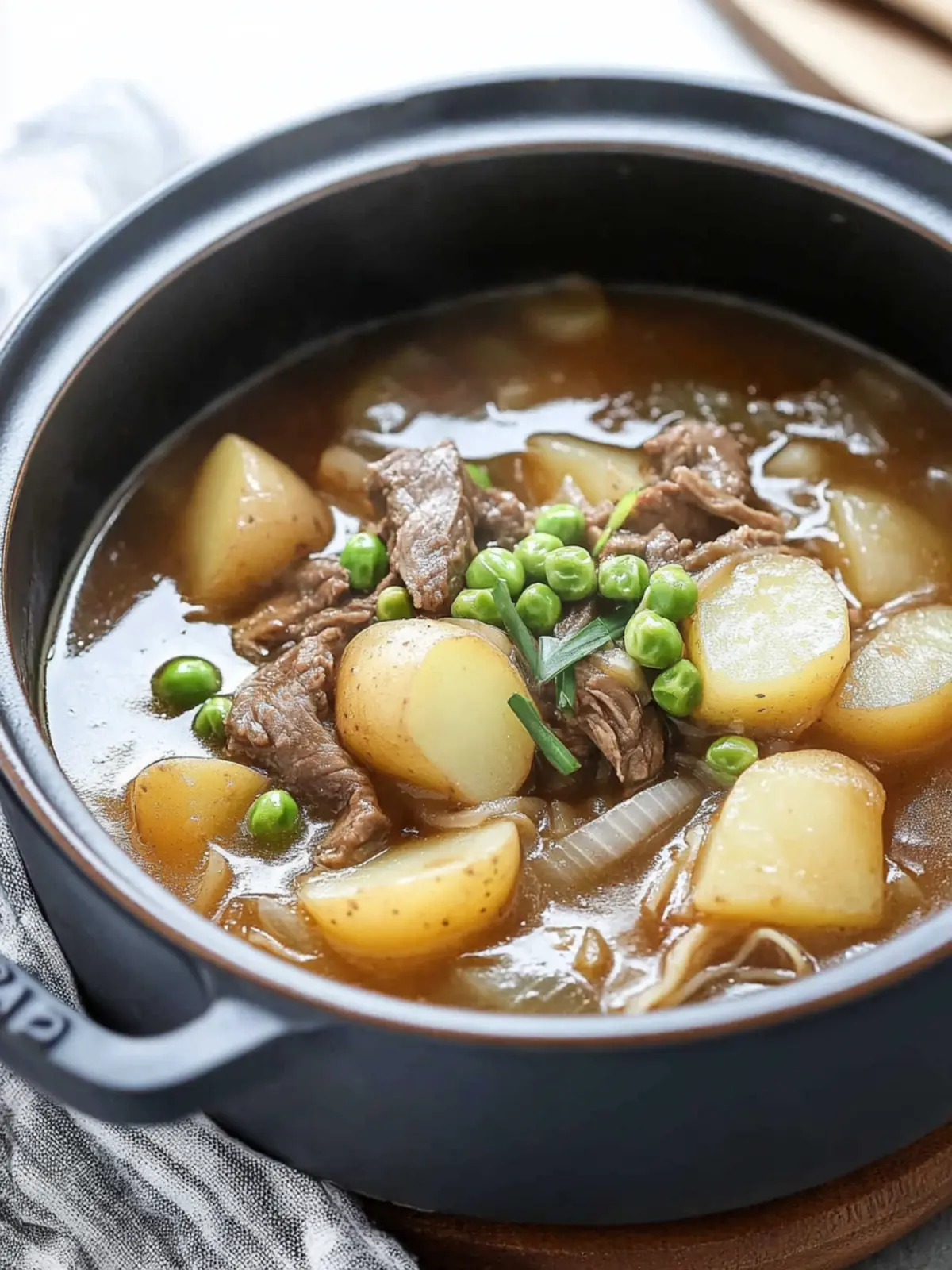
These Japanese Beef and Potato Stew preparations are perfect for busy weeknights! You can chop the onions, carrots, and potatoes up to 24 hours in advance and refrigerate them in an airtight container to save time without sacrificing flavor. The seasoning sauce can also be mixed ahead of time and stored in the fridge for up to 3 days. When it’s time to enjoy your meal, simply sauté the beef and vegetables, combine with the dashi stock, and allow everything to simmer until tender. This thoughtful prep will ensure that your nikujaga maintains its deliciousness and richness, making your dinner experience just as cozy and inviting as if you made it from scratch!
How to Store and Freeze Japanese Beef and Potato Stew
Room Temperature: Let the stew cool to room temperature before storing it; it can be left out for up to 2 hours.
Fridge: Store leftovers in an airtight container in the fridge for up to 3 days. Reheat gently on the stove or in the microwave until warmed through.
Freezer: For longer storage, freeze the stew in a freezer-safe container for up to 3 months. Thaw in the fridge overnight before reheating.
Reheating: When reheating, add a splash of water or dashi stock to the pot to maintain moisture and flavor in the Japanese Beef and Potato Stew.
Japanese Beef and Potato Stew Variations
Feel free to get creative and customize this comforting dish to your taste preferences and dietary needs!
-
Vegetarian: Substitute thinly sliced beef with firm tofu or tempeh for a hearty meat-free version.
Enjoy the same warmth and depth of flavor while keeping it plant-based. -
Gluten-Free: Use tamari sauce instead of soy sauce to maintain that savory taste without gluten.
Simply swap to accommodate dietary sensitivities while enjoying this cozy stew. -
Spicy Kick: Add sliced jalapeños or red pepper flakes to your sauté with the vegetables for an extra kick.
This twist welcomes warmth while keeping the stew’s comforting essence intact. -
Sweet Twist: Include cubed sweet potatoes or butternut squash in place of some Yukon gold potatoes for added sweetness.
This variation not only enhances flavor but also introduces a delightful pop of color. -
Umami Boost: Stir in a tablespoon of miso paste when adding the dashi stock for an extra umami hit.
This deepens the flavor profile, making it even more savory and satisfying. -
Coconut Cream: Incorporate a splash of coconut cream for a creamy texture and a hint of tropical flair.
This creamy twist makes each bowl feel more indulgent—perfect for chilly evenings. -
Extra Veggies: Toss in additional vegetables like bell peppers or mushrooms to enhance the nutrition and texture.
The more, the merrier—these vibrant additions boost the freshness of your stew. -
Rice Companion: Serve the stew over a bed of steamed rice to soak up all that delicious broth.
This hearty pairing transforms the dish into a fulfilling, well-rounded meal.
Expert Tips for Japanese Beef and Potato Stew
- Ingredient Freshness: Use fresh vegetables and quality beef for the best flavor; stale ingredients can make the dish taste dull.
- Cut Uniformly: When chopping vegetables, aim for even sizes to ensure they cook evenly and look appealing in the stew.
- Don’t Rush Simmering: Allow the stew to rest off the heat after cooking, as this melding time enhances the rich flavors of the Japanese Beef and Potato Stew.
- Adjust Sweetness: Feel free to tweak the amount of sugar and mirin according to your taste—balance is key in this comforting dish.
- Rinse Noodles Thoroughly: Shirataki noodles can have a strong smell; be sure to rinse them well to ensure they absorb the delicious broth flavors.
- Serving Presentation: For an elegant touch, serve in warm bowls and garnish with blanched snow peas, adding both color and crunch.
What to Serve with Japanese Beef and Potato Stew?
As you prepare your cozy bowl of Nikujaga, let’s explore some fantastic pairings that will elevate your meal experience.
-
Steamed Rice: This classic side is perfect for soaking up the rich dashi broth, complementing the stew’s flavors beautifully.
-
Miso Soup: A warm bowl of miso soup adds depth and umami, enhancing the overall Japanese dining experience. The robust flavors contrast pleasantly with the stew’s sweetness.
-
Pickled Vegetables: Adding a side of tangy pickles introduces a refreshing crunch, balancing the stew’s rich textures and grounding your meal.
-
Japanese Cucumber Salad: Light, crisp, and dressed in rice vinegar, this simple salad provides a refreshing palate cleanser that complements the hearty stew well.
-
Savory Japanese Pancakes (Okonomiyaki): These versatile pancakes add a delightful texture and flavor contrast. They can be customized with various fillings to make your meal more exciting.
-
Sake: Pair your full-flavored stew with a glass of smooth sake, which enhances the savory and sweet elements of the dish, bringing harmony to the table.
-
Green Tea: A warm cup of green tea serves as a lovely digestif after the rich meal, its mild, earthy tones refreshing the palate.
-
Blanched Broccoli: Bright and nutritious, broccoli provides not only a burst of color but also a crunchy texture that pairs wonderfully with the stew.
-
Japanese Cheesecake: For a sweet finish, a slice of fluffy Japanese cheesecake offers a light and airy end to your comforting meal, balancing the richness of the Nikujaga.
Each of these options will enhance the comforting delight of your Japanese Beef and Potato Stew, ensuring your dinner becomes a full-flavored experience!
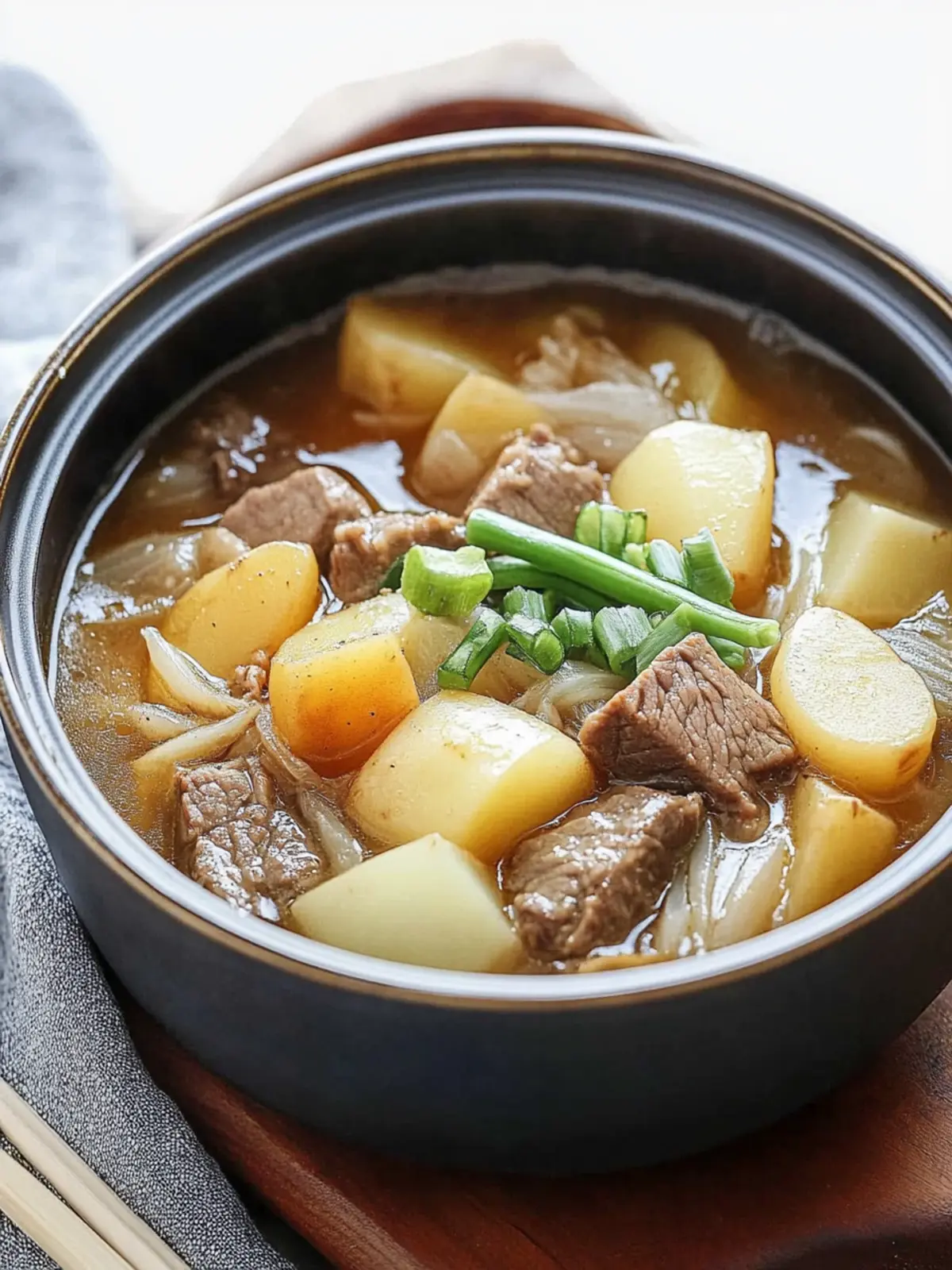
Japanese Beef and Potato Stew Recipe FAQs
What kind of potatoes are best for Nikujaga?
Absolutely! I recommend using Yukon gold potatoes for this recipe. Their creamy texture and ability to hold shape make them ideal for absorbing the rich flavors of the stew while still providing a delightful bite.
How long can I store leftovers in the fridge?
Leftovers of this delicious Japanese Beef and Potato Stew can be stored in an airtight container in the fridge for up to 3 days. Just make sure it cools completely to room temperature before you pop it into the fridge to maintain its flavor and texture.
Can I freeze Nikujaga?
Yes, you can definitely freeze this stew! To do so, allow it to cool completely and transfer it to a freezer-safe container. It will keep well in the freezer for up to 3 months. When you’re ready to enjoy it again, simply thaw overnight in the refrigerator and reheat gently on the stove. Don’t forget to add a splash of dashi or water to keep it nice and moist!
What should I do if my stew is too salty?
If your stew turns out too salty, don’t worry—there’s a quick fix! You can add more vegetables like chopped potatoes or carrots to help balance the saltiness. Cooking them in with the stew for about 10-15 minutes will incorporate their natural sweetness and dilute the salt. Alternatively, adding a teaspoon of sugar can also tone down the flavor.
Is Nikujaga suitable for gluten-free diets?
Great question! While traditional recipes use soy sauce, which contains gluten, you can easily adapt this dish for gluten-free diets. Simply swap regular soy sauce with a gluten-free alternative, and rest assured that your comforting bowl of Japanese Beef and Potato Stew can be enjoyed by everyone!
Can I use a different type of meat?
Very much! While thinly sliced beef is classic for Nikujaga, you can substitute it with chicken, pork, or even tofu for a vegetarian option. Just adjust the cooking times depending on what you choose—ensuring that whatever meat or protein you use is cooked through and tender adds to the heartwarming comfort of this stew.
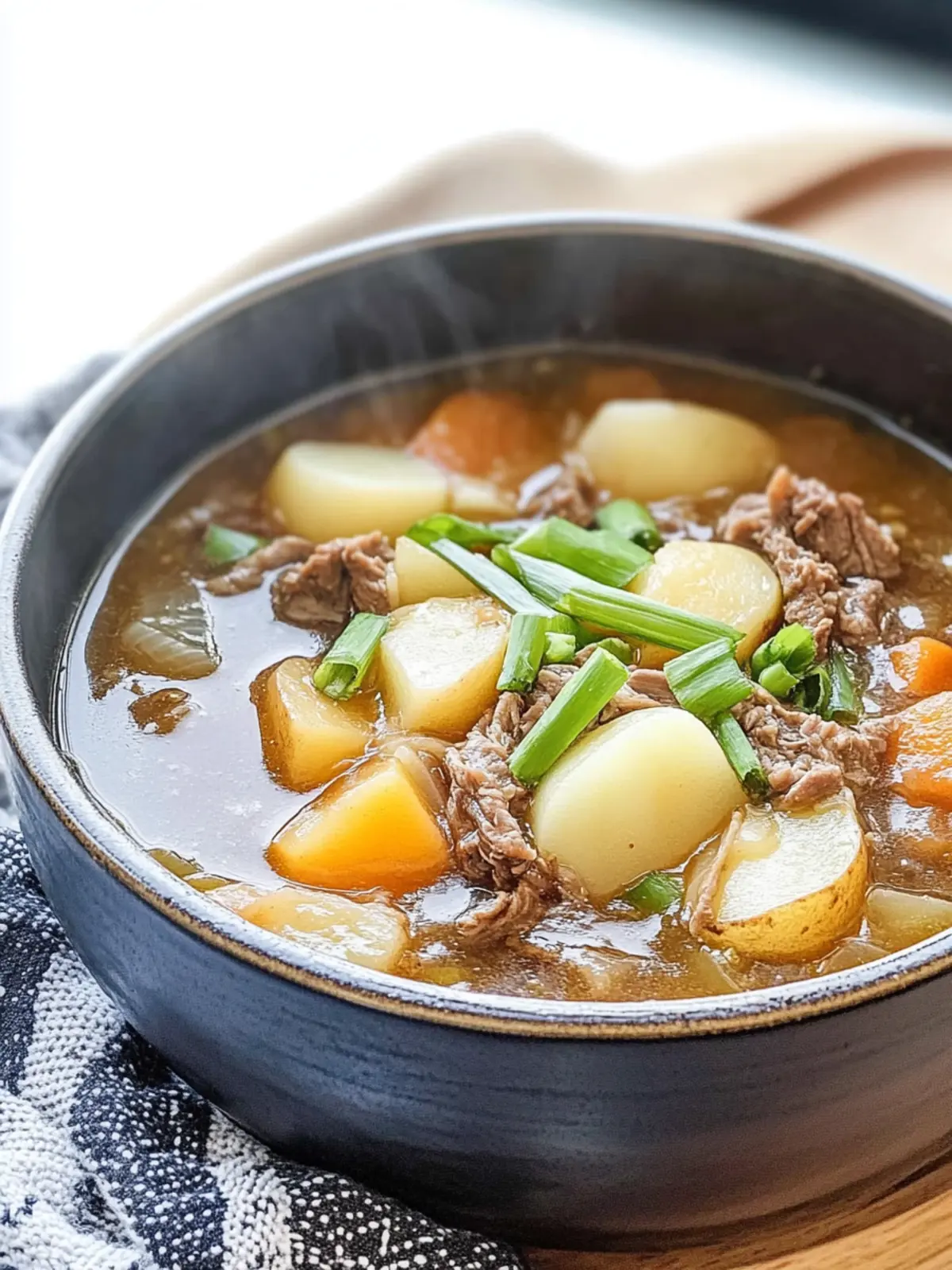
Japanese Beef and Potato Stew: A Cozy Comfort Food Delight
Ingredients
Equipment
Method
- Prepare the sauce: In a bowl, whisk together soy sauce, sake, mirin, and sugar to create a harmonious seasoning sauce. Adjust the sweetness and set aside.
- Chop the vegetables: Slice the onions into wedges, peel the carrot and cut into pieces. Peel and quarter the potatoes.
- Rinse the noodles: Rinse shirataki noodles in cold water, boil for 1 minute, drain, and cut if necessary.
- Sauté the beef: Heat oil in a pot, add beef, season with ginger juice and salt, pour 1/3 of seasoning sauce, cook until done, then remove.
- Cook the vegetables: In the same pot, add more oil, toss in onions, carrots, and potatoes, season with salt, and sauté for 3 minutes.
- Combine and simmer: Pour in dashi stock and remaining seasoning, ensure vegetables are submerged, bring to boil, reduce heat, and simmer for 15-18 minutes.
- Meld the flavors: Return cooked beef to pot, add final soy sauce, cover, and let rest off heat for 45-60 minutes.
- Blanch the snow peas: Prepare snow peas, blanch in boiling salted water for 45-60 seconds, transfer to ice-cold water and drain.
- Serve and enjoy: Reheat nikujaga until warmed through, serve in bowls, and garnish with blanched snow peas.