
The first time I prepared Asian Salmon and Noodles, the vibrant colors and tantalizing aromas made my kitchen feel electric. As the garlic kissed the pan, mingling with the earthy notes of mushrooms and the sweet undertones of honey, I knew I had discovered something special. This recipe effortlessly blends flavor and nutrition, making it perfect for busy weeknights while still giving you that gourmet feel.
Packed with succulent salmon and crisp snow peas, this dish is a delightful twist on traditional pasta, offering a delightful balance of textures and tastes. Whether you’re impressing friends at a dinner party or just craving a home-cooked meal that breaks the fast-food routine, Asian Salmon and Noodles is versatile enough to satisfy anyone at the table. Let’s dive into how you can whip up this simple yet impressive dish in no time!

Why is Asian Salmon and Noodles perfect?
Easily prepared: With just a quick 40 minutes, you’ll have a stunning dish on the table.
Flavor explosion: The rich combination of sweet honey and savory soy sauce elevates the salmon and noodles to new heights!
Nutrient-packed: Salmon offers healthy omega-3s, while snow peas contribute a fresh crunch and vibrant color.
Customizable: Feel free to swap in your favorite veggies or switch up the protein for a new twist every time!
Crowd-pleaser: Perfect for family dinners or impressing friends, everyone will want seconds!
Skip the takeout and try this quick and delicious recipe that you can whip up any weekday!
Ingredients for Asian Salmon and Noodles
Let’s gather everything you need to create this delightful dish!
For the Sauce
- Olive oil – adds a rich base flavor to your sautéed vegetables.
- Soy sauce – provides a savory depth; choose low-sodium for a lighter option.
- Honey – brings sweetness to balance the saltiness; consider maple syrup as a substitute.
- Chicken stock – adds moisture and flavor; vegetable stock works great for a veggie version.
- Sesame oil – enhances the dish with nutty notes; a drizzle goes a long way!
- Sriracha sauce – introduces a spicy kick; feel free to use a milder hot sauce if preferred.
For the Vegetables
- Green onions – brightens the dish with freshness; save some for garnish!
- Sesame seeds – offer a delightful crunch and visual appeal; toast them for extra flavor.
- Button mushrooms – contribute earthy notes; substitute with Portobello for a heartier bite.
- Snow peas – provide a crisp texture; can swap with snap peas for a different crunch.
For the Noodles & Salmon
- Fettuccine pasta – acts as a hearty base for the sauce; try whole wheat or rice noodles for a twist.
- Cooking oil – ensures the salmon sears beautifully; use canola or avocado oil for high smoke points.
- Salmon fillet – the star of the dish, rich in omega-3s; opt for skinless if you prefer.
- Salt and pepper – essential for seasoning; season to taste for perfect balance.
With these Asian Salmon and Noodles ingredients gathered, you’re just a step away from bringing that electric kitchen vibe to life!
How to Make Asian Salmon and Noodles
-
Heat oil: In a large frying pan over medium heat, add cooking oil, allowing it to warm. Toss in the chopped green onions and sesame seeds, sautéing for 2-3 minutes until fragrant and vibrant.
-
Sauté mushrooms: Add the sliced mushrooms to the pan, cooking for an additional 2 minutes until softened. Remove the pan from the heat and stir in the soy sauce, honey, chicken stock, sesame oil, and Sriracha sauce, ensuring the flavors meld together beautifully.
-
Blanch snow peas: Bring a separate pot of water to a rolling boil. Blanch the snow peas for 3-5 minutes until tender yet crisp, then drain and set aside.
-
Cook pasta: In another pot, boil water and cook the fettuccine pasta according to package instructions for 10-12 minutes. Drain the pasta well, letting the steam escape.
-
Combine ingredients: Gently fold the drained snow peas and cooked pasta into the large pan with the vegetable sauce mixture. Stir everything together over medium-low heat for a few minutes, allowing all those wonderful flavors to meld.
-
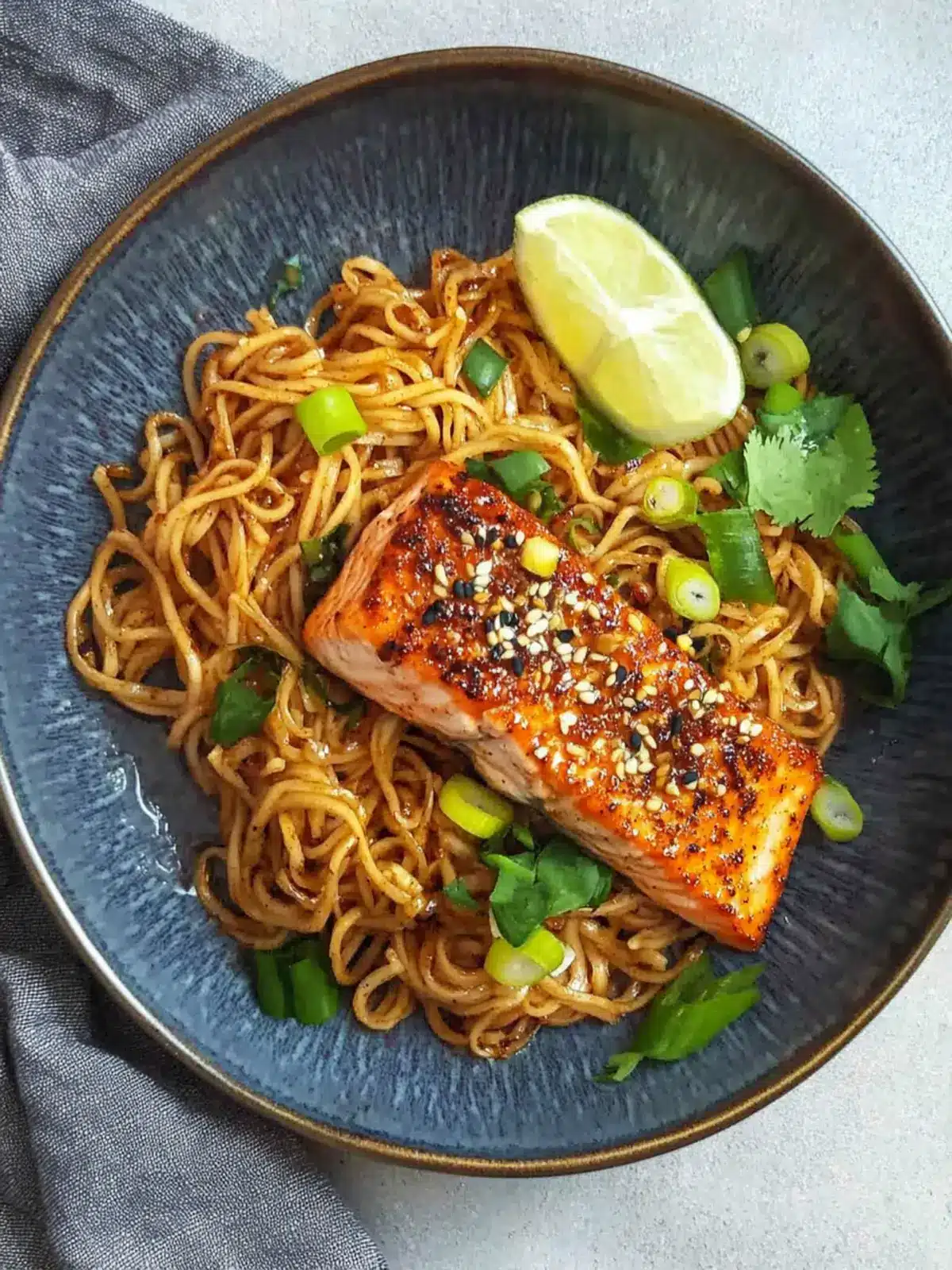
Sear salmon: Season the salmon fillet with salt and pepper. In a separate skillet over medium heat, sear the salmon skin-side down for about 4-5 minutes, then flip and cook for another 3-4 minutes until it’s perfectly cooked through and still moist. Brush with a honey and soy sauce mixture during the last minute for that extra glossy finish.
-
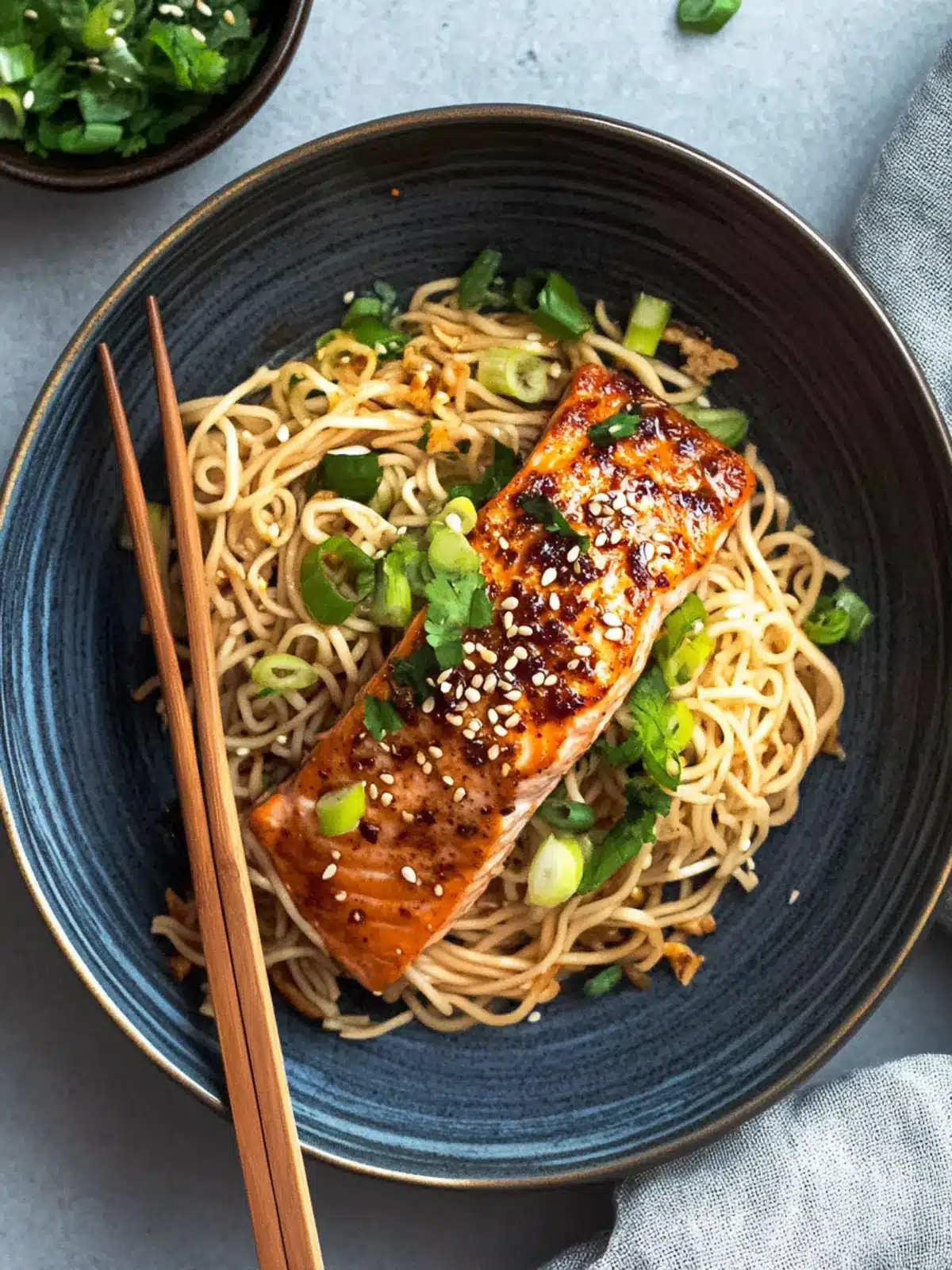
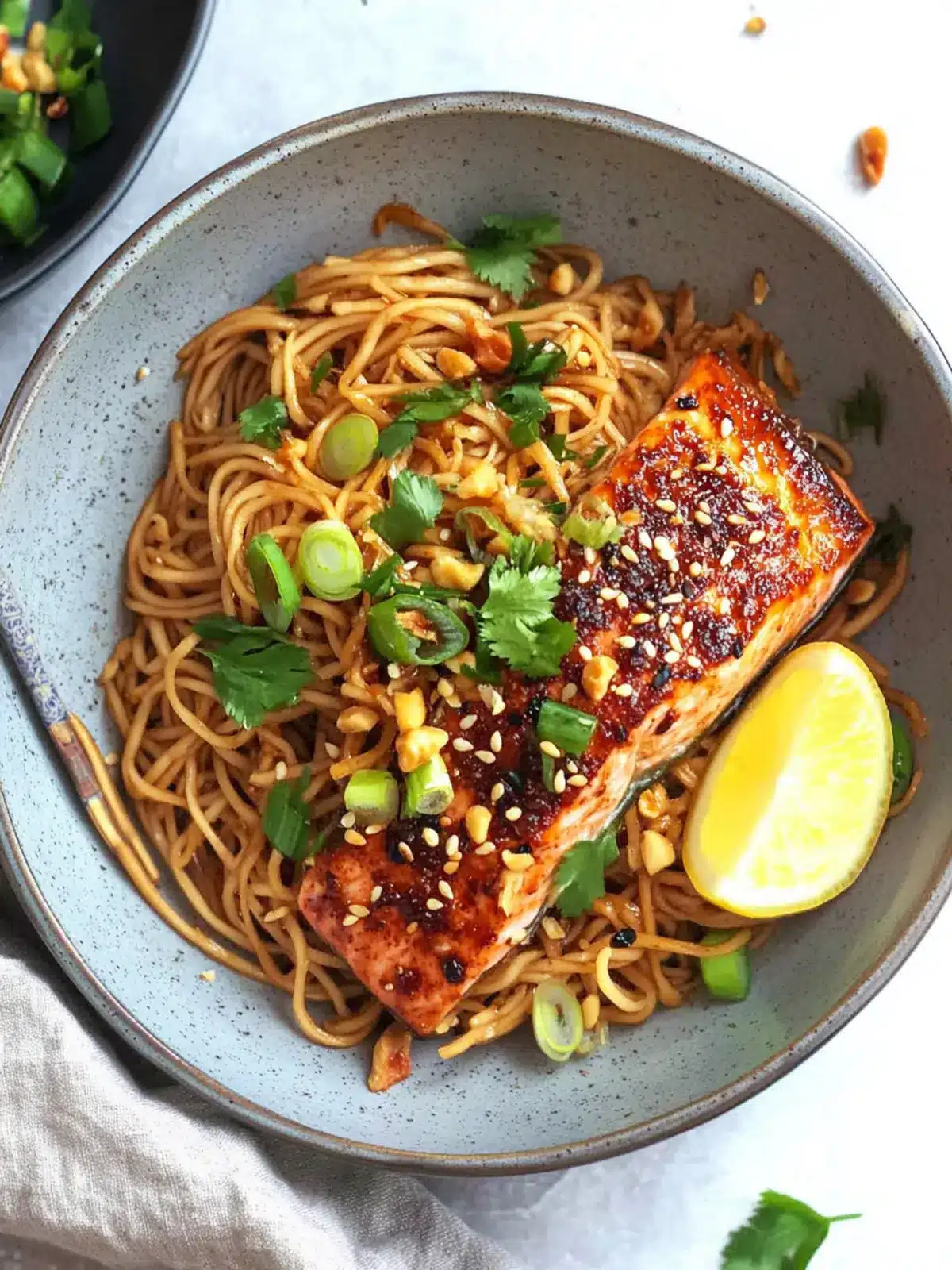
Plate and serve: Plate the warm Asian noodles, generously topping each serving with the cooked salmon fillet. Garnish with additional sesame seeds or chopped green onions if you like. Serve immediately and enjoy this lovely dish!
Optional: Add a sprinkle of chili flakes for an extra spice kick!
Exact quantities are listed in the recipe card below.
How to Store and Freeze Asian Salmon and Noodles
Fridge: Store any leftovers in an airtight container in the fridge for up to 3 days. This keeps the flavors fresh while maintaining the dish’s delightful texture.
Freezer: For longer storage, freeze the salmon and noodles separately in airtight containers for up to 2 months. Thaw overnight in the fridge before reheating.
Reheating: To reheat, warm in a skillet over medium heat, stirring gently until heated through. If needed, add a splash of chicken stock or water to prevent sticking.
Assembly Note: It’s best to store the salmon separately from the noodles to preserve the moisture and prevent sogginess.
Make Ahead Options
These Asian Salmon and Noodles are perfect for meal prep enthusiasts! You can chop the green onions, slice the mushrooms, and even prepare the sauce (combining the soy sauce, honey, chicken stock, sesame oil, and Sriracha) up to 24 hours in advance. Just store these ingredients in airtight containers in the refrigerator to keep them fresh. You can also blanch the snow peas and cook the fettuccine pasta one day prior. To finish, simply sauté the prepared ingredients, fold in your pasta and vegetables, and sear the salmon just before serving for that restaurant-quality dish right at home. Enjoy the luxury of saving time without sacrificing taste!
Asian Salmon and Noodles Variations
Feel free to explore your creativity and customize this delightful dish to suit your taste buds!
-
Gluten-Free: Use rice noodles or gluten-free pasta for a delicious, celiac-friendly alternative. The soft texture of rice noodles pairs beautifully with the savory sauce.
-
Veggie-Packed: Add bell peppers, broccoli, or carrots to boost nutrients and colorful presentation. These veggies add crunch and lovely hues, making your dish even more appealing.
-
Spicy Upgrade: Swap Sriracha for chili paste or add fresh sliced jalapeños for a fiery kick. Just a little heat can elevate the whole dish into a bold flavor party!
-
Citrus Zing: Incorporate lime or lemon juice for a bright, zesty undertone. This refreshing addition cuts through the richness of the salmon, giving you an exciting contrast.
-
Herb Infusion: Toss in fresh cilantro or basil before serving for a fragrant finish. The aromatic herbs add a burst of freshness that takes the dish to another level.
-
Pasta Swaps: Change up the noodles by using udon, soba, or even zucchini noodles for a fun twist. Each noodle type brings a different texture and taste experience to the meal.
-
Umami Boost: Add a splash of fish sauce to the sauce mixture for an intense umami flavor. This addition deepens the savory notes, making each bite more satisfying.
-
Protein Variations: Substitute the salmon with tofu or shrimp for different proteins. Both options bring unique flavors and textures, allowing for endless variations!
Expert Tips for Asian Salmon and Noodles
-
Fresh Ingredients: Always opt for the freshest vegetables and salmon. Fresh ingredients not only enhance flavor but also make your dish visually appealing.
-
Avoid Overcooking: Be careful not to overcook the salmon. It should be just tender and moist. A cooking thermometer can help ensure it reaches 145°F for perfect doneness.
-
Noodle Timing: For the best texture, cook the fettuccine until al dente. This ensures they hold their shape and don’t become mushy when mixed with the sauce.
-
Adjust Spice Level: If you’re sensitive to heat, adjust the Sriracha to your taste. A little can go a long way, and you can always add more later if needed.
-
Flavor Elevation: For an extra layer of flavor, consider toasting sesame seeds before adding them to your dish. This brings out their nutty essence!
-
Meal Prep: Make the sauce in advance and store it in the fridge. This way, when you’re ready to cook, it will be a breeze to whip up your Asian Salmon and Noodles!
What to Serve with Asian Salmon and Noodles?
Elevate your meal experience by pairing these delightful noodles with the perfect side dishes and drinks that complement their vibrant flavors.
- Steamed Broccoli: A simple yet crunchy side, steamed broccoli adds color and a nutritious boost to your plate.
- Crispy Spring Rolls: Golden and crispy, spring rolls bring additional texture and flavor, perfect for dipping in soy or sweet chili sauce.
- Garlic Bread: A must-try indulgence! The buttery, garlic-infused bread provides a rich contrast to the lightness of the noodles.
- Coconut Rice: Soft and subtly sweet, coconut rice enhances the meal with a tropical twist, balancing the savory elements beautifully.
- Asian Cucumber Salad: Fresh and zesty, this salad is a refreshing counterpoint that cools off the palate with every bite.
- Green Tea: A warm cup of green tea complements the meal perfectly, with its earthy notes enhancing the dish’s flavors.
- Fruit Sorbet: To round off the meal, a light, fruity sorbet offers a refreshing finish that cleanses the palate after the rich salmon.
- Miso Soup: This comforting soup provides a warm, savory embrace, making it a perfect pairing that enhances the Asian theme.
- Crispy Tofu Bites: These savory bites are fantastic additions for extra protein and a delightful crunch that complements the noodles.
Asian Salmon and Noodles Recipe FAQs
How do I select the best salmon fillet?
Absolutely! When selecting your salmon fillet, look for bright, vibrant flesh with minimal dark spots. The fish should have a fresh, ocean-like smell. If you’re unsure, ask your fishmonger about the catch of the day. Wild-caught salmon usually has a richer flavor compared to farm-raised.
What’s the best way to store leftovers?
To keep your Asian Salmon and Noodles fresh, store leftovers in an airtight container in the fridge for up to 3 days. This method will help maintain the flavors and textures of the dish. Avoid storing them for longer, as the noodles may get soggy and lose their delightful bite!
Can I freeze Asian Salmon and Noodles?
Yes, you can freeze them! To do so, separate the salmon and noodles into airtight containers. This helps keep them in good shape. They can be frozen for up to 2 months. When you’re ready to enjoy them again, thaw them overnight in the fridge. Reheat gently in a skillet, adding a splash of chicken stock or water if needed to avoid drying out.
How can I fix overcooked salmon?
If you find your salmon is overcooked and dry, gently flake it into smaller pieces and mix it back into the noodles with a little more sauce to help moisten it up. The remaining sauce can help revive those flavors, making it a delight to eat again.
Can I modify the recipe for dietary restrictions?
Very! If you’re avoiding gluten, consider using rice noodles or gluten-free pasta. For allergies, ensure all your sauces are free from gluten and soy if needed. If you’re cooking for kids or those sensitive to spice, simply reduce or omit the Sriracha. The beauty of this recipe is in its adaptability!
How can I incorporate more vegetables into this dish?
The more the merrier! You can absolutely add more veggies like bell peppers, carrots, or broccoli. Just sauté them until tender along with the mushrooms. Alternatively, you could add in a handful of baby spinach during the last moment of cooking for a pop of greens and nutrients.
Savor Asian Salmon and Noodles in 40 Minutes Flat
Ingredients
Equipment
Method
- In a large frying pan over medium heat, add cooking oil, allowing it to warm. Toss in the chopped green onions and sesame seeds, sautéing for 2-3 minutes until fragrant and vibrant.
- Add the sliced mushrooms to the pan, cooking for an additional 2 minutes until softened. Remove the pan from the heat and stir in the soy sauce, honey, chicken stock, sesame oil, and Sriracha sauce, ensuring the flavors meld together beautifully.
- Bring a separate pot of water to a rolling boil. Blanch the snow peas for 3-5 minutes until tender yet crisp, then drain and set aside.
- In another pot, boil water and cook the fettuccine pasta according to package instructions for 10-12 minutes. Drain the pasta well.
- Gently fold the drained snow peas and cooked pasta into the large pan with the vegetable sauce mixture. Stir everything together over medium-low heat for a few minutes.
- Season the salmon fillet with salt and pepper. In a separate skillet over medium heat, sear the salmon skin-side down for about 4-5 minutes, then flip and cook for another 3-4 minutes until it’s perfectly cooked through.
- Plate the warm Asian noodles, generously topping each serving with the cooked salmon fillet. Garnish with additional sesame seeds or chopped green onions and serve immediately.