

Picture this: it’s a chilly evening, and the world outside is wrapped in a blanket of soft, whispering winds. The kitchen is alive with aromas of savory broth and tender beef, and suddenly, my heart settles with the promise of a comforting bowl of Niku Udon. This dish isn’t just food; it’s a warm hug in a bowl, perfect for those long weeknights when all you crave is a taste of home.
As I was digging through my pantry one day, I stumbled upon some frozen udon noodles and a few unexpected ingredients that sparked my imagination. The result? A rich, delicious meal that’s quick to make yet feels special enough to impress. With a delicate balance of flavors from the dashi-infused broth, succulent beef, and the gentle zing of ginger, Niku Udon is one of those recipes that transforms an ordinary dinner into an extraordinary culinary experience.
Join me as we unravel the simple yet flavorful layers of this beloved Japanese dish that promises to make you fall in love with cooking at home all over again!

Why is Niku Udon the ultimate comfort food?
Comforting warmth: Picture a steaming bowl filled with rich broth, perfect for cozy evenings.
Umami explosion: The dashi broth, infused with bonito and kombu, delivers an incredible depth of flavor.
Quick and easy: With just a 15-minute prep time, you’re only an hour away from this delightful dish.
Versatile toppings: Customize your bowl with scallions, Shichimi togarashi, or extra protein to suit your taste!
Crowd-pleasing: Perfect for family dinners or impressing guests, this recipe makes everyone feel at home. For more cozy meal ideas, check out my easy pasta recipes.
Niku Udon Ingredients
For the Broth
• Water – 5 cups (1.2 liters) forms the base of your delicious dashi broth.
• Kombu – 1 piece (6 inches/15 centimeters) adds a subtle umami flavor to enhance your Niku Udon.
• Katsuobushi – 1.4 ounces (40 grams) of dried shaved bonito creates a rich, savory depth to the broth.
• Usukuchi Soy Sauce – 1/4 cup (60 milliliters) brings a delicate balance of saltiness needed for the broth.
• Mirin – 2 tablespoons (30 milliliters) provides a touch of sweetness to contrast with the savory elements.
• Salt – 1/4 teaspoon enhances all the flavors of your broth wonderfully.
For the Beef
• Ribeye or Sirloin Beef – 8 ounces (227 grams) sliced against the grain makes for tender pieces in your Niku Udon.
• Sake – 2 tablespoons (30 milliliters) helps tenderize the beef while adding depth to the marinated flavor.
• Soy Sauce – 2 tablespoons (30 milliliters) intensifies the flavor profile of the beef.
• Mirin – 2 tablespoons (30 milliliters) continues the sweet note from the broth; feel free to use the same batch!
• Granulated Sugar – 2 teaspoons add sweetness that balances the umami flavors in the dish.
• Fresh Ginger – 1/2 inch (1.25 centimeters) peeled and grated adds a gentle warmth and freshness to the marinated beef.
For the Udon
• Frozen Udon – 2 bricks (8.8 ounces/250 grams each) offer a hearty noodle base that absorbs the flavors beautifully.
Optional Toppings
• Shichimi Togarashi – A sprinkle of this optional spice blend perks up your bowl with a delightful kick.
• Scallion or Negi – 1 stalk, sliced thinly adds a fresh crunch to each delightful mouthful.
• Narutomaki – 4-6 thin slices of white fish cakes with pink/red spirals not only beautify your dish but also add another layer of flavor.
How to Make Niku Udon
-
Combine water and kombu: In a large pot, mix the 5 cups of water with the kombu. Allow this to steep for 30 minutes to extract that essential umami flavor before cooking.
-
Boil the mixture: After 30 minutes, bring the kombu-infused water to a gentle boil over medium heat, releasing an enticing aroma as it heats.
-
Add bonito flakes: Once boiling, remove the kombu and add 2 tablespoons of cold water. Stir in the katsuobushi (bonito flakes) until just mixed; you’ll notice the broth starting to transform!
-
Simmer and skim: Reduce the heat to low, letting the mixture simmer for 5 minutes. Remember to skim any foam that arises for a clear, beautiful broth.
-
Let it rest: Remove from heat and allow the mixture to sit for 15 minutes. This resting time ensures the flavors meld and deepen beautifully.
-
Strain the dashi: Pour the broth through a fine mesh strainer or cheesecloth into a bowl, ensuring you don’t squeeze the bonito flakes, to keep it clear and refined.
-
Season the dashi: Return the strained dashi to the cleaned pot over high heat. Stir in the usukuchi soy sauce, mirin, and salt. Once bubbling, reduce the heat to low and keep warm.
-
Marinate the beef: In a large bowl, mix the beef slices with sake, soy sauce, mirin, sugar, and grated ginger. Let this marinate for 10 minutes, allowing flavors to soak in.
-
Heat the skillet: Place a large skillet over medium heat, without any oil. The beef will cook perfectly in its marinade!
-
Cook the beef: Once hot, add the marinated beef, spreading it out. Cook until the marinade has mostly evaporated, and the beef is nice and browned—this should take about 5-10 minutes.
-
Boil the udon: In another pot, bring water to a boil over high heat. Add the frozen udon and cook until just tender; this usually takes 3-5 minutes.
-
Assemble your bowls: Drain the udon and place it into two large soup bowls, creating a cozy seat for the flavorful toppings to come.
-
Add beef and broth: Generously top each bowl of udon with the cooked beef and ladle the hot dashi broth over, enveloping your noodles in solace.
-
Garnish and serve: Finish with a sprinkle of Shichimi Togarashi, some sliced scallions, and 2 beautiful pieces of Narutomaki. Serve immediately and enjoy every comforting slurp!
Optional: For extra flavor, try adding a drizzle of sesame oil before serving.
Exact quantities are listed in the recipe card below.
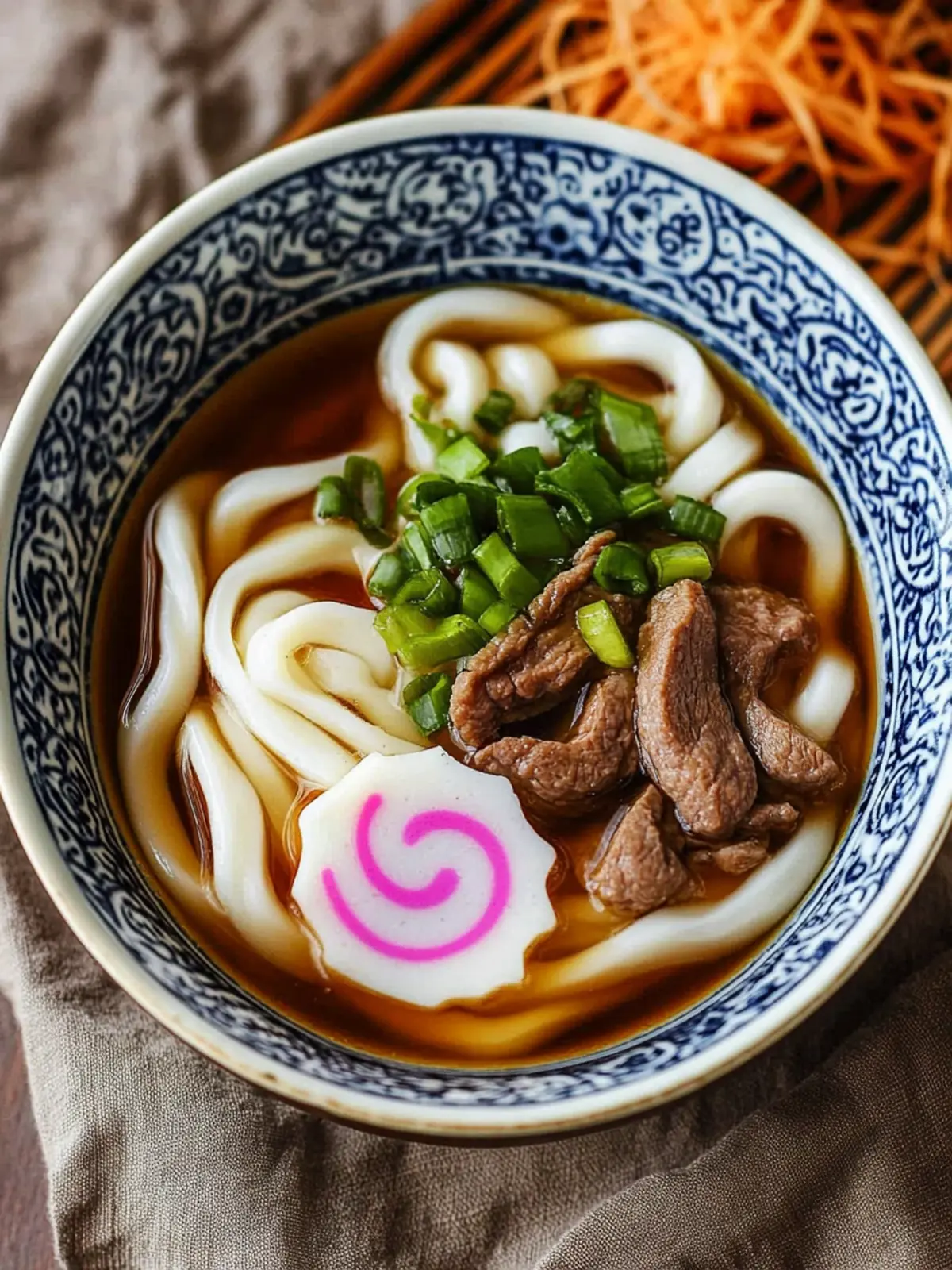
Niku Udon Variations
Feel free to explore these delightful options and make this comforting dish uniquely yours!
-
Vegetarian: Swap beef for sautéed mushrooms and tofu to enjoy an earthy and hearty twist on this classic.
-
Gluten-Free: Use rice noodles instead of udon for an equally satisfying and delicious alternative that meets gluten sensitivities.
-
Extra Spice: Add a teaspoon of gochujang or a splash of chili oil for those who crave a snappy heat that will warm you from the inside out.
-
Herbaceous Boost: Toss in a handful of fresh spinach or bok choy just before serving for an extra layer of nutrition and vibrant color.
-
Crispy Toppings: Top with crispy fried onions or tempura bits to add a delightful crunch that complements the soft noodles perfectly.
-
Coconut Creamy: For a unique twist, try adding a splash of coconut milk to the broth for a creamy richness, bringing an exotic flavor to your bowl.
-
Umami Punch: Incorporate a tablespoon of miso paste into the broth while simmering for an even deeper umami experience that enhances every bite.
-
Savory Egg: Add a soft-boiled egg into each bowl for a hearty protein boost and a velvety yolk that enriches the soup.
Make Ahead Options
Niku Udon is a fantastic choice for meal prep enthusiasts! To save time on busy weeknights, you can prepare the dashi broth (steps 1-6) and marinate the beef (step 8) up to 24 hours in advance, refrigerating both components separately to maintain their vibrant flavors. Additionally, you can pre-cook the udon and keep it in the fridge for up to 3 days; simply store it in an airtight container with a drizzle of sesame oil to prevent sticking. When you’re ready to enjoy your meal, just reheat the broth and beef over low heat while warming the udon in boiling water. This ensures that your Niku Udon remains just as delicious and comforting as ever—perfect for those cozy evenings!
Expert Tips for Niku Udon
Ingredient Quality: Always use fresh ingredients, especially for the beef and udon. Higher quality results in a more flavorful Niku Udon.
Properly Marinate: Ensure you marinate the beef for the full 10 minutes. This step is crucial for maximizing flavor and tenderness.
Don’t Rush the Dashi: Letting the dashi sit for 15 minutes after simmering enhances its flavor. Skipping this step can lead to a less rich broth.
Strain Gently: When straining the dashi, avoid squeezing the bonito flakes; this keeps the broth clear and free from bitterness.
Customize Your Toppings: Feel free to personalize your Niku Udon. Adding more veggies or different proteins can make it your own delicious creation!
Storage Tips for Niku Udon
Fridge: Store any leftover Niku Udon in an airtight container in the fridge for up to 3 days. Reheat gently on the stove to preserve the flavors.
Freezer: If you want to freeze Niku Udon, separate the beef and broth from the noodles before freezing. Beef and broth can last up to 2 months; udon noodles can freeze for about 1 month.
Reheating: When reheating frozen components, thaw them overnight in the fridge. Reheat the broth and beef on the stove, adding fresh udon just before serving for the best texture.
Storage Containers: Use glass or BPA-free plastic containers for storing leftovers, ensuring they are tightly sealed to keep the flavors intact.
What to Serve with Niku Udon?
Imagine the delightful aroma of comfort wafting through your kitchen, ready to create a full meal that leaves everyone smiling.
-
Edamame Beans: Lightly salted and steamed, they add a satisfying crunch and a protein boost alongside your savory udon.
-
Japanese Pickles (Tsukemono): These tangy, pickled vegetables provide a refreshing contrast to the warm broth, balancing the meal beautifully.
-
Tempura Vegetables: Crisp and airy, these batters fried veggies introduce an irresistible texture that works wonderfully with the noodles and broth.
-
Miso Soup: A light, umami-rich soup complements Niku Udon, keeping the warm and comforting theme while adding another layer of flavor.
-
Seaweed Salad: This adds a refreshing, slightly briny element that brightens up the palate, making it a perfect counterpart to the hearty udon.
-
Sake or Green Tea: Pair your meal with a warm cup of sake or traditional green tea to enhance the flavors while offering a soothing finish.
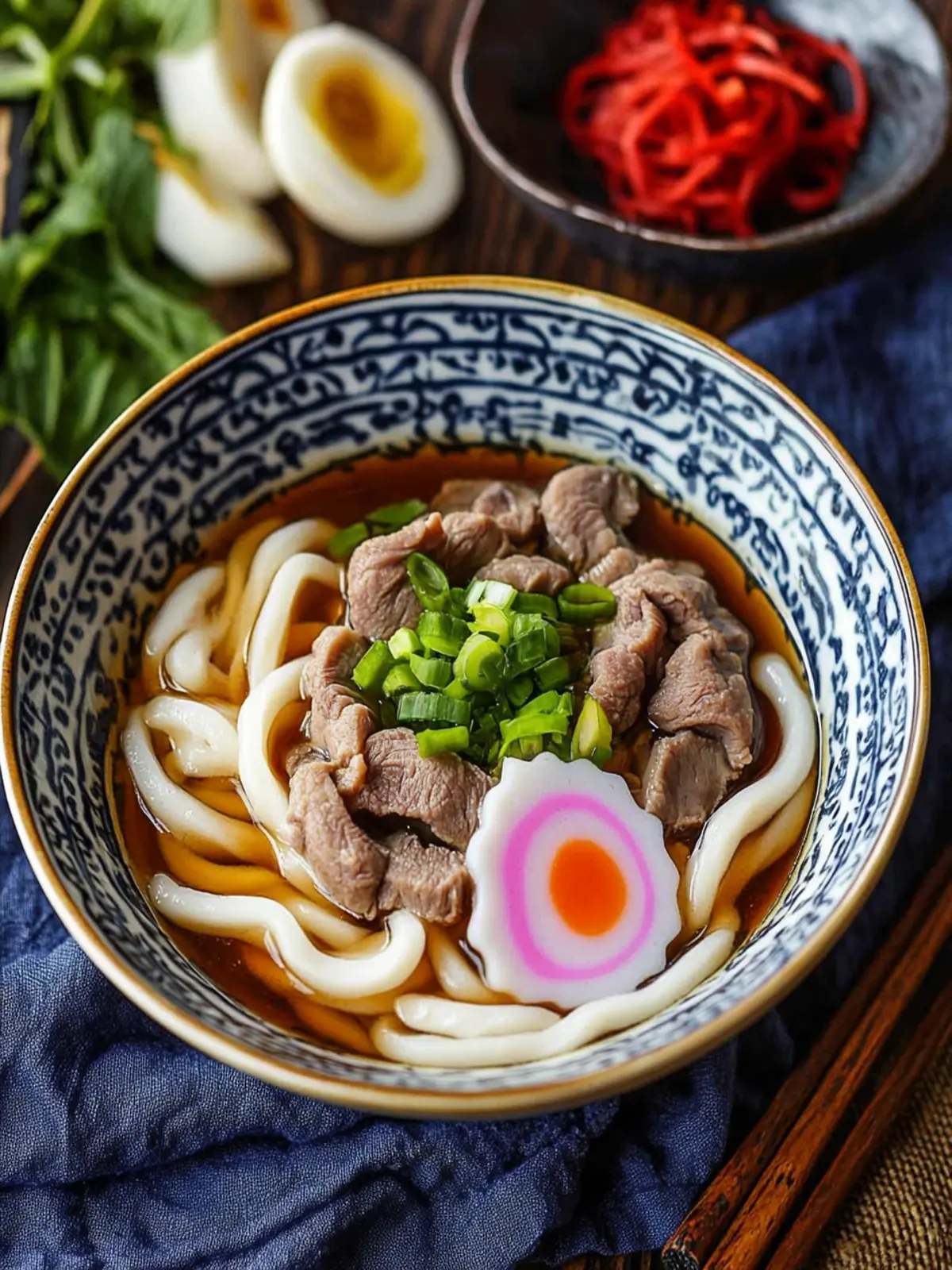
Niku Udon Recipe FAQs
How do I select the best beef for Niku Udon?
Absolutely! For the best results, choose cuts like ribeye or sirloin that are well-marbled. This marbling ensures tenderness and rich flavor. Look for bright red color without any brown spots, indicating freshness. If possible, source your beef from a butcher who can slice it thinly for you.
What’s the best way to store leftover Niku Udon?
Very! Place leftover Niku Udon in an airtight container and store it in the refrigerator for up to 3 days. When you’re ready to enjoy it again, gently reheat on the stove to maintain its delicious flavors. Avoid microwaving the broth as it can change the consistency.
Can I freeze Niku Udon?
Absolutely, you can! To freeze, separate the beef and broth from the noodles. Store the broth and beef in airtight containers for up to 2 months, while the frozen udon noodles can last for about 1 month. Thaw them overnight in the fridge, then reheat the broth and beef on the stove before adding the cooked udon.
What should I do if my dashi broth tastes too strong or bitter?
If your dashi ends up too strong, it might be from overcooking the bonito flakes. Next time, ensure you don’t let it simmer too long after adding the flakes—5 minutes is usually sufficient. If it’s already too strong, balance it out by adding a bit more water and soy sauce to dilute the flavors.
Is Niku Udon suitable for people with dietary restrictions, like gluten allergies?
While classic Niku Udon uses soy sauce and udon made from wheat, you can modify it for gluten-free diets! Use gluten-free soy sauce or tamari as a substitute and look for gluten-free udon noodles. Always check the labels, as ingredients can vary by brand.
Can pets eat the ingredients in Niku Udon?
Very! However, it’s best to avoid giving them any seasoned or cooked beef, as well as soy sauce. Plain, unseasoned beef might be acceptable in small amounts, but always consult with your vet before sharing human food with your furry friends.
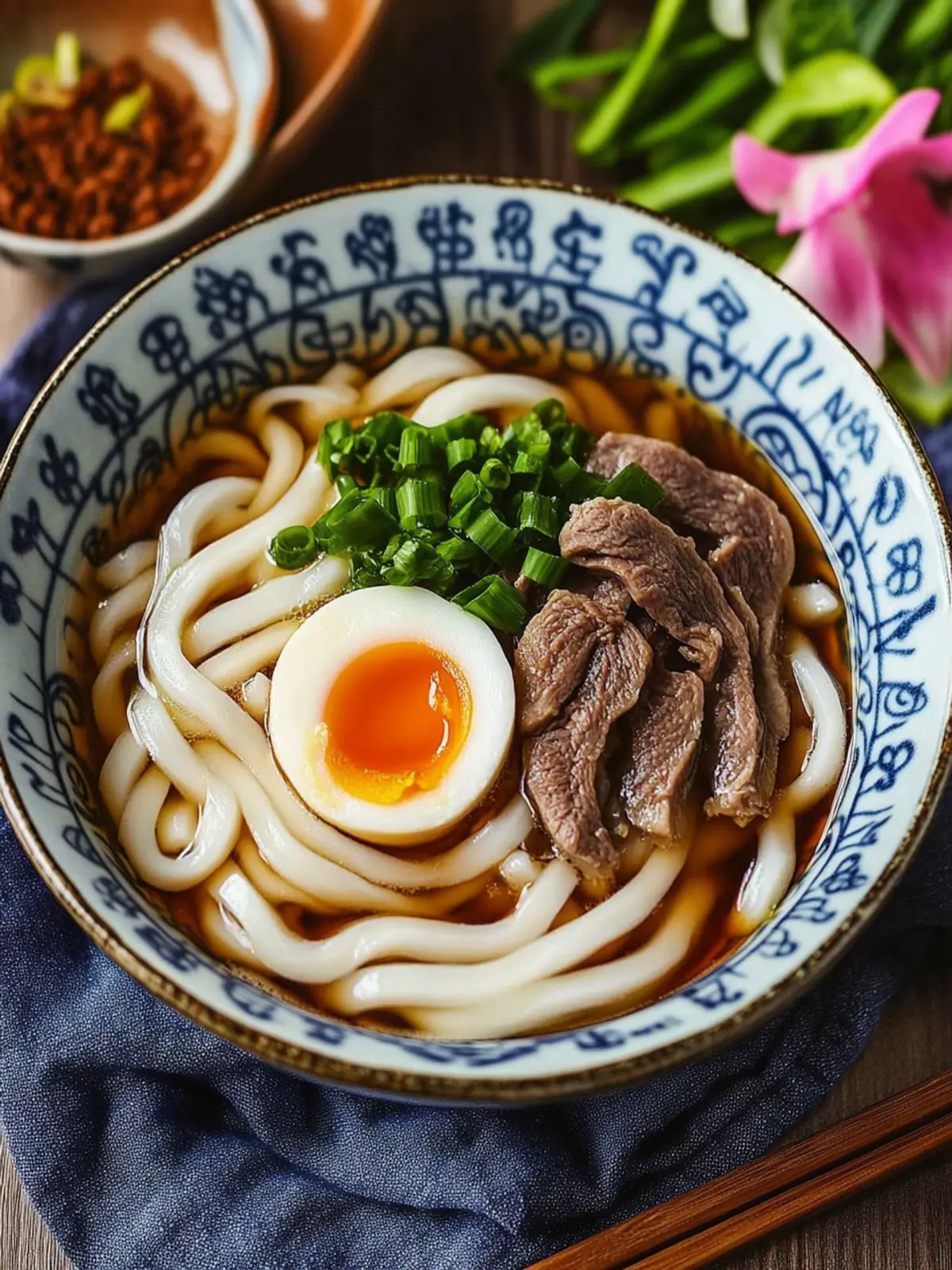
Delicious Niku Udon: Comfort in Every Slurp!
Ingredients
Equipment
Method
- In a large pot, mix the 5 cups of water with the kombu. Allow this to steep for 30 minutes.
- After 30 minutes, bring the kombu-infused water to a gentle boil over medium heat.
- Once boiling, remove the kombu and add 2 tablespoons of cold water. Stir in the katsuobushi.
- Reduce the heat to low, letting the mixture simmer for 5 minutes.
- Remove from heat and allow the mixture to sit for 15 minutes.
- Pour the broth through a fine mesh strainer into a bowl.
- Return the strained dashi to the cleaned pot over high heat. Stir in the usukuchi soy sauce, mirin, and salt.
- In a large bowl, mix the beef slices with sake, soy sauce, mirin, sugar, and grated ginger. Let marinate for 10 minutes.
- Place a large skillet over medium heat. Add the marinated beef and cook until browned, about 5-10 minutes.
- In another pot, bring water to a boil over high heat. Add the frozen udon and cook until tender, about 3-5 minutes.
- Drain the udon and place it into two large soup bowls.
- Top each bowl of udon with the cooked beef and ladle the hot dashi broth over.
- Garnish with Shichimi Togarashi, sliced scallions, and slices of Narutomaki. Serve immediately.