
There’s something enchanting about indulging in desserts that transport you across the globe and straight into the heart of a bustling Thai market. The rich, creamy layers of Thai Coconut Custard beckon with their inviting aromas of coconut and vanilla, wrapping you in a warm embrace that feels like a sweet escape from everyday chaos. I discovered this delightful recipe one rainy afternoon when I craved dessert but wanted something that felt both exotic and comforting.
As I gathered the ingredients—simple staples like creamy coconut milk and delicate palm sugar—I realized this custard is not just easy to make; it’s also incredibly versatile. Whether you choose to enjoy it plain or serve it alongside a warm bed of sticky rice, each bite carries a taste of tradition and indulgence. Join me on this culinary adventure as we create a beautifully smooth custard that turns any moment into a special occasion, perfect for impressing guests or treating yourself to a little daily luxury.
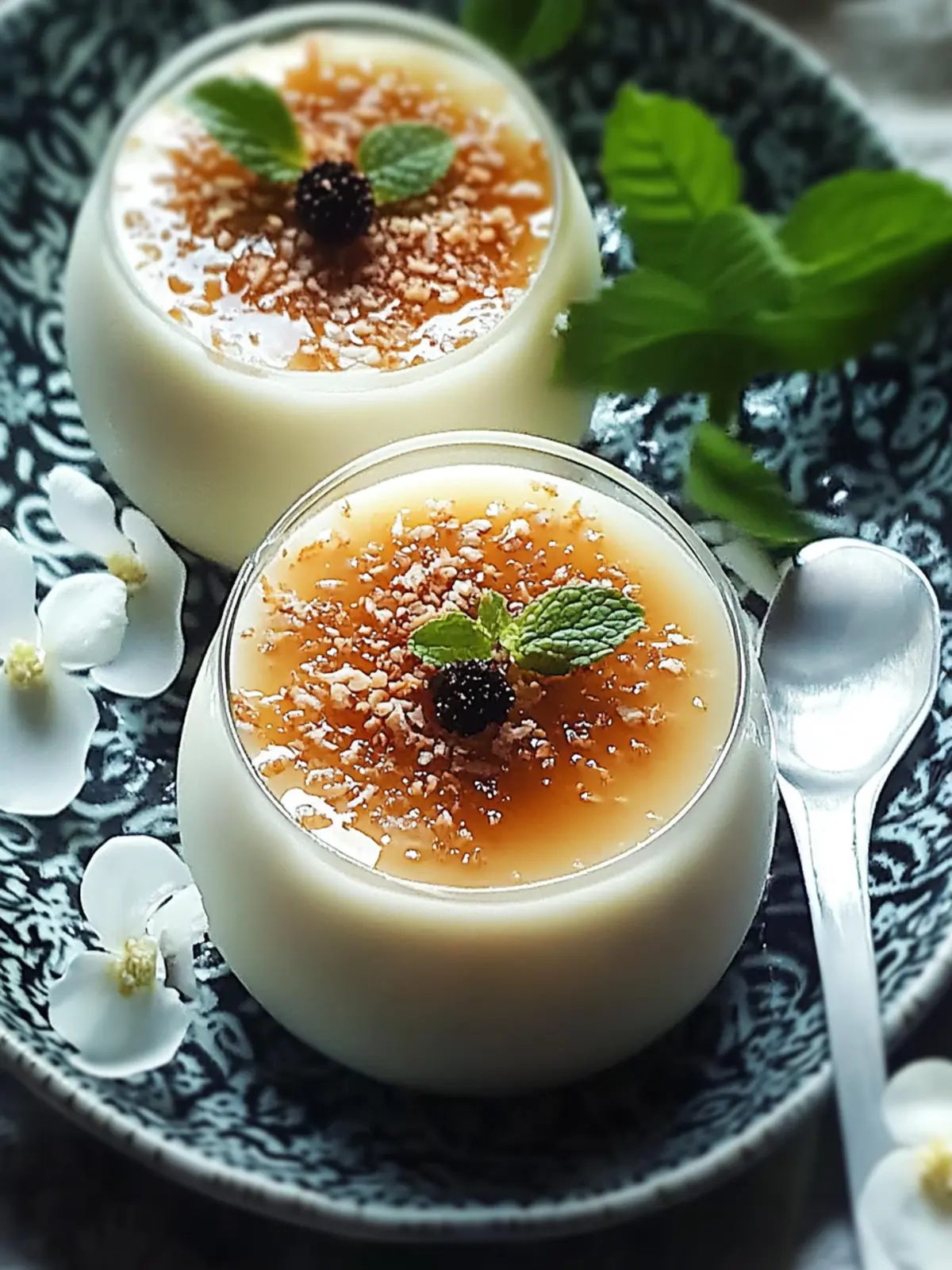
Why is Thai Coconut Custard so special?
Irresistible Taste: The perfect blend of coconut milk and palm sugar creates a delicate sweetness that dances on your palate.
Creamy Texture: Each spoonful is luxuriously smooth, offering a delightful contrast to chewy sticky rice.
Simple Ingredients: With just a handful of pantry staples, you can whip up this treat in no time.
Versatile Serving: Enjoy it alone or with sticky rice, making it the ideal dessert for any occasion.
Crowd-Pleasing Treat: Whether for a cozy night in or a festive gathering, this custard is sure to impress your guests.
Elevate your dessert game and check out more delightful custard recipes for endless inspiration!
Ingredients for Thai Coconut Custard
When you’re ready to create this creamy delight, make sure you have these simple yet essential ingredients on hand!
For the Custard
- 4 large Eggs – Key for a rich texture, be sure to beat them gently.
- 1 can Coconut Milk – Provides that luscious, creamy base that defines this custard.
- 1/2 cup Palm Sugar – Adds a unique floral sweetness; you can substitute with brown sugar if needed.
- 1/4 teaspoon Salt – Enhances the overall flavor profile and balances the sweetness.
- 1 teaspoon Vanilla Extract – Infuses warmth and depth of flavor into the custard.
- 2 leaves Pandan Leaves (optional) – Offers a lovely aroma and green hue; if unavailable, skip!
- 1 cup Sticky Rice (optional) – Serves as a wonderful creamy bed that complements the custard perfectly.
Now that you’re armed with the ingredients, let’s dive into the preparation and transport your taste buds to Thailand!
How to Make Thai Coconut Custard
-
Preheat your oven to 350°F (175°C). If you’re using pandan leaves, nestle them at the bottom of your baking dish for an aromatic touch.
-
Beat the eggs gently in a bowl until the mixture is smooth. Take your time to avoid incorporating too much air—this leads to the perfect custard texture!
-
Combine the coconut milk, palm sugar, salt, and vanilla extract into the egg mixture. Stir until everything is fully dissolved, creating a sweet, creamy concoction.
-
Strain the mixture through a fine sieve into a separate bowl to eliminate any lumps, ensuring your custard will be perfectly smooth and silky.
-
Layer the soaked sticky rice in the baking dish if desired. This optional step creates a wonderful base for the custard to rest upon.
-
Create a water bath by placing the baking dish into a larger pan filled with hot water. This gentle cooking method will help your custard bake evenly.
-
Bake for 45 minutes to 1 hour, checking for doneness. The custard should be set but still jiggles slightly in the center—just the way it should be!
-
Cool the custard at room temperature, then chill it in the refrigerator before serving to enhance the flavors and texture.
Optional: Serve with fresh fruit or a drizzle of honey for a sweet twist.
Exact quantities are listed in the recipe card below.
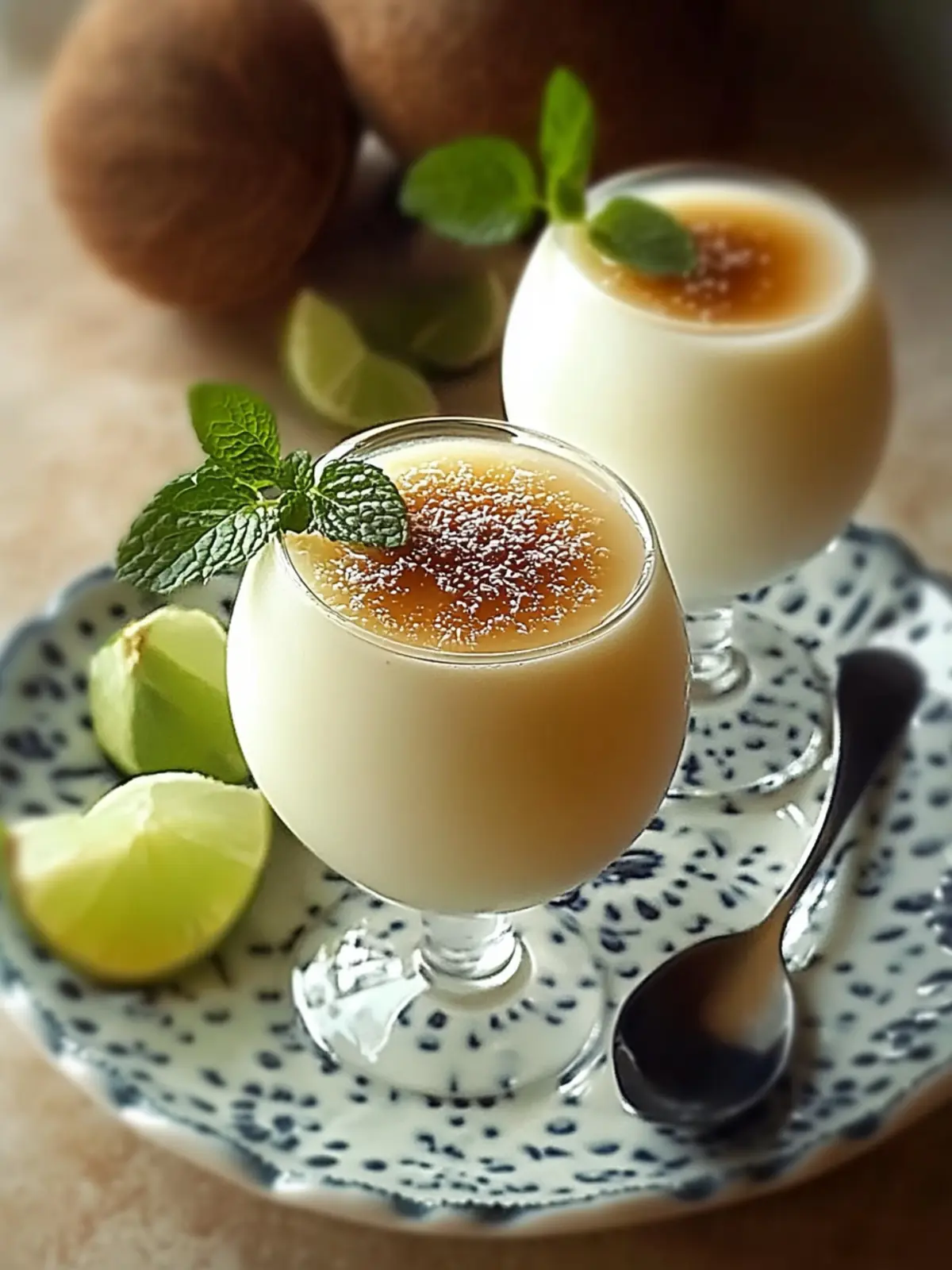
How to Store and Freeze Thai Coconut Custard
Fridge: Store your Thai Coconut Custard in an airtight container for up to 3 days. This helps retain its creamy texture and delightful flavors.
Freezer: If you want to extend its life, freeze it for up to 1 month. Make sure to wrap it tightly in plastic wrap, then place in a freezer-safe container.
Reheating: To enjoy the custard after freezing, thaw it in the fridge overnight, then reheat gently in the microwave or enjoy it chilled for a refreshing treat.
Serving Tips: Serve it straight from the fridge or warm it slightly; it pairs beautifully with fresh fruit or a drizzle of honey for an extra touch.
Make Ahead Options
These Thai Coconut Custards are perfect for meal prep, saving you time and hassle on busy weeknights! You can prepare the custard mixture (steps 2-4) up to 24 hours in advance; simply cover it tightly and refrigerate to keep it fresh. The sticky rice can also be soaked and layered in the baking dish ahead of time, making your final assembly a breeze. When you’re ready to bake, just pour the prepped mixture over the rice and create your water bath before baking as instructed. This way, you can enjoy a delightful dessert with just minimal effort, allowing you to treat yourself and your family to this creamy indulgence without any last-minute rush!
What to Serve with Thai Coconut Custard?
Imagine a tropical feast that complements the silky sweetness of your custard, crafting an unforgettable dining experience.
- Sticky Rice: This chewy delight pairs beautifully, soaking up the custard’s creamy richness for each blissful bite.
- Fresh Mango Slices: Juicy and vibrant, mango adds a refreshing fruity contrast that brightens the dessert’s flavors. A burst of tropical sunshine!
- Whipped Coconut Cream: Light and airy, this topping enhances the coconut flavor while adding a luscious texture that guests will adore.
- Thai Iced Tea: The creamy, sweet notes of this drink echo the custard’s essence, rounding off your meal in perfect harmony. It’s a thirst-quenching delight!
- Grilled Pineapple: The caramelized sugars from the grill create a sweet-and-sour note that complements the custard’s sweetness, adding a smoky layer to the experience.
- Sesame Brittle: Crisp and slightly salty, this crunchy addition adds a delightful contrast, making each spoonful of custard a truly unique treat.
- Lemon Sorbet: For a refreshing palate cleanser, this icy treat contrasts with the rich custard, making your meal feel lighter and brighter. It’s a sweet escape!
Expert Tips for Thai Coconut Custard
-
Eggs Matter: Use fresh eggs for the best flavor and texture. Remember not to overbeat them, as this can create bubbles in your custard.
-
Smoothness is Key: Always strain your custard mixture to eliminate lumps, ensuring a silky texture that melts in your mouth.
-
Baking Tip: The water bath is essential! It helps regulate the temperature and prevents the custard from cracking, making your Thai Coconut Custard perfect every time.
-
Cool Down: Letting the custard cool at room temperature before chilling enhances the flavors. Patience is key, so don’t rush this step!
-
Storage Secrets: Store leftovers covered in the fridge for up to three days. Enjoy it cold, or reheat gently in the microwave for a cozy treat!
Thai Coconut Custard Variations
Feel free to explore delightful twists to make this custard your own!
-
Dairy-Free: Substitute coconut cream for coconut milk for an even richer flavor that’s still vegan-friendly.
-
Sweetener Swap: Use equal parts honey or maple syrup instead of palm sugar for a different yet harmonious sweetness.
-
Citrus Zest: Add a teaspoon of lime or lemon zest to the mixture for a zesty kick that brightens the custard beautifully.
-
Nutty Addition: Mixing in 1/4 cup of toasted coconut flakes not only adds texture but also amplifies that tropical coconut flavor.
-
Spiced Twist: Include a dash of cardamom or cinnamon in the egg mixture for a warm spice that evokes cozy comfort.
-
Fruit Infusion: Fold in diced mango or papaya before baking for a fruity surprise in every bite. Their vibrant flavors create an exciting profile!
-
Decadent Chocolate: Create a chocolate coconut custard by stirring in 2 tablespoons of cocoa powder for a delightful, dessert-style custard.
-
Chili Heat: For adventurous palates, sprinkle a pinch of chili powder or cayenne into the mixture for a sweet-heat fusion that sparks curiosity!
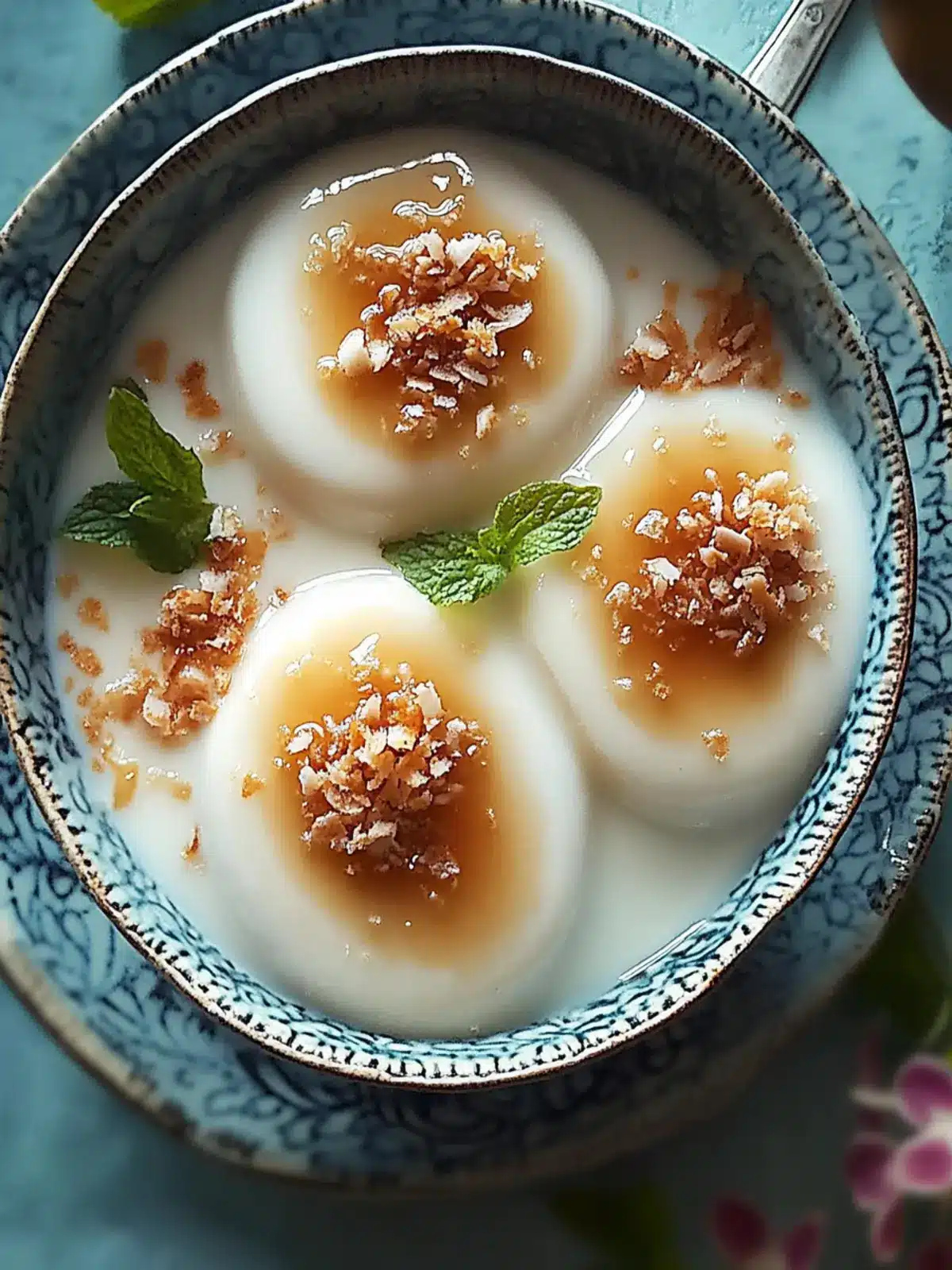
Thai Coconut Custard Recipe FAQs
What should I look for in ripe ingredients?
Absolutely! When choosing your ingredients, make sure your eggs are fresh; the shells should be clean and free from any cracks. For coconut milk, look for a can that doesn’t have any swelling or leaks, as this may indicate spoilage. If using pandan leaves, they should be vibrant green without any dark spots, and for sticky rice, select grains that are plump and free of debris.
How should I store leftover Thai Coconut Custard?
I recommend storing your leftover custard in an airtight container in the refrigerator. It will keep well for up to 3 days. Just make sure it’s covered to prevent it from absorbing any odors from other foods. This way, you can enjoy that creamy delight even after the initial serving!
Can I freeze Thai Coconut Custard?
Yes, you can! To freeze your custard, first, allow it to cool completely. Then, tightly wrap it in plastic wrap and place it in a freezer-safe container. It can last up to 1 month in the freezer. To thaw, simply put it in the refrigerator overnight. For serving, you can enjoy it cold or gently reheat it in the microwave for a cozy treat.
What if my Thai Coconut Custard is too runny after baking?
Very good question! If your custard doesn’t set properly, it could be due to insufficient baking time or incorrect egg measurements. Ensure it is baked long enough, as the center should jiggle slightly but not look liquidy. If it’s runny, bake for an additional 10 to 15 minutes in the water bath until it firms up. Always keep an eye on it to avoid overcooking!
Can I modify this recipe for dietary needs?
Absolutely! If you’re looking for a dairy-free option, check for lactose-free coconut milk, which usually works well. If you or your guests have allergies, just be sure to mention the use of eggs, and note the optional ingredients to accommodate those with gluten or corn sensitivities. For a vegan version, replace eggs with a suitable egg replacer—just be aware it might change the texture slightly.
What’s the best way to serve Thai Coconut Custard?
The more the merrier! You can serve it plain or drizzle it with honey for added sweetness. Pair it with some fresh mango or strawberries for a delightful contrast. Additionally, if you’ve made sticky rice, serving the custard on top creates a wonderfully fulfilling dessert that captures the essence of Thai cuisine. Enjoy!
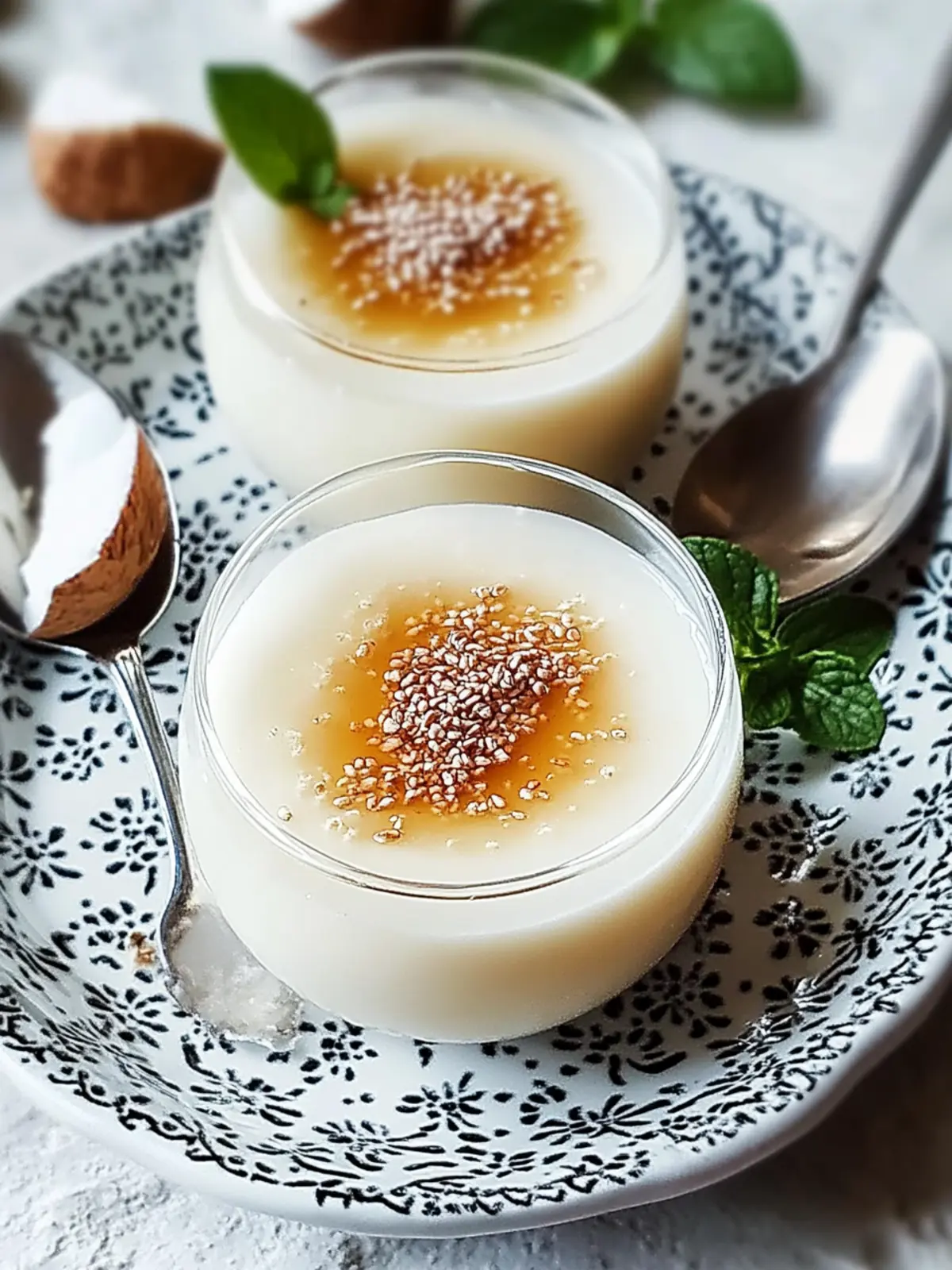
Indulge in Thai Coconut Custard: A Creamy Delight at Home
Ingredients
Equipment
Method
- Preheat your oven to 350°F (175°C). If using pandan leaves, nestle them at the bottom of your baking dish.
- Beat the eggs gently in a bowl until smooth, avoiding incorporating too much air.
- Combine the coconut milk, palm sugar, salt, and vanilla extract into the egg mixture. Stir until fully dissolved.
- Strain the mixture through a fine sieve into a separate bowl to eliminate lumps.
- Layer the soaked sticky rice in the baking dish if desired to create a base for the custard.
- Create a water bath by placing the baking dish into a larger pan filled with hot water.
- Bake for 45 minutes to 1 hour, checking for doneness. The custard should jiggle slightly in the center.
- Cool at room temperature, then chill in the refrigerator before serving.