
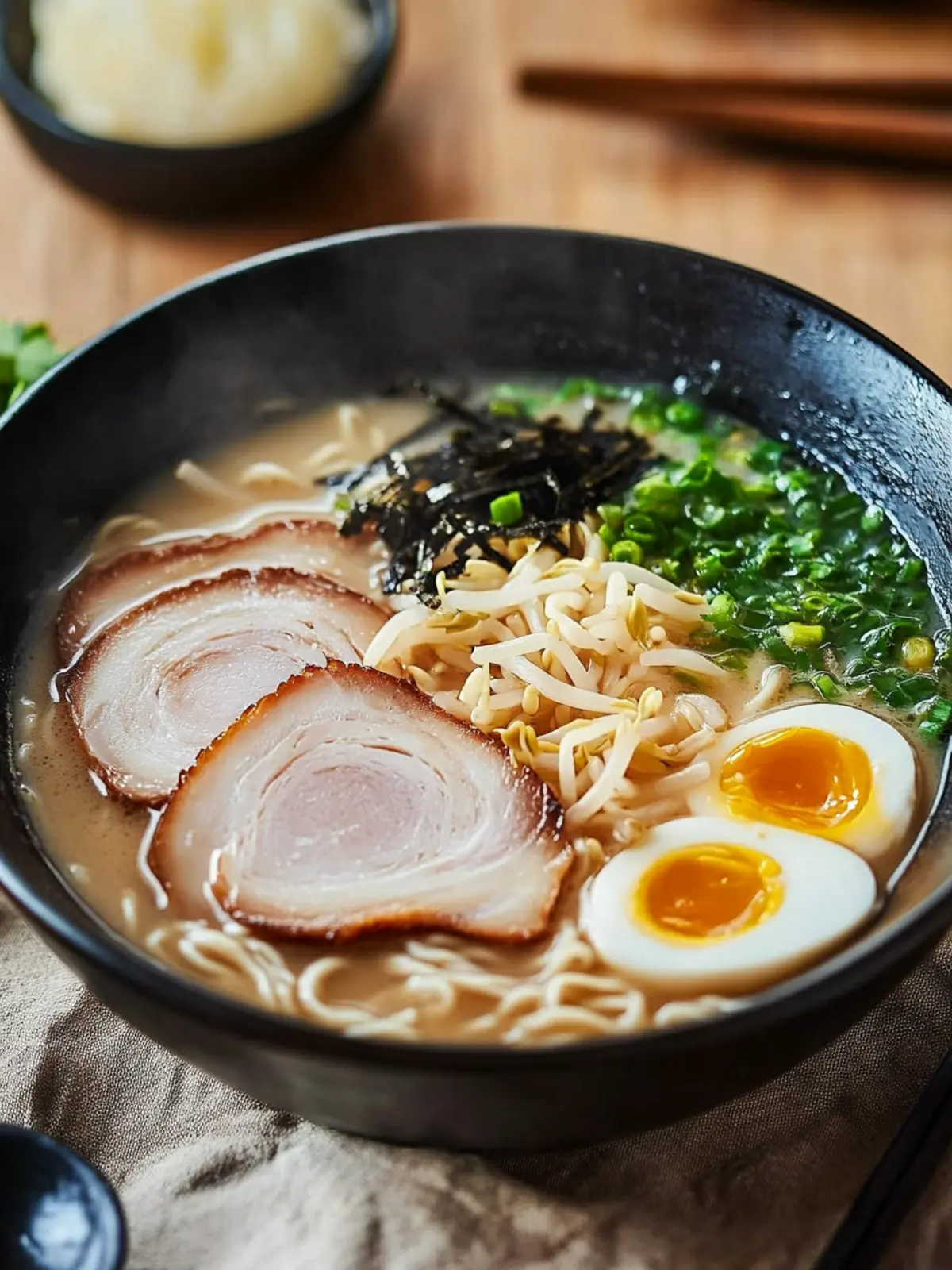
The first time I slurped a bowl of Tonkotsu Ramen, I was transported to a bustling ramen shop in the heart of Tokyo, where every spoonful echoed warmth and comfort. The rich, creamy pork broth wraps around each strand of noodles, creating a symphony of flavors that is simply irresistible. If you’ve ever found yourself craving the perfect bowl, look no further!
Picture a cozy evening where you can savor the slow-cooked goodness of tender chashu pork and perfectly marinated eggs, all topped with delicate enoki mushrooms and a sprinkle of green onions. This recipe invites you to dive into a culinary adventure without the fuss of takeout—but with all the delight that homemade food brings.
What’s even more exciting? Despite its gourmet allure, this Tonkotsu Ramen can be prepared in the comfort of your kitchen with just a little love and patience. So gather your ingredients, and let’s embark on this flavorful journey together!

Why is Tonkotsu Ramen a Must-Try?
Irresistible flavor: This Tonkotsu Ramen is rich and creamy, featuring a tantalizing pork broth that warms your soul with every spoonful.
Homemade goodness: Enjoy the satisfaction of creating restaurant-quality ramen right in your kitchen, without the long wait for takeout.
Satisfying texture: With chewy ramen noodles, tender chashu pork, and delicate enoki mushrooms, every bite delivers a delightful crunch and softness.
Perfect for gatherings: Impress your friends and family with this show-stopping dish that brings everyone to the table for a comforting meal.
Easy customization: Modify ingredients to suit your taste, whether it’s adding more spice or trying different toppings like seaweed or bamboo shoots.
When you’re ready to dive into this culinary adventure, explore more details in my guide on how to master ramen at home.
Tonkotsu Ramen Ingredients
A delightful mix to create your own bowl!
For the Broth
• 8 cups tonkotsu pork broth – This rich base is what gives your ramen that iconic flavor.
• 1/4 cup soy sauce – Adds depth and saltiness to the broth, enhancing overall taste.
• 1/2 cup sake – Use good quality sake for a more aromatic experience.
• 1/2 cup mirin – This sweet rice wine balances the savory flavors beautifully.
• 1/4 cup sugar – A touch of sweetness to round out the broth’s richness.
• 2-3 cloves garlic – Left whole, they infuse a mild garlic essence.
• 2 green onions – Coarsely chopped for extra flavor in the broth.
For the Chashu Pork
• 2 lb pork belly – Rolled and tied, it becomes the star of this ramen!
• 2 slices bacon – Adds an additional layer of flavor to your chashu.
For the Ramen
• 12 oz good quality dried ramen noodles – Freshness is key for the perfect noodle texture.
• 4 large or extra large eggs – Soft-boiled, they add creaminess to each bowl.
• 2-3 oz enoki or other mushrooms – These delicate mushrooms offer a lovely texture.
For Finishing Touches
• Thinly sliced green onions – A fresh garnish that adds color and crunch.
• 4 Tbsp shiro miso – Incorporate a touch of umami, elevating your Tonkotsu Ramen.
• 1-2 tsp kosher salt – Adjust for taste; the amount may vary based on broth saltiness.
• Pinch shichimi togarashi (optional) – Sprinkle for an exciting fiery kick!
By mastering these Tonkotsu Ramen ingredients, you’ll craft a comforting, authentic noodle soup right at home!
How to Make Tonkotsu Ramen
-
Prepare the Marinade: Combine the soy sauce, sake, mirin, sugar, garlic, and green onions in a large ziploc bag that can hold the pork belly. Remove excess air using a straw and seal tightly.
-
Sous Vide the Pork Belly: Immerse the sealed pork belly in your sous vide setup at 170°F for 10-11 hours. This gentle cooking method ensures tender, flavorful meat.
-
Cool and Slice the Pork: Once finished, carefully remove the pork from the bag and discard the marinade. Allow the chashu pork belly to cool completely before slicing into 8-12 pieces, about 1/8 to 3/16 inches thick.
-
Cook the Bacon: In a small saucepan, combine the bacon, 1/4 cup soy sauce, 2 tablespoons mirin, and 2 tablespoons sake. Simmer on low heat for about an hour, adding chicken stock if needed. Remove the bacon once done.
-
Simmer the Miso Mixture: In another small saucepan, mix the shiro miso, 1/4 cup sake, and 1/4 cup mirin. Simmer on low for about 5 minutes to meld the flavors.
-
Boil the Eggs: In boiling water, cook large eggs for 6 minutes and 30 seconds, or extra large eggs for 7 minutes and 30 seconds. Transfer them to an ice bath to stop the cooking.
-
Prepare the Ramen Noodles: Cook the ramen noodles in boiling water according to package instructions, which is typically around 4 minutes.
-
Sauté the Mushrooms: Cook the mushrooms alongside the noodles in the boiling water until they are softened.
-
Brown the Chashu Pork: In a non-stick skillet, gently fry the sliced chashu pork until it is lightly browned on all sides, bringing out the flavors.
-
Assemble the Bowls: Place 1/4 of your chosen tare (flavoring) in the bottom of four bowls. Ladle in about 1/2 cup of the warmed tonkotsu broth and stir to mix.
-
Add Noodles and Broth: Carefully add the cooked ramen noodles to each bowl. Pour in an additional 1 1/2 cups of tonkotsu broth over the noodles.
-
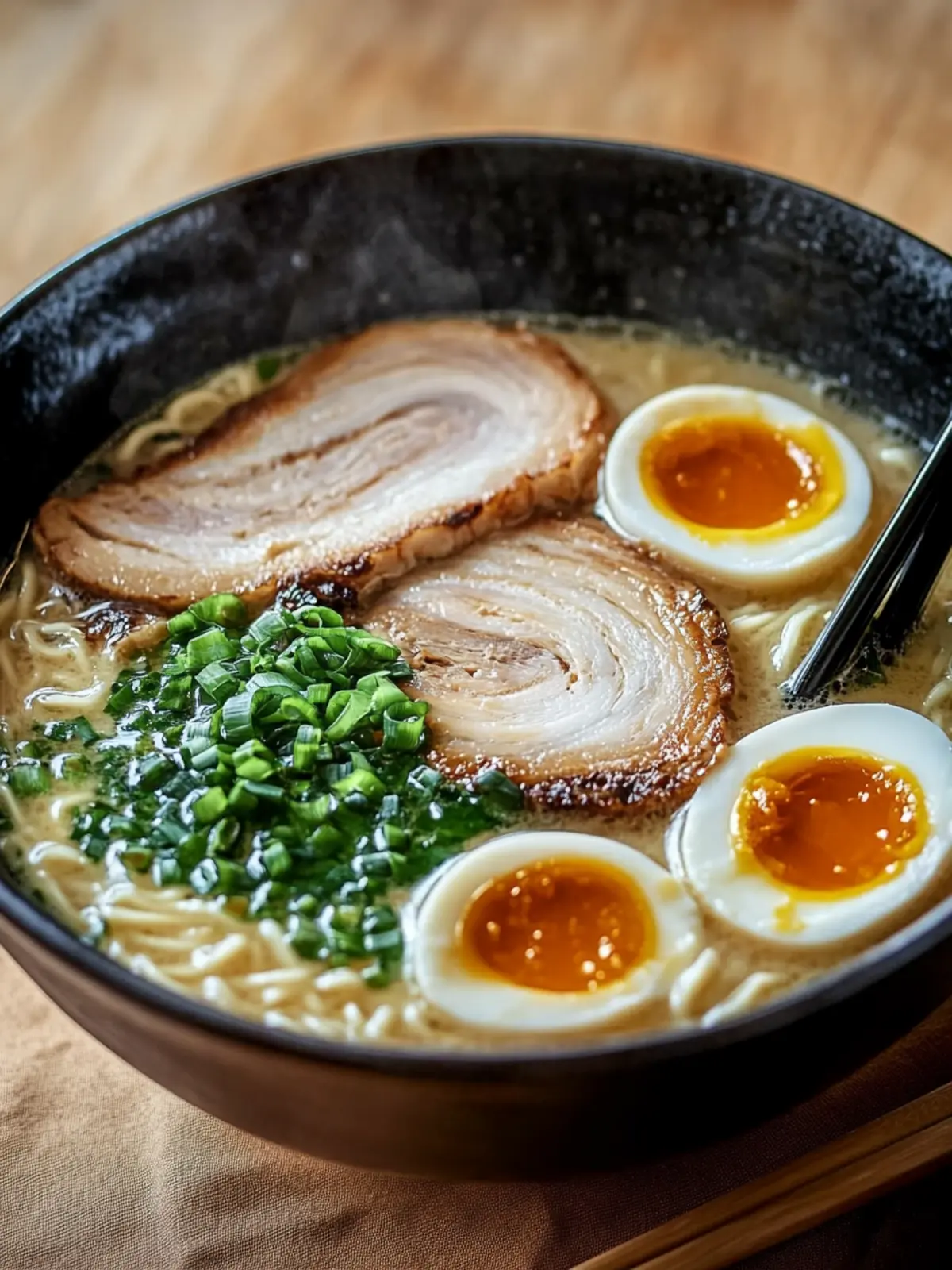
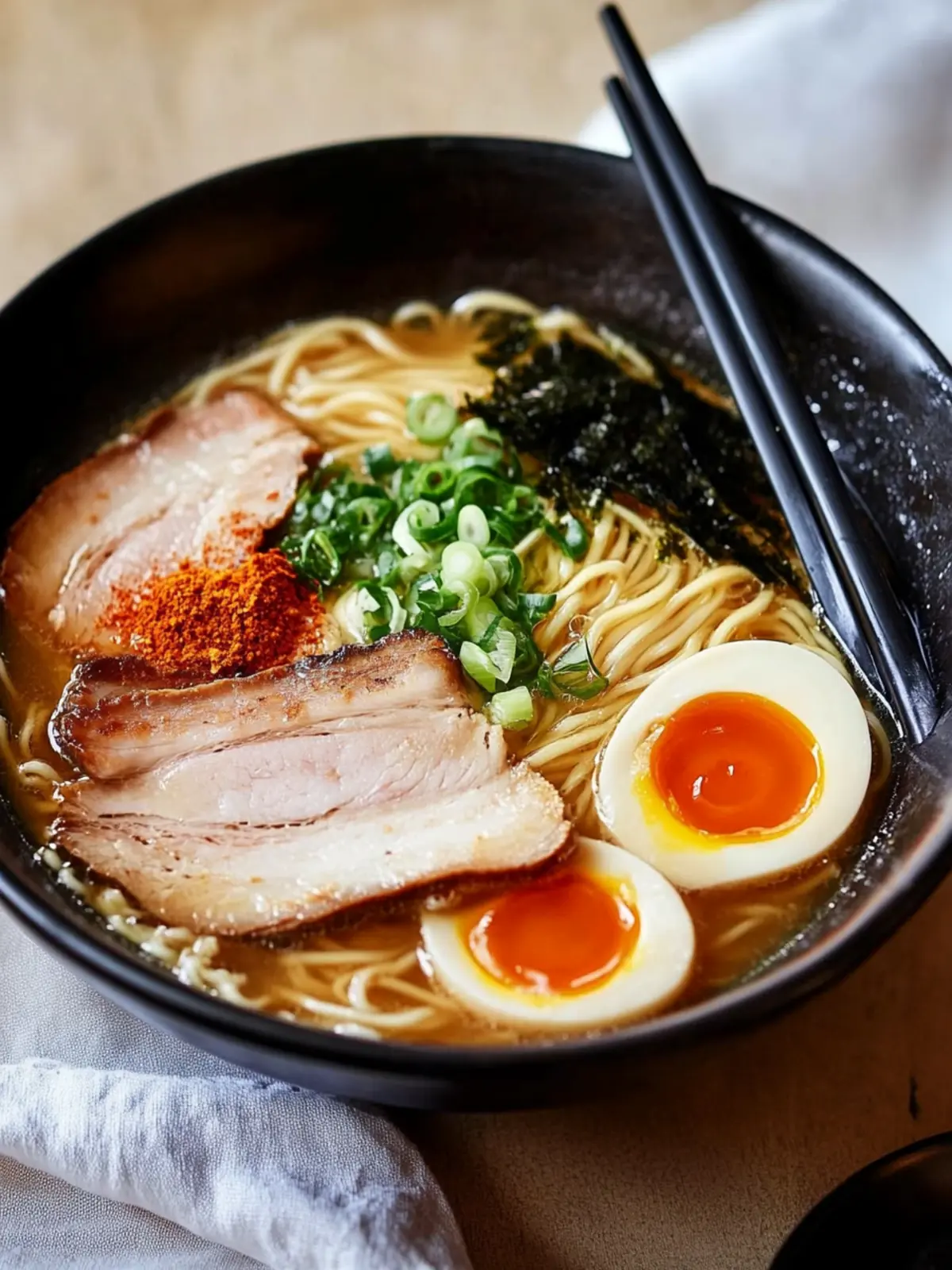
Garnish Your Ramen: Top each bowl with a half of a soft-boiled egg, sautéed mushrooms, slices of chashu pork, and a sprinkle of thinly sliced green onions.
Optional: For an extra kick, sprinkle a pinch of shichimi togarashi over each serving.
Exact quantities are listed in the recipe card below.
Expert Tips for Tonkotsu Ramen
• Quality Ingredients: Use high-quality tonkotsu pork broth and ramen noodles, as they dramatically enhance the flavors of your dish.
• Sous Vide Precision: Ensure your sous vide is set correctly at 170°F for 10-11 hours to get that melt-in-your-mouth texture for the chashu pork.
• Egg Timing: Pay close attention to boiling times for your eggs! For perfect soft-boiled eggs, aim for 6 minutes 30 seconds for large eggs.
• Don’t Rush Noodles: Always boil ramen noodles according to package instructions to avoid mushiness; a quick 4-minute cook usually does the trick.
• Layering Flavors: Consider the order of adding ingredients; start with tare, then broth, and finally noodles to allow flavors to meld beautifully in your Tonkotsu Ramen.
• Taste as You Go: Adjust seasonings, especially salt, towards the end. This is key for achieving your desired taste profile without overpowering the broth.
What to Serve with Tonkotsu Ramen?
Treat your family and friends to a delightful, comforting meal that will elevate your ramen experience.
-
Gyoza: These crispy pan-fried dumplings add a delightful crunch and savory flavor that pairs perfectly with the creamy broth. They’re a delightful appetizer that invites sharing.
-
Seaweed Salad: A refreshing seaweed salad brings a burst of umami and a touch of brightness, nicely balancing the richness of the ramen. The chewy texture contrasts beautifully with the noodles, creating harmony on your plate.
-
Spicy Tofu Bites: Craving something with a kick? Crispy, spicy tofu bites complement the comforting flavors of Tonkotsu Ramen while adding a bit of fire to your meal.
-
Edamame: Simple and nutritious, steamed edamame makes a perfect finger food. Tossed with a sprinkle of sea salt, they provide a subtle, satisfying crunch that pairs well with the rich broth.
-
Japanese Pickles: Bright, tangy Japanese pickles (tsukemono) are the ideal palate cleanser between sips of ramen. Their acidity contrasts nicely with the creamy pork broth, providing a refreshing bite.
-
Sapporo Beer: Sip on a chilled Sapporo beer while enjoying your Tonkotsu Ramen. The light, crisp taste of the beer pairs beautifully with the hearty flavors of the dish, enhancing your overall dining experience.
Each option enhances your ramen meal, inviting delightful textures and flavors that will make your dining experience truly special.
Tonkotsu Ramen Variations
Customize this delicious recipe to match your taste buds!
-
Vegan Delight: Substitute pork broth with vegetable broth and use tofu instead of chashu pork for a plant-based twist.
-
Spicy Kick: Add a spoonful of chili paste or Sriracha to the broth to give your Tonkotsu Ramen an exciting heat level that’ll warm your soul.
-
Umami Boost: Include a dash of soy sauce or extra shiro miso in your broth for an extra layer of depth that enhances the dish’s savory profile.
-
Texture Variation: Swap out the enoki mushrooms with sliced shiitake or sautéed bok choy for a different textural experience in each bite.
-
Quick Prep: Use pre-cooked pork belly to significantly cut down on cooking time while still enjoying that rich flavor profile.
-
Herbal Infusion: Stir in a handful of fresh herbs like cilantro or basil to brighten up the flavors and introduce a fresh, aromatic element.
-
Crunch Factor: Top your ramen with crispy shallots or fried garlic for extra flavor and a delightful crunch, elevating your dining experience.
-
Egg Perfection: Try seasoning your soft-boiled eggs with a bit of soy sauce or miso for a richer flavor that elevates this comforting classic.
How to Store and Freeze Tonkotsu Ramen
Fridge: Store any leftover Tonkotsu Ramen components in airtight containers. The broth can last up to 3 days, while the noodles and toppings should be kept separate for freshness.
Freezer: For longer storage, freeze the tonkotsu broth in freezer-safe bags or containers. It can be kept for up to 3 months. Do not freeze the noodles or soft-boiled eggs, as they may lose texture.
Reheating: To enjoy reheated ramen, thaw the broth overnight in the fridge, then gently reheat on the stove. Boil fresh noodles separately to maintain their chewy texture, then assemble your comforting bowl.
Eggs: If you’ve made extra soft-boiled eggs, they can be stored in the fridge for up to 3 days, but enjoy them fresh for the best flavor.
Make Ahead Options
These Tonkotsu Ramen bowls are perfect for meal prep enthusiasts! You can marinate and sous vide the pork belly up to 3 days in advance, which allows the flavors to deepen while preserving tenderness. After sous vide cooking, let the chashu cool completely, then slice and store it in an airtight container in the refrigerator. The soft-boiled eggs can also be prepared up to 24 hours ahead; simply chill in ice water after cooking and peel before serving. When you’re ready to delight in your homemade ramen, boil the noodles fresh, reheat the broth and toppings, then assemble your bowls for restaurant-quality results with minimal effort.
Tonkotsu Ramen Recipe FAQs
How do I select ripe ingredients for Tonkotsu Ramen?
Absolutely! For the best flavor, choose fresh, high-quality ingredients. Look for vibrant green onions without wilted leaves, firm pork belly, and eggs that have a good shell color and are free from cracks. The mushrooms should be firm and not slimy—enoki are delicate and should be used quickly after purchase.
What is the best way to store leftover Tonkotsu Ramen?
Very good question! Store any remaining components separately in airtight containers. The tonkotsu broth can be refrigerated for up to 3 days. Keep the ramen noodles and toppings like pork and eggs in separate containers to maintain freshness and ideal texture.
Can I freeze Tonkotsu Ramen broth?
Certainly! For freezing, pour the cooled tonkotsu broth into freezer-safe bags or containers, leaving some space for expansion. It can be stored in the freezer for up to 3 months. Just remember not to freeze noodles or soft-boiled eggs to avoid loss of texture.
What if my broth turned out too salty?
No worries! If your broth is too salty, you can dilute it with a small amount of water or additional unsalted broth. Bring it back to a gentle simmer, then taste and adjust as needed. Adding a splash of additional mirin can also help balance saltiness with sweetness.
Can I make Tonkotsu Ramen vegan or vegetarian?
Absolutely! For a vegetarian version, use vegetable broth instead of tonkotsu pork broth. You could also create a rich umami flavor using ingredients like shiitake mushrooms and miso. For the chashu, substitute with marinated tofu or seitan prepared similarly for tenderness.
How long can I keep soft-boiled eggs?
Great question! Soft-boiled eggs can be stored in the fridge for up to 3 days. To keep them fresh, store them in their shells and peel them just before serving. Enjoy them warm for the best flavor and texture!
Dreamy Tonkotsu Ramen: Your Ultimate Comfort Bowl at Home
Ingredients
Equipment
Method
- Prepare the Marinade: Combine the soy sauce, sake, mirin, sugar, garlic, and green onions in a large ziploc bag that can hold the pork belly. Remove excess air using a straw and seal tightly.
- Sous Vide the Pork Belly: Immerse the sealed pork belly in your sous vide setup at 170°F for 10-11 hours.
- Cool and Slice the Pork: Remove the pork from the bag and discard the marinade. Allow the chashu pork belly to cool completely and slice into 8-12 pieces.
- Cook the Bacon: In a small saucepan, combine the bacon, soy sauce, mirin, and sake. Simmer on low heat for about an hour.
- Simmer the Miso Mixture: In another saucepan, mix shiro miso, sake, and mirin. Simmer on low for about 5 minutes.
- Boil the Eggs: In boiling water, cook large eggs for 6 minutes and 30 seconds.
- Prepare the Ramen Noodles: Cook the ramen noodles in boiling water according to package instructions, typically around 4 minutes.
- Sauté the Mushrooms: Cook the mushrooms alongside the noodles in boiling water until softened.
- Brown the Chashu Pork: In a non-stick skillet, fry the sliced chashu pork until lightly browned.
- Assemble the Bowls: Place tare in the bottom of four bowls. Ladle in about 1/2 cup of warmed tonkotsu broth and stir to mix.
- Add Noodles and Broth: Add the cooked ramen noodles and pour in an additional 1 1/2 cups of tonkotsu broth.
- Garnish Your Ramen: Top each bowl with soft-boiled egg, sautéed mushrooms, chashu pork, and green onions.