
As the weather turns crisp, I find myself yearning for the comforting embrace of a warm bowl of Korean rice cake soup, or Tteokguk. The first whiff of its rich broth, mingled with savory beef and fragrant garlic, instantly transports me to a cozy kitchen where laughter and warmth fill the air. I stumbled upon this delightful dish during a winter gathering, where the host served it with love and care—it quickly became a cherished favorite.
Imagine sitting down after a long day, cradling a steaming bowl of Tteokguk, each bite offering a delightful chew from the rice cakes and a burst of flavor from the carefully selected ingredients. Not only does this dish celebrate tradition, but it’s also remarkably easy to whip up in just 15 minutes! With a few simple ingredients, you can create a meal that’s not only satisfying but also beautiful, garnished with vibrant green onions and a hint of sesame oil.
Join me as we dive into the steps to make this beloved Korean comfort food that promises to warm your heart and make any meal feel special, all while steering clear of bland fast food options!
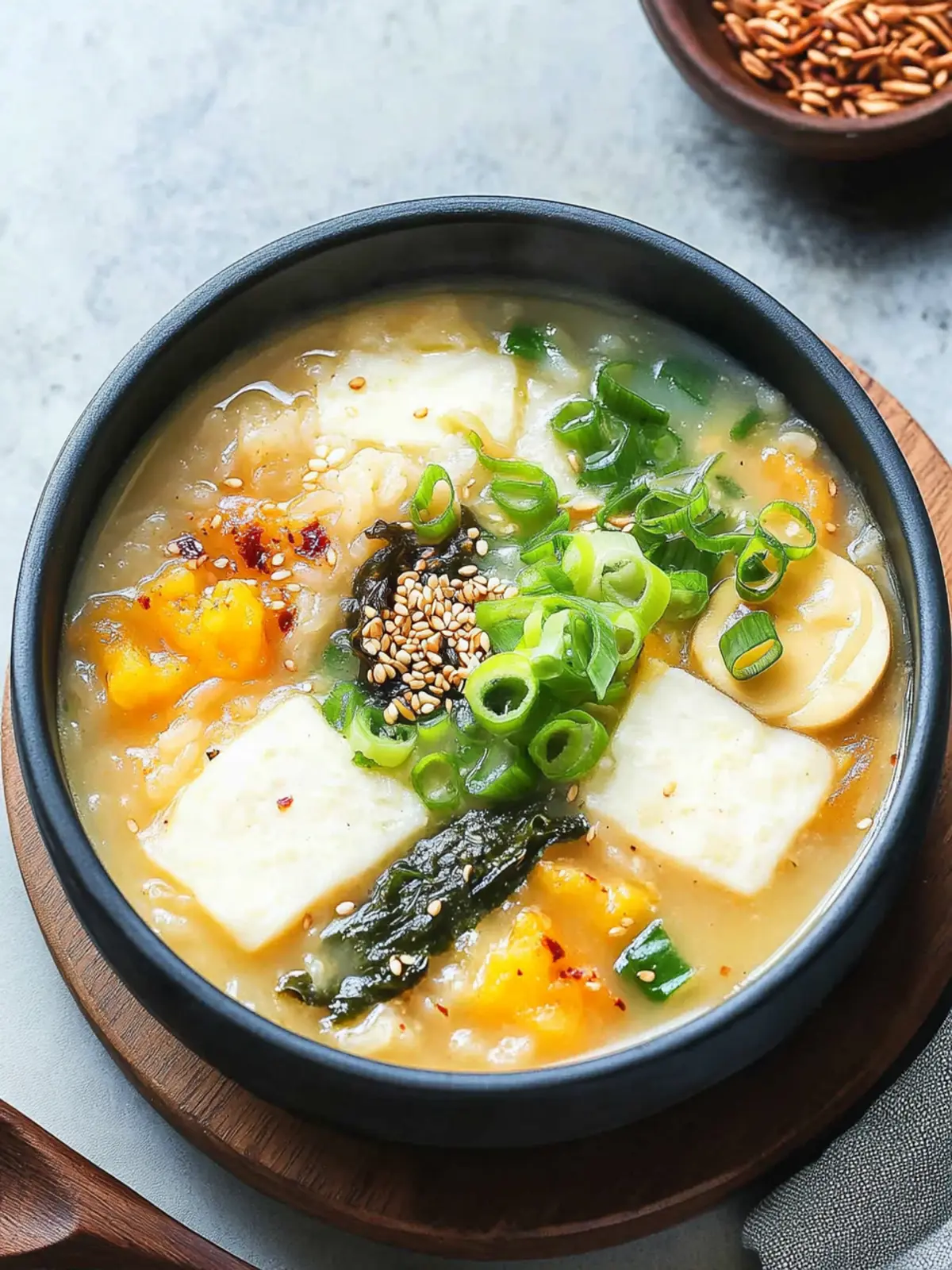
Why is Korean Rice Cake Soup a Must-Try?
Comforting warmth: Tteokguk is the perfect bowl to snuggle up with on chilly nights.
Quick and easy: This recipe takes only 15 minutes—ideal for busy weeknights!
Savory delight: The blend of tender beef, rich broth, and chewy rice cakes is simply irresistible.
Versatile option: Customize it by adding mandu or other favorite ingredients for a unique touch.
Impressive presentation: Garnished with vibrant eggs and green onions, it’s sure to impress your guests.
Create memorable meals at home and elevate your culinary skills with this delightful dish!
Korean Rice Cake Soup Ingredients
• Discover the essential elements for the perfect Korean Rice Cake Soup.
For the Soup Base
- Korean rice cakes – These chewy treats are the heart of the dish, providing texture and tradition.
- Broth (anchovy, dashi, or chicken) – Choose a rich broth for depth of flavor, elevating your soup to new heights.
- Sliced beef – Adds protein and a savory essence, making every spoonful satisfying.
- Garlic – A few cloves minced will give the soup that aromatic kick we all love.
- Vegetable oil – This is essential for sautéing the beef, helping to build layers of flavor.
For Seasoning
- Low sodium soy sauce – Just the right amount enhances the umami without overwhelming the dish.
- Salt and pepper – Essential to taste, ensuring all flavors harmonize beautifully.
- Toasted sesame oil – A finishing drizzle imparts a warm nuttiness that enriches the experience.
For Garnish
- Eggs (whites and yolks separated) – Cooking and garnishing with these adds elegance and visual appeal.
- Green onions – Freshly chopped, they bring color and a mild onion flavor, brightening the dish.
- Gim (roasted seaweed) – For a touch of oceanic essence and extra crunch, sprinkle or strip over the top.
Optional Add-ins
- Mandu (Korean dumplings) – Add these for a delightful twist, making your Korean Rice Cake Soup even heartier!
How to Make Korean Rice Cake Soup
-
Soak the rice cakes: Begin by rinsing and soaking 2½ cups of Korean rice cakes in a bowl of water while you prep the other ingredients. This step helps soften them for the soup.
-
Cook the eggs: In a pan, cook the separated egg whites and yolks until fully set, then slice them into thin strips. These will add a lovely texture and garnish to your soup.
-
Sauté the beef: Heat a large pot over medium-high heat and add 1 cup of sliced beef, 3 cloves of minced garlic, and 1 tablespoon of vegetable oil. Sauté them until the beef is fully cooked and notes of garlic fill the air.
-
Combine ingredients: Stir in the drained rice cakes along with 3½ cups of broth (your choice of anchovy, dashi, or chicken). If you’re feeling adventurous, add in mandu (Korean dumplings) for extra heartiness.
-
Cook the soup: Bring the mixture to a rolling boil and simmer for about 5 to 7 minutes until the rice cakes are soft and tender, and the mandu is fully cooked. Skim off any scum that rises to the surface.
-
Season to taste: Drizzle in 2 teaspoons of low sodium soy sauce, and add salt and pepper according to your taste preferences. This is where your soup gains its delicious flavor!
-
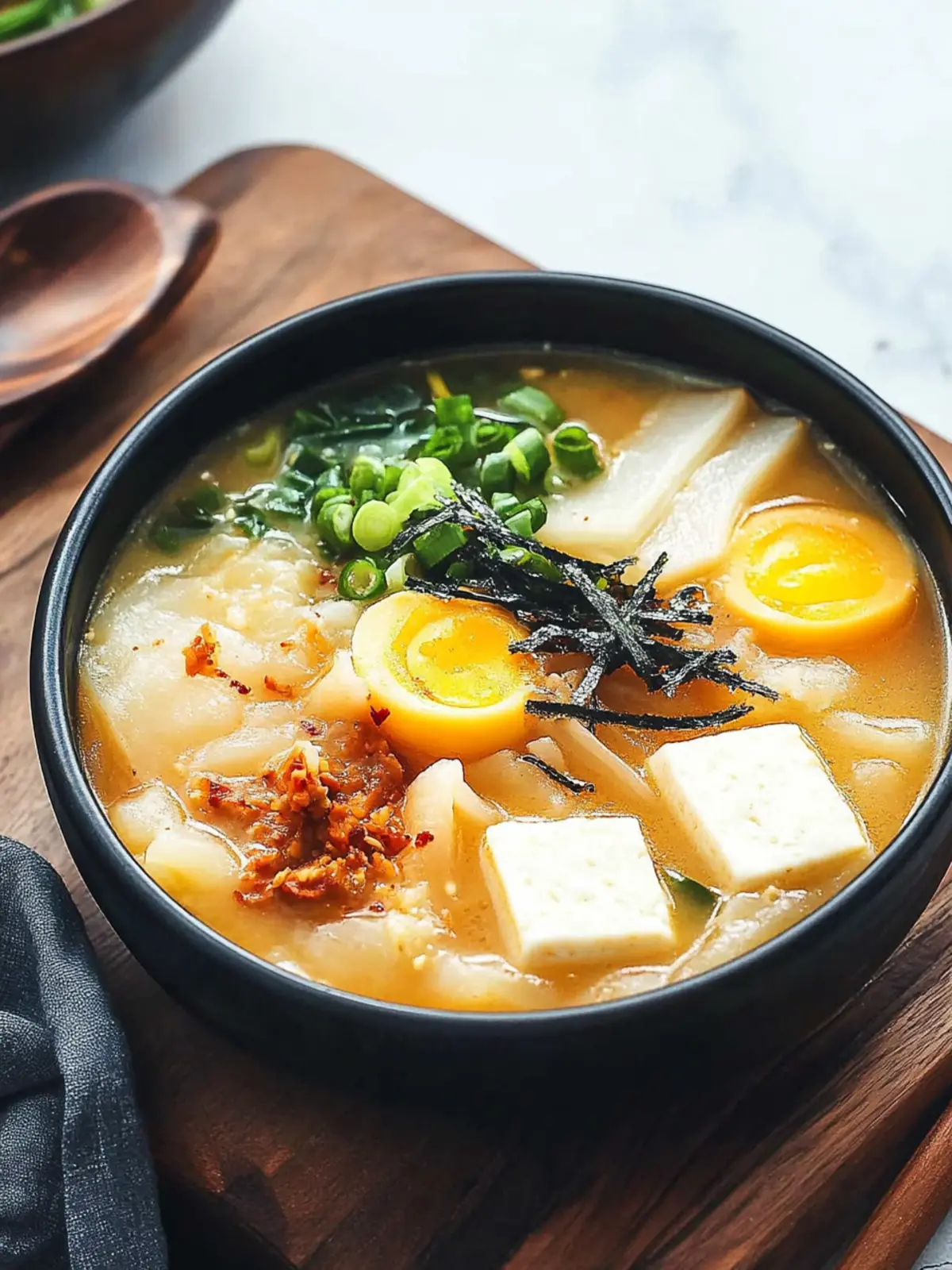
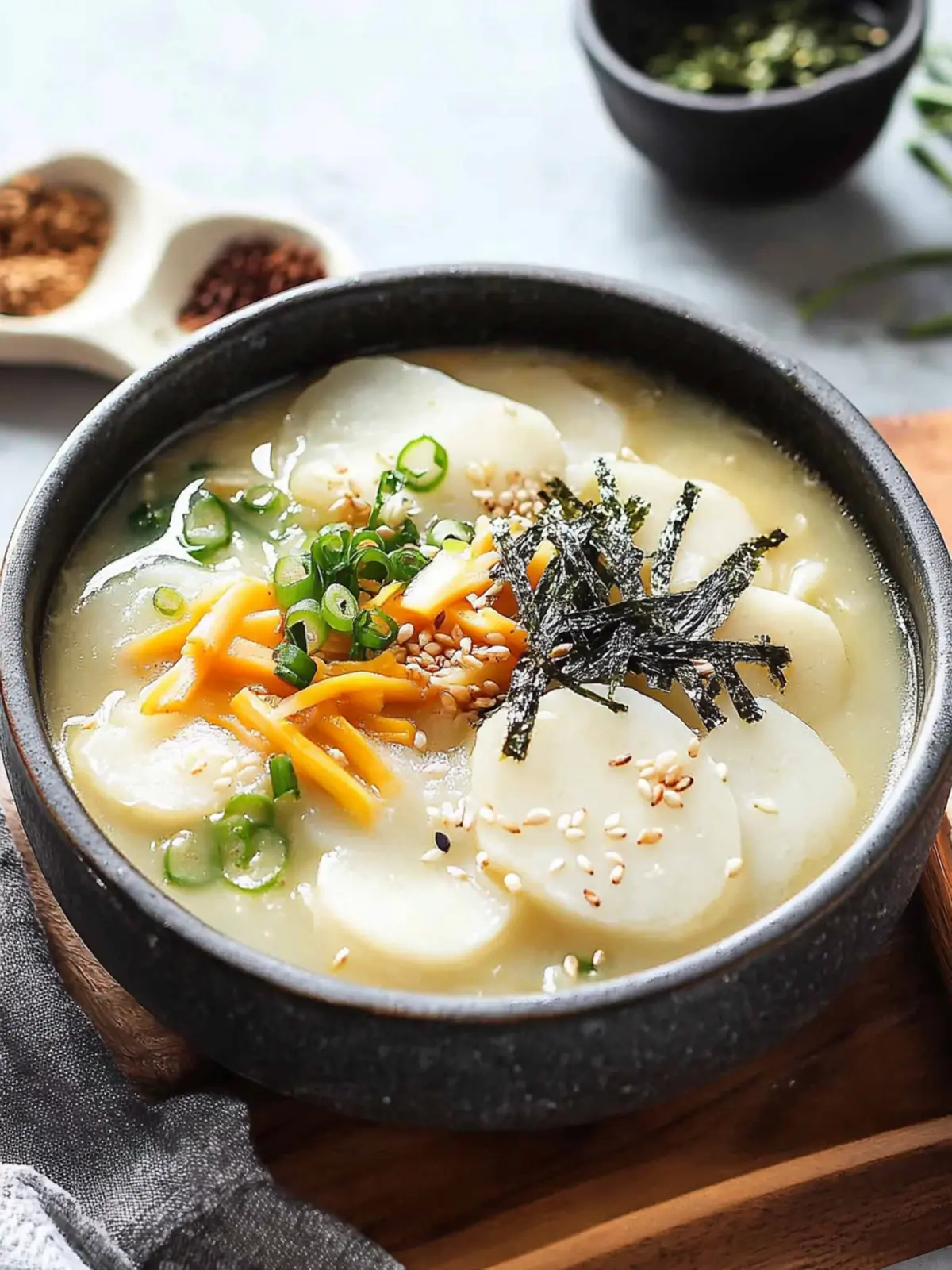
Garnish and serve: Finally, ladle your beautiful soup into bowls and garnish with the sliced eggs, chopped green onions, a sprinkle of crushed gim, and a dash of toasted sesame oil for the finishing touch. Enjoy the warmth!
Optional: Add a sprinkle of chili flakes for a little heat.
Exact quantities are listed in the recipe card below.
Make Ahead Options
These Korean Rice Cake Soup preparations are perfect for busy home cooks looking to save time! You can soak the rice cakes and slice the beef up to 24 hours in advance; just keep them refrigerated to maintain freshness. Additionally, you can cook and refrigerate the eggs, storing them separately until you’re ready to serve. When you’re ready to enjoy your delicious soup, simply sauté the beef with garlic, add everything to the pot with the broth, and cook for about 5 to 7 minutes until the rice cakes are tender. This way, you’ll have a warm, comforting bowl of Tteokguk ready to savor with minimal effort!
Korean Rice Cake Soup Substitutions
Feel free to experiment and make this comforting dish your own with these exciting variations!
-
Vegetarian: Use vegetable broth and swap beef for sliced mushrooms to keep it hearty and delicious.
For a flavor boost, try adding some tofu for extra protein. -
Gluten-Free: Replace soy sauce with tamari or coconut aminos for a gluten-free alternative that doesn’t skimp on taste.
Adding a little lime juice can also brighten the flavors beautifully! -
Spicy Kick: Mix in gochujang or sprinkle red pepper flakes to add a delightful heat to your soup.
This brings a warm, invigorating kick that pairs wonderfully with the savory notes. -
Creamy Twist: Stir in a dollop of coconut milk for a rich and creamy mouthfeel that elevates the broth.
It creates a wonderful balance with the chewy rice cakes. -
Extra Veggies: Toss in some spinach or bok choy for an added nutritional boost and vibrant color.
Not only does it enhance the dish visually, but it also packs a healthy punch! -
Seafood Boost: Substitute the beef with shrimp or clams for a seafood twist that brings a whole new flavor profile.
The ocean’s essence mingling with the broth is absolutely divine! -
Flavorful Add-ins: Throw in your favorite Asian vegetables like napa cabbage or radish to introduce various textures and tastes.
This addition can transform your soup into a colorful medley. -
Noodle Option: Swap rice cakes for rice noodles for a different chewy texture that still feels deliciously comforting.
This creates a unique take on the traditional soup while still keeping it heartwarming!
How to Store and Freeze Korean Rice Cake Soup
Fridge: Store leftover Korean rice cake soup in an airtight container for up to 3 days. Make sure to let it cool before sealing to maintain freshness.
Freezer: For longer storage, freeze the soup (without garnishes) in a freezer-safe container for up to 3 months. Thaw overnight in the fridge before reheating.
Reheating: Reheat on the stove over medium heat, adding a splash of broth or water to loosen it if necessary. Be sure to heat until it’s thoroughly warmed.
Garnishing: Add any garnishes like green onions or eggs fresh before serving to elevate the flavors again!
Tips for the Best Korean Rice Cake Soup
- Rice Cake Prep: Always soak the Korean rice cakes before cooking; this helps them soften quickly and ensures they don’t become tough in the soup.
- Sautéing Beef: Make sure to fully cook the beef before adding the broth—this layers flavors and gives the soup a rich depth.
- Broth Choice: Choosing a good-quality broth is key; it sets the foundation for your Korean rice cake soup, so pick one you truly enjoy!
- Adjust Seasoning: Taste as you go! Everyone’s palate is different, so adjust the salt, pepper, and soy sauce to fit your preference.
- Beautiful Garnishing: Don’t skip the garnishes! They not only enhance the visual appeal but also add layers of flavor and texture to the dish.
What to Serve with Korean Rice Cake Soup?
Cozying up with a bowl of this delightful soup opens doors to a world of wonderful pairings that elevate your mealtime experience.
- Kimchi: A classic Korean side dish that offers a tangy, spicy kick, perfectly balancing the rich flavors of the soup.
- Steamed Rice: Soft, fluffy rice adds a comforting base to soak up the tasty broth, creating a well-rounded meal.
- Pan-Fried Dumplings: Crispy on the outside and tender within, they elevate the dining experience with texture and flavor.
- Pickled Vegetables: These refreshing bites cleanse the palate and add brightness, contrasting beautifully with the soup’s richness.
- Vegetable Pancakes (Jeon): A savory addition, they bring a delightful crunch and flavors that pair harmoniously with the soup.
- Cold Noodles: Serve alongside chilled noodles tossed in a sweet-spicy sauce for a refreshing contrast to the warm soup.
- Hot Tea: A steaming cup of ginger tea or barley tea adds warmth and comfort as you enjoy your meal.
- Dessert (Sweet Rice Cake): Close the meal with a sweet rice cake to continue the joyous celebration of rice in delightful new forms.
Korean Rice Cake Soup Recipe FAQs
How do I choose the right Korean rice cakes?
Absolutely! Look for fresh, round rice cakes in the refrigerated section of your Asian grocery store. They should have a soft texture without any dark spots or visible damage. Avoid overly dry or hard rice cakes, as they won’t yield the chewy texture we love in Tteokguk.
How long can I store leftovers of Korean rice cake soup?
Very! You can store your leftover Korean rice cake soup in an airtight container in the fridge for up to 3 days. Just make sure to let it cool to room temperature before sealing to keep it fresh and tasty.
Can I freeze Korean rice cake soup?
Yes, you can! I often freeze my soup without garnishes. Pour it into a freezer-safe container and store it for up to 3 months. When you’re ready to enjoy it again, just thaw it overnight in the fridge and reheat it on the stove, adding a splash of broth or water if necessary.
What should I do if my rice cakes turn out rubbery?
If your rice cakes become rubbery, it may be because they weren’t soaked long enough or cooked in enough liquid. Make sure to soak them for at least 30 minutes and add plenty of broth as they cook. If you’re still facing challenges, try reducing the heat and simmering the soup gently to allow them to soften properly.
Are there any dietary considerations for this Korean rice cake soup?
Absolutely! Tteokguk typically contains beef, which may not suit vegetarians. You can easily substitute the meat with mushrooms or tofu for a delightful vegetarian option while keeping the broth flavorful. Additionally, if you have soy allergies, consider using tamari as a soy sauce alternative.
How do I add an extra kick of flavor to my Korean rice cake soup?
To enhance the flavors, try adding fresh ginger during the sautéing step or sprinkle in some chili flakes just before serving for a little heat. If you enjoy a more umami essence, consider incorporating a splash of fish sauce along with the soy sauce for depth!
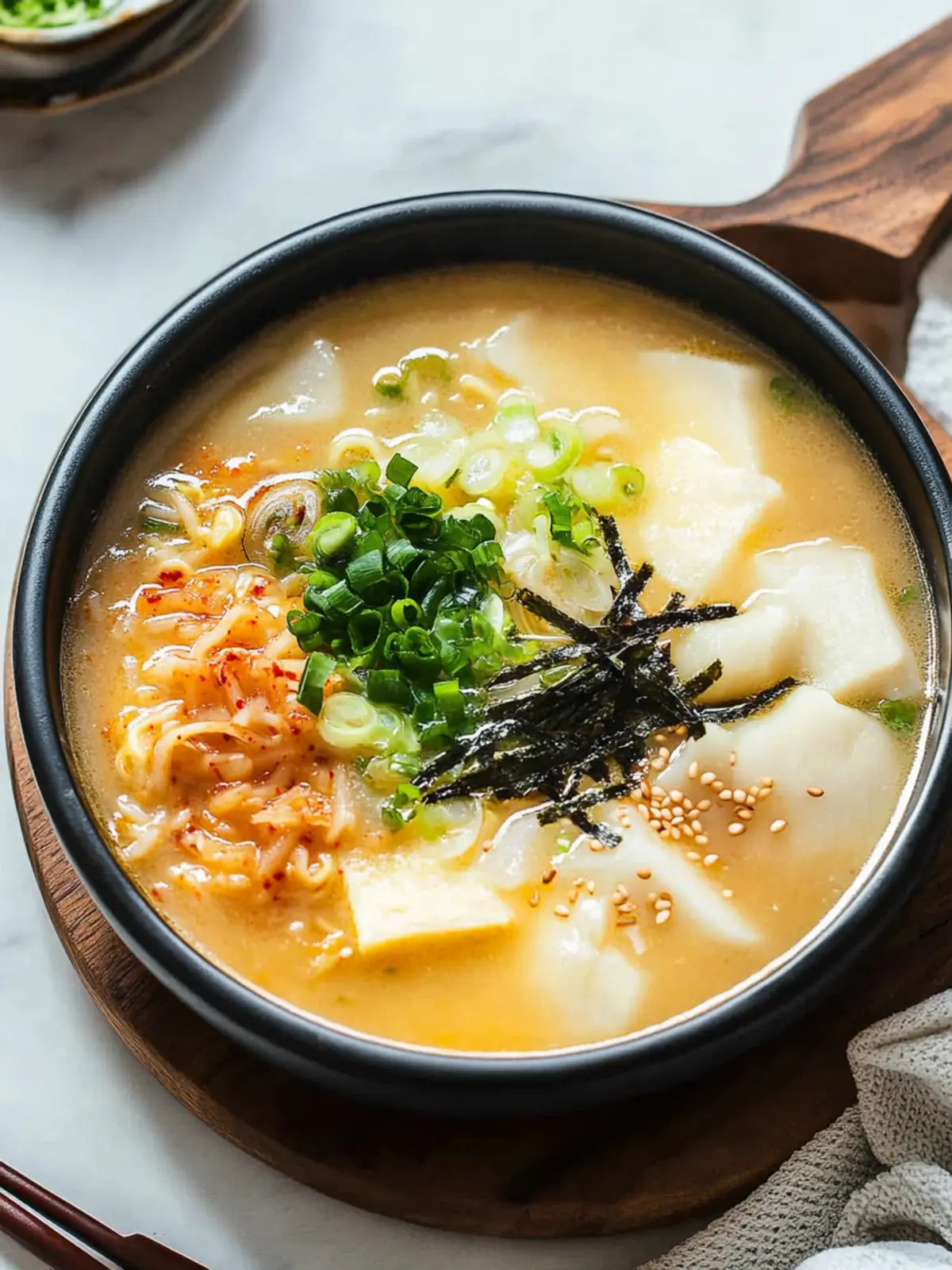
Warm Up with Delicious Korean Rice Cake Soup Recipe
Ingredients
Equipment
Method
- Soak the rice cakes in a bowl of water.
- Cook the separated egg whites and yolks until set, then slice.
- Heat a pot and sauté the beef, garlic, and vegetable oil.
- Add soaked rice cakes and broth, and optional mandu.
- Bring to a boil and simmer for 5 to 7 minutes.
- Season to taste with soy sauce, salt, and pepper.
- Garnish with eggs, green onions, gim, and sesame oil.